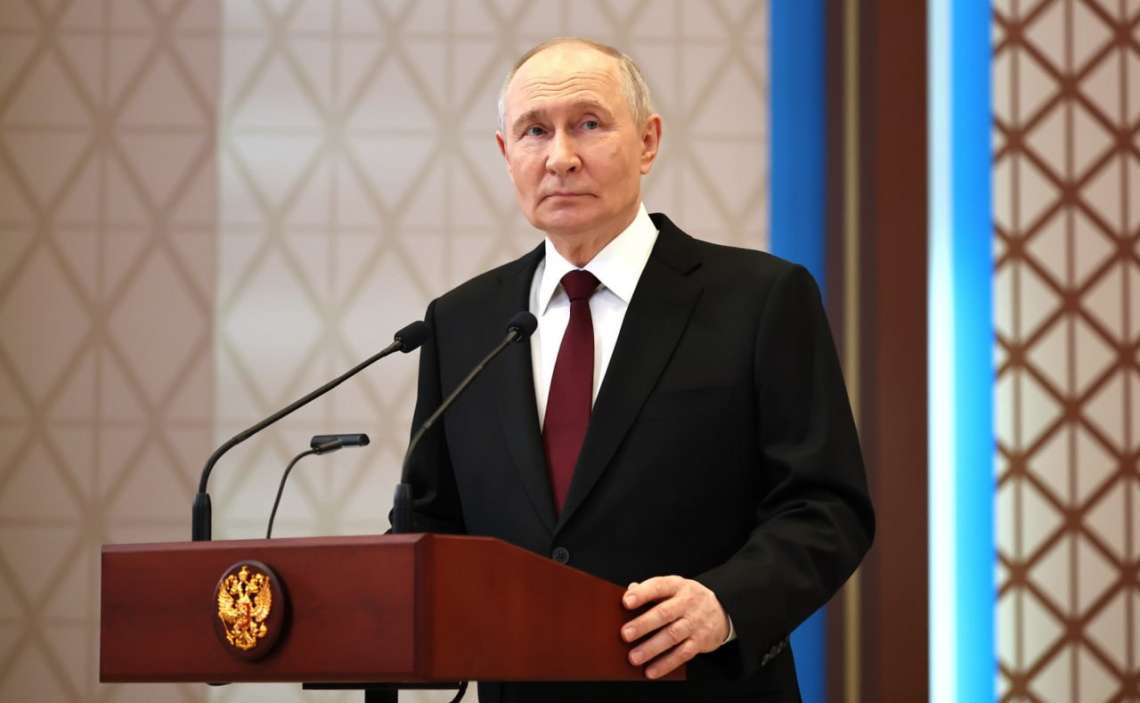
Putin and Macron discussed the need to step up the search for diplomatic solutions to the escalating crisis in eastern Ukraine in a phone call on Sunday, reports Asian Lite News
Prime Minister Boris Johnson said on Sunday that Russian President Vladimir Putin’s commitments to French President Emmanuel Macron were a welcome sign that the Kremlin chief may be still willing to engage in a diplomatic solution to the Ukraine crisis.
Johnson spoke to Macron after Macron held a call with Putin.
“The Prime Minister noted that President Putin’s commitments to President Macron were a welcome sign that he might still be willing to engage in finding a diplomatic solution,” a Downing Street spokesperson said.
“The Prime Minister stressed that Ukraine’s voice must be central in any discussions,” the spokesperson said.
Putin and Macron discussed the need to step up the search for diplomatic solutions to the escalating crisis in eastern Ukraine in a phone call on Sunday, the Kremlin said.
Meanwhile, multiple explosions were heard on Sunday in the centre of the separatist-held city of Donetsk in eastern Ukraine, a Reuters witness said.
A loudspeaker in the area asked citizens to exercise caution. The origin of the explosions was not clear.
Western allies can’t keep offering an olive branch while Russia continues to dial up tensions along the Ukrainian border, European Council President Charles Michel said Sunday.
“The big question remains: does the Kremlin want dialogue?” Michel asked at the Munich Security Conference.
“We cannot forever offer an olive branch while Russia conducts missile tests and continues to amass troops,” he added.
A Russian invasion of Ukraine now seems “far more likely than unlikely” and all the signs suggest it is “very, very imminent”, Britain’s minister for Europe said on Sunday.
“Unfortunately, at the moment, an attack, an invasion seems far more likely than unlikely but we will continue to work to try and avert that,” James Cleverly told Sky News.
“Everything that we see indicates that invasion is very, very, highly likely and very, very imminent.”
UK embassy temporarily relocated
In view of the ongoing buildup of Russian forces on Ukraine’s border followed by the threat of Russian invasion on the country, the British embassy in Kyiv has been relocated to Western Ukraine’s Lviv while the government has urged British nationals in Ukraine to leave the country till the commercial flights are still available.
A statement issued by UK’s Foreign Office said, “Since January 2022, the build-up of Russian forces on Ukraine’s borders has increased the threat of military action. The British Embassy office in Kyiv is temporarily relocating. Embassy staff are operating from the British Embassy office in Lviv.”
Citing that any Russian military actions in Ukraine will affect the British government’s ability to provide consular assistance in Ukraine, the Ministry said that the British nationals should not expect increased consumer support and help in regard to the evacuation in the circumstances. Further addressing those who wish to remain in Ukraine, the ministry asked them to remain vigilant throughout their stay due to potential combat operations in the coming days while public demonstrations are presently being carried out across the country.
Notably, the US government had earlier also announced moving their embassy to Lviv in view of the ongoing conflict. In the statement issued by the White House, it said that the embassy will continue to engage with the Ukrainian government while it remains in the process of temporarily relocating its embassy operations in Ukraine from Kyiv to Lviv.
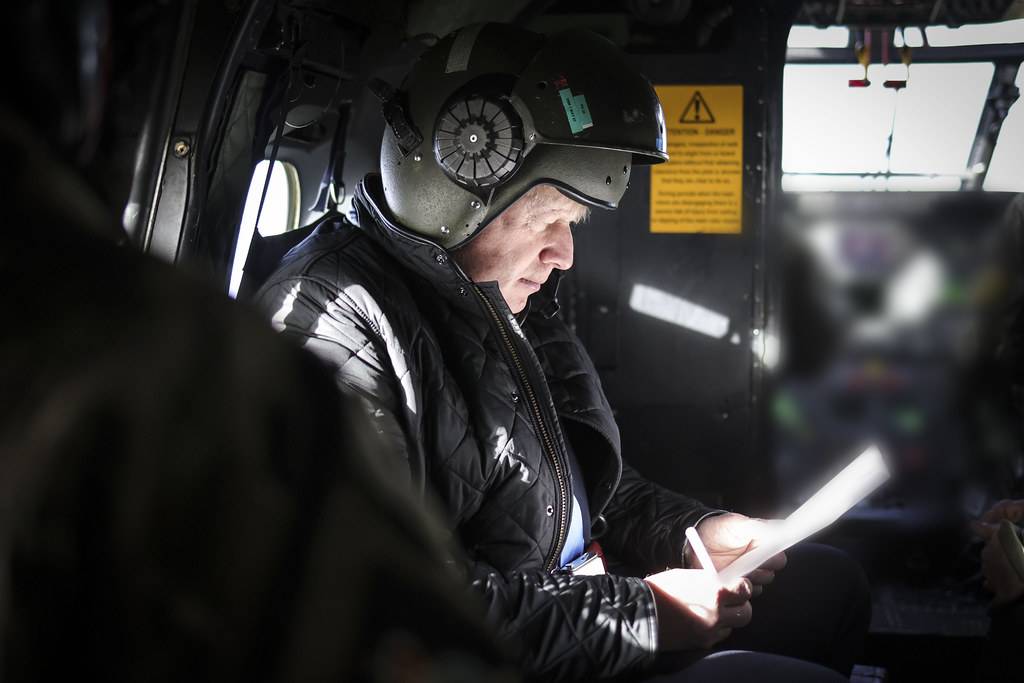
Meanwhile, Johnson who will be attending the Munich Security Summit is likely to make an appeal to the Western leaders for coming together in solidarity in face of the Russian aggression resulting in a devastating conflict in Ukraine.
This came in the backdrop of the ongoing events in Ukraine which have gained momentum after the Russia-backed separatists have announced their plan to evacuate around 7 lakh people to Russia from the self-proclaimed Donetsk People’s Republic (DPR). Following this. speculations have also been raised regarding a possible invasion by Russian powers on Ukraine amid repetitive warnings from Western allies.
PM’s warning
Russia is preparing to plunge Europe into its worst conflict since World War II, British Prime Minister Boris Johnson has said, warning that any invasion of Ukraine would freeze Moscow out of global finance.
“The fact is that all the signs are that the plan has already in some senses begun,” he said in a BBC interview broadcast Sunday from the Munich Security Conference, after two Ukrainian soldiers were killed in attacks around rebel-held enclaves.
Russian invasion plans would see its troops not just enter Ukraine from the rebel-held east, but from Belarus to the north and encircle the capital Kyiv, Johnson said, citing US intelligence relayed to Western leaders by President Joe Biden.
“People need to understand the sheer cost in human life that could entail,” he said, after previously indicating that the West would continue to support any Ukraine resistance after an invasion.
“I’m afraid to say that the plan we are seeing is for something that could be really the biggest war in Europe since 1945, just in terms of sheer scale.”
In a speech Saturday to the conference in Germany, Johnson warned that Western sanctions in response to any invasion would make it “impossible” for President Vladimir Putin’s regime to access the City of London’s deep capital markets.
He indicated a global reach for the sanctions also involving US measures, telling the BBC that they would stop Russian companies “trading in pounds and dollars” — which he said would hit Russia “very, very hard”.
The UK government has long been accused of turning a blind eye to lucrative flows of Russian-sourced money through London, some of which has ended up in Conservative coffers, although Johnson’s party says all its donations are legal.
The Sunday Times newspaper reported a list of elite party donors which it said had privileged access to Johnson’s government, including Lubov Chernukhin, who is married to Putin’s former deputy finance minister Vladimir Chernukhin.