January 6, 2022
3 mins read

Calls grow to revoke Tony Blair’s knighthood

The MailOnline’s report came as an opinion poll published by UK polling company YouGov revealed 63 percent of Britons are opposed to Blair being knighted…reports Asian Lite News.

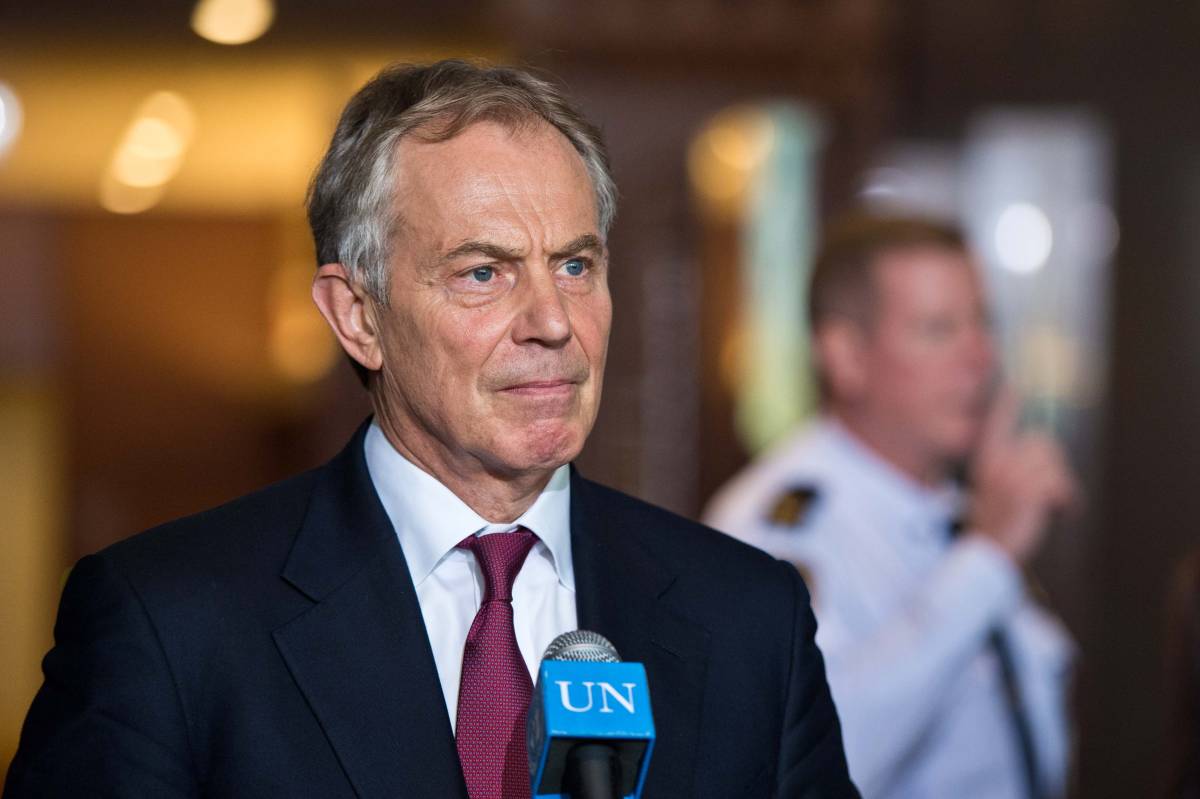
Hundreds of thousands of people in the United Kingdom have joined a call for former British Prime Minister Tony Blair to be stripped of his knighthood, citing his role in the Iraq War.

An online petition had attracted more than 700,000 signatures as of Wednesday morning, just four days after it was set up in response to Blair being made a Knight Companion of the Most Noble Order of the Garter in Queen Elizabeth II’s New Year’s honours list.

The petition says Blair is “the least deserving person of any public honour” and calls for him to be held accountable for “war crimes”.

“Tony Blair caused irreparable damage to both the constitution of the United Kingdom and to the very fabric of the nation’s society. He was personally responsible for causing the death of countless innocent, civilian lives and servicemen in various conflicts,” it adds.

The ex-Labour Party leader, who served as prime minister from 1997 to 2007, has faced constant criticism in recent decades over his involvement in the United States-led invasion of Iraq in 2003.

The invasion, which resulted in former President Saddam Hussein’s removal from power and subsequent execution, ushered in years of conflict that saw hundreds of thousands of Iraqi civilians killed as the country descended into chaos.

To justify the invasion, Blair and then-US President George Bush had cast Hussein as a global threat who possessed weapons of mass destruction as Washington, in particular, focused on neutralising supposed threats in the wake of the September 11, 2001 attacks.

But no such weapons were ever found.

Late on Tuesday, as the campaign to remove Blair’s knighthood was gathering pace, the UK’s MailOnline news website published resurfaced allegations against Blair.

The site said a former aide of his had in 2003 ordered then-Defence Secretary Geoff Hoon to “burn” a memo written by then-Attorney General Peter Goldsmith that said the invasion of Iraq could be illegal.

At the time, the US and UK had failed to secure a specific UN resolution giving them international backing for the incursion.

Hoon said his secretary was told “in no uncertain terms” by Jonathan Powell, Blair’s then-chief of staff, that the note was to be destroyed after it had been read, the Daily Mail reported, citing passages from Hoon’s recently published memoir, See How They Run.

However, this order was defied and the memo was locked in a safe at the UK’s Ministry of Defence instead.

Blair and Powell have previously dismissed these allegations – which first emerged in 2015 – as false.

The MailOnline’s report came as an opinion poll published by UK polling company YouGov revealed 63 percent of Britons are opposed to Blair being knighted.

The survey was based on responses from 2,441 Britons and suggested that most Labour voters were also against the move.

Despite the mounting public pressure for Blair’s knighthood to be revoked, several leading politicians have spoken out in favour of him being honoured by Queen Elizabeth II.

Current Labour leader Keir Starmer and Speaker of the House of Commons Lindsay Hoyle, both of whom have already been knighted by the monarch, made separate remarks on Tuesday defending the former prime minister as a worthy recipient of the decoration.

ALSO READ-Tony Blair, King of Jordan, Czech PM figure in Pandora Papers

Previous Story

UAE urges people to take booster jabs, issues guidelines

Next Story

Markle wins £1 in token damages in privacy case

Previous Story

UAE urges people to take booster jabs, issues guidelines

Next Story

Markle wins £1 in token damages in privacy case

Latest from -Top News

Pakistan Risks Overstretching Itself in Yemen War

Pakistan’s expanding military role in Saudi Arabia amid the Yemen conflict could strain its defence resources and fragile finances…reports Asian Lite News Desk Pakistan’s military involvement in the war in Yemen may prove unsustainable because of mounting financial pressures and competing security demands, according to a new report. Islamabad’s growing military presence in Saudi Arabia risks stretching its defence resources while exposing the country to greater strategic and economic challenges. An article by Andrew Wilson in One World Outlook describes Pakistan’s involvement as a case of “fiscal and strategic overreach”, arguing that the country lacks the financial flexibility to sustain an expanded military commitment. Pakistan’s external finances depend heavily on an International Monetary Fund (IMF) programme, financial support from Gulf countries and remittances from Pakistani workers in the region. The report argues that deeper military involvement in the conflict could place additional pressure on these sources of financial stability. It also warns that deploying troops and military equipment abroad could weaken Pakistan’s capacity to address security challenges along its eastern border and deal with two domestic insurgencies. The move could also draw Islamabad into a conflict it has sought to approach cautiously. A Reuters report in May, citing Pakistani security and government sources, said Islamabad had deployed around 8,000 troops, a squadron of approximately 16 aircraft, mostly JF-17 fighter jets, two drone squadrons and a Chinese HQ-9 air-defence battery to Saudi Arabia. According to those sources, Riyadh was financing the deployment, with Pakistani personnel operating the equipment. The sources also said a confidential agreement contemplated the possibility of deploying up to 80,000 troops. Islamabad has not confirmed those figures, although it has acknowledged its military presence in Saudi Arabia, including the deployment of fighter jets at King Abdulaziz Air Base from April. The One World Outlook article argues that Saudi financial support can cover allowances and operating expenses but cannot easily replace military equipment needed elsewhere or resolve the political and strategic challenges of participating in the Yemen conflict. Pakistan’s defence budget is another concern. For the 2026-27 financial year, the federal government allocated PKR 3 trillion, or approximately $10.8 billion, to defence services. The allocation represents an 18 per cent increase from the original PKR 2.55 trillion provision and amounts to around 2.1 per cent of projected gross domestic product (GDP). Defence spending accounts for approximately 16 per cent of the federal government’s PKR 18.8 trillion expenditure. Military pensions are budgeted separately at PKR 822 billion, while debt servicing costs stand at approximately PKR 8 trillion, more than two-and-a-half times the defence allocation. The report argues that these competing financial obligations leave little room for additional military expenditure without placing further pressure on public finances. Pakistan’s reliance on IMF assistance also limits its fiscal flexibility. The country must meet the conditions attached to the programme, including a primary budget surplus target of 2 per cent of GDP and continued restraint on development spending. According to the article, these requirements make it difficult for Islamabad to finance an additional military commitment without compromising other budgetary priorities. Pakistan’s economic indicators offer limited reassurance. Economic growth for the 2025-26 financial year is estimated at between 3.6 and 3.7 per cent, while inflation reached approximately 10.3 per cent in September following an energy price shock. Foreign exchange reserves stood at around $21.5 billion at the end of September. Although this marks an improvement from the low levels recorded in 2023, the report notes that the reserves cover only a few months of imports. Financial assistance from Gulf partners remains central to Pakistan’s external stability. The article says Islamabad holds approximately $8 billion in Saudi deposits at its central bank. In July, the State Bank of Pakistan said Riyadh had extended the maturity of $5 billion in deposits to December 2028, easing the country’s immediate external financing requirements. A further $3 billion deposit was also extended in the spring. However, the article argues that these arrangements provide temporary relief rather than long-term financial independence, particularly as regional conflict threatens the stability of the Gulf economies on which Pakistan relies. The report concludes that Pakistan faces a difficult balance between supporting Saudi Arabia militarily and preserving the financial and military resources needed to address its domestic and regional challenges.

UK and Germany Ratify Kensington Treaty

Britain and Germany ratify the Kensington Treaty, agreeing new cooperation on AI, quantum research, defence and security while targeting investment, jobs and Russian hybrid threats…reports Asian Lite News Desk Britain and Germany

Economic tide is turning in Bangladesh

If there is one thing that can bring some comfort to the struggling Bangladeshi economy, it is good relations with India. Bangladesh should remember that Delhi’s backing, through easy supplies of essentials
Go toTop

Don't Miss

PM appoints former Blair, Brown aide as political director

Reynolds’ job is part of a wider Downing Street shake-up

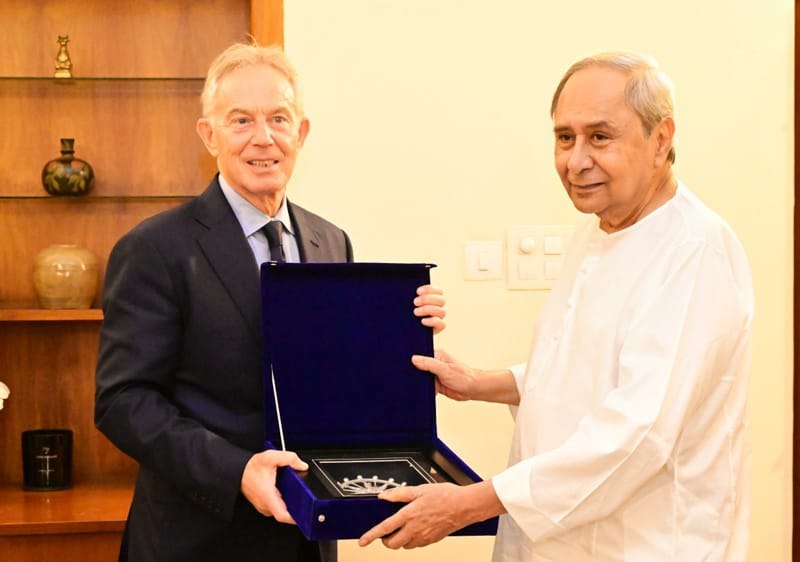
Blair calls on Odisha CM, discusses economic growth  

Blair also praised the CM for the state’s success in