Eliot also makes extensive use of Scriptural writings such as the Bible, the Book of Common Prayer the Hindu Brihadaranyaka Upanishad and Buddha’s Fire Sermon and of cultural and anthropological studies etc…writes Dilip Roy
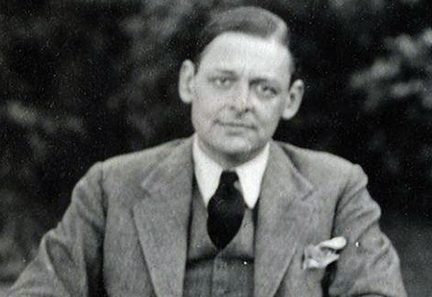
Thomas Stearns Eliot OM (1888-1965) was born in St. Louis, Missouri in America to a prominent Bostonian Brahmin family. Eliot was a poet of a highest caliber and is regarded as one of 20th century’s greatest poets just like his predecessor Rabindranath Tagore who also hailed from a Brahmin family. Eliot was not only a poet but an essayist, publisher, playwright, literary critic and editor. In 1922 Eliot founded a quarterly journal called the Critarion and in the first issue appeared his landmark poem “The Weste Land” which established him decisively as the voice of a disillusioned generation.
His writing style, and verse structure of English poetry for which he was awarded the 1948 Nobel Prize in Literature, for his pioneering contribution to the modern day poetry. Eliot became internationally known for his philosophical poetry The Waste Land which was first published in the book form in 1922 in it he quotes in Sanskrit and Indian philosophy which the author studied at Harvard university in 1911-13 are particularly relevant for the definition of the final and most complex section of the poem: “What thunder said.” In particular the three words “Datta, dayadhvam, damyata” are taken from Sanskrit meaning of Thunder in the Upanishads sources from which Eliot alludes to include the works of Homer, Sophocles, Shakespeare, Richard Wagner (Parsifal) Hermann Hesse and Aldus Huxley to name but a few.
Eliot also makes extensive use of Scriptural writings such as the Bible, the Book of Common Prayer the Hindu Brihadaranyaka Upanishad and Buddha’s Fire Sermon and of cultural and anthropological studies etc. However, it is The Fire Sermon that offers a philosophical meditation influenced by Eastern religions. Among his famous his famous phrases are OM “Shantih Shantih Shantih.” (Peace, Peace, Peace)
Postscript: Like most intellectuals Eliot was a reclusive, secretive man. He told the Nobel audience in 1948. “I stand before you not on my own merits, but as a symbol for a time, for the significance of poetry.”
( The author Dilip Roy is a researcher on cultural subjects he is a Fellow of Royal Asiatic Society UK and an Afficionado of Richard Wagner.)
ALSO READ-OPPENHEIMER : A critical response to the 2023 movie