December 31, 2023
4 mins read

2024 SPECIAL: Unrest in Gilgit-Baltistan

Frustration grows in Gilgit-Baltistan over chronic food, power crises and exploitive governance … writes Dr Sakariya Kareem. Protests are being held by political parties, civil society, and the public in Gilgit Baltistan, which has become a serious law-and-order issue in the geo-strategically crucial region.

The Pakistani government’s decision to hike wheat prices has led to widespread protests in the Gilgit-Baltistan region which is already suffering from a shortage of food grains, energy and fuel as well as the imposition of unjust taxes, and forced land acquisition. While Islamabad’s failure to address the problems has risked law and order disruptions, the frustration among people has led some of them to talk about joining India. Gilgit-Baltistan is governed by Pakistan but claimed by India to be its integral part.

The Islamabad government has raised wheat prices from Rs 20 to Rs 36, though the initial plan was to increase it to Rs 52. The hike however has led to strong protests in Gilgit-Baltistan, in which all religious, social, and political groups have come together and formed an alliance named the Awami Action Committee (AAC). Calling the Gilgit-Baltistan a “disputed” region, AAC chairman Najaf Ali said the protests were not just against the wheat prices but the rights of people in the region.

Similarly, the prolonged power crisis and fuel shortage have become major problems in Gilgit-Baltistan. People were forced to stay in the dark during the holy month of Ramadan. “Electricity has become a dream for us. We are experiencing over 20 hours of power outages,” said Zakir Baltistani, a resident of Skardu city. Now they are left in the lurch to brave intense cold. Severe load shedding adds to winter woes of people in Gilgit-Baltistan,” said another local Sattar Farooq.  
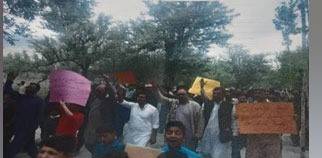
Protest in Gilgit Baltistan over Air Force’s Land Grab

The Gilgit-Baltistan residents do not express their confidence in the local legislature assembly as they claim it is being controlled by the Islamabad government. “The Gilgit-Baltistan Assembly is not a public spokesperson but a group of the privileged class,” they said while criticising Chief Minister Khalid Khurshid during wheat price-induced protests.

Moreover, they assert that the Pakistan-administered Kashmir and Gilgit-Baltistan are administered via ad hoc presidential decrees as they reject the Islamabad government’s absolute control over them and its arbitrary decisions. Even the Supreme Court of Kashmir has maintained that the region is “disputed”.

London-based anthropologist Livia Holden said the people of Gilgit-Baltistan have not allowed the Islamabad government to access the management of their economic and natural resources as the region remained a disputed territory to date. “The people of Gilgit-Baltistan have submitted petitions to the Supreme Court, held peaceful protests, and initiated grassroots political scrutiny,” she said in her report on the struggle of the people of Gilgit-Baltistan. “Undermining their efforts would mean to silence their struggle. People’s struggle for participatory governance in Gilgit-Baltistan shows remarkable resilience, which has been unjustly perceived.”

Now, protests are being held by political parties, civil society, and the public in Gilgit Baltistan, which has become a serious law-and-order issue in the geo-strategically crucial region. Protesters have resorted to burning highways and burning tyres to express their anguish and frustration. Khalid Khurshid, chief minister of Gilgit-Baltistan blamed the Islamabad government for the shortage of wheat and overall cuts in funds allocated for the region. But people are not in the mood to accept any reason for the price hike.

Another reason for the people’s anger is land grabbing by the Islamabad government under colonial law, which protestors call a “black law”. These protests are not new but they are being held for decades now. They have become more intense in recent times. People in Gilgit Baltistan blame the Islamabad government for discriminatory policies that led to their exploitation. This often leads the protestors to express their desire to join with India as the region was a part of Jammu & Kashmir before Pakistan came into existence.

UK-based Kashmiri activist Amjad Ayub Mirza said the people in Pakistan-administered Kashmir and Gilgit-Baltistan were suffering due to a shortage of essential commodities and taxes on basic necessities. “People are out on streets because there is no food, there is no flour. People are fed up. The government depots for flour are locked. People in almost every city of (Kashmir and Gilgit-Baltistan) are protesting, even students, lawyers, civil society and women are protesting,” Mirza said.



Previous Story

LuLu Exchange Opens 100th Centre in Dubai’s Al Warqa

Next Story

Saroj Sweets, Mumbai draws up a plan to add bakery products

Previous Story

LuLu Exchange Opens 100th Centre in Dubai’s Al Warqa

Next Story

Saroj Sweets, Mumbai draws up a plan to add bakery products

Latest from Asia News

Economic tide is turning in Bangladesh

If there is one thing that can bring some comfort to the struggling Bangladeshi economy, it is good relations with India. Bangladesh should remember that Delhi’s backing, through easy supplies of essentials

DP World Lands 15-Year Bangladesh Port Deal

The agreement between the Chittagong Port Authority (CPA) and DP World covers the New Mooring Container Terminal…reports Asian Lite News Desk Bangladesh has signed a 15-year concession agreement with global ports operator

Nepal Floods Cause $1.66 Billion In Damage, Says World Bank

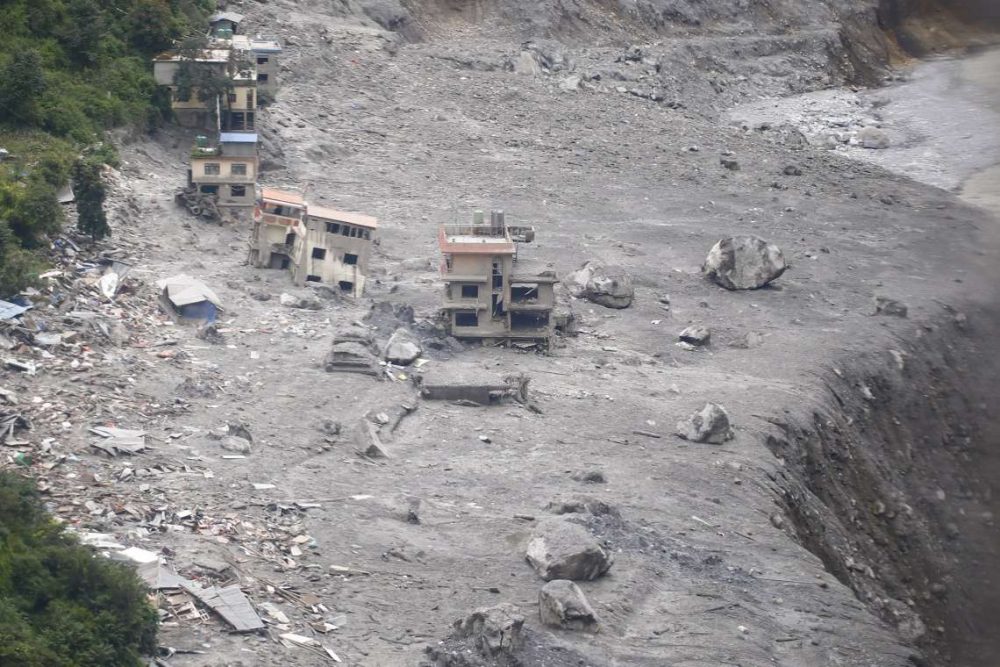
Nepal’s August 2026 floods caused an estimated US$1.66 billion in direct physical damage, with infrastructure accounting for 83 per cent of the total…reports Asian Lite News Desk Nepal’s devastating floods in August 2026 caused an estimated US$1.66 billion in direct physical damage, with infrastructure accounting for 83 per cent of the total, according to a World Bank report. The estimate, included in the World Bank’s Nepal Development Update unveiled this week, is close to the Nepal government’s preliminary Rapid Damage and Needs Assessment (RDNA), which put physical damage at US$1.81 billion. The government’s assessment also estimated losses beyond physical assets at US$883.32 million, taking the total economic effects of the disaster to approximately US$2.7 billion. The World Bank’s Global Rapid Post-Disaster Damage Estimation (GRADE) found that infrastructure suffered the greatest damage, estimated at US$1.38 billion, or 83 per cent of the total. Residential buildings accounted for US$185 million, or 11 per cent, while non-residential buildings sustained damage worth US$101 million, or 6 per cent. The floods along the Bhotekoshi and Trishuli rivers caused extensive damage to hydropower projects, solar energy facilities, electricity transmission infrastructure and transport networks. The energy sector, particularly hydropower, was among the worst affected. The August 2026 floods affected 12 hydropower projects and one solar project, involving 281.1 MW of operational capacity and 395.02 MW of capacity under construction. Damage to transmission lines and substations also disrupted the transmission of 149.6 MW of electricity to the national grid. The total affected capacity reached approximately 430.7 MW, equivalent to 10.6 per cent of Nepal’s installed hydropower and solar capacity at the end of fiscal year 2025-26, which concluded in mid-July. The disaster also severely damaged transport infrastructure along the 82-km Rasuwa trade corridor, which connects Kathmandu with the Rasuwagadhi border point with China. More than 55 km of the corridor was damaged, including 40 km that was completely destroyed. The floods also damaged 37 motorable bridges and 68 suspension bridges. The disaster resulted in significant human losses along the affected corridor and beyond. According to Nepal’s National Disaster Risk Reduction and Management Authority, 1,455 people had been confirmed dead, while 5,285 remained missing following the disaster. The World Bank report found that the physical damage was concentrated in three districts in central Nepal: Rasuwa, Nuwakot and Dhading. Rasuwa was the worst-affected district, accounting for US$1.07 billion, or 64 per cent, of the total direct damage. Nuwakot recorded an estimated US$551 million in damage, while Dhading suffered approximately US$39 million. “The findings highlight the concentration of physical damage in a small number of districts and the disproportionate impact on infrastructure, underscoring the scale of the reconstruction challenge facing the affected areas,” the World Bank said. The global development financier said the floods had demonstrated the scale and complexity of disaster risks in Nepal’s Himalayan environment. The event also showed how a single extreme weather event could trigger cascading impacts across sectors and geographical areas. The report said recovery efforts should extend beyond restoring infrastructure to its pre-disaster condition. While the principle of “Build Back Better” remained relevant, the World Bank stressed that rebuilding infrastructure to higher engineering standards in the same locations might not always be sufficient. “In some cases, simply rebuilding the same infrastructure in the same location to a higher engineering standard may not be sufficient. Nepal may need to build differently — based on a better understanding of risk, more careful decisions about location and design, greater redundancy in critical networks, stronger monitoring and early warning, and a more integrated approach to infrastructure development in the Himalayas,” the report said. The World Bank said Nepal’s recovery strategy should incorporate improved risk assessment, more informed infrastructure planning, stronger monitoring systems and better early warning mechanisms. The report emphasised that reconstruction should not only restore damaged assets but also reduce the impact of future disasters, particularly in the country’s vulnerable Himalayan regions.

Vaccine Delays Fuel Bangladesh Measles Outbreak

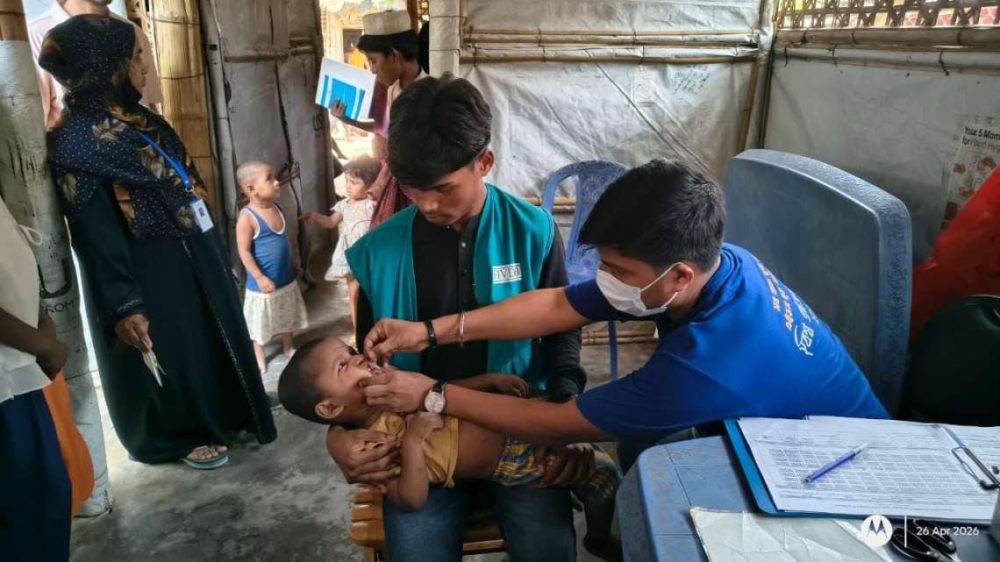
More than 32,000 suspected cases and over 250 deaths have been reported since mid-March, with children making up most of the fatalities….reports Asian Lite News Desk Bangladesh’s measles outbreak has intensified, with
Go toTop