April 12, 2023
4 mins read

Biden to meet Sunak before Belfast speech

US officials said the president would be “underscoring the readiness of the US to support Northern Ireland’s vast economic potential to the benefit of all communities”…reports Asian Lite News

Joe Biden will hold a meeting with Rishi Sunak in Belfast on Wednesday before a keynote speech in which he is expected to emphasise the US’s commitment to ensuring lasting peace and prosperity for Northern Ireland.

US officials said the president would be “underscoring the readiness of the United States to support Northern Ireland’s vast economic potential to the benefit of all communities” with the prospect of major investments if power-sharing is restored in Stormont.

It is understood he or Sunak, who will return to Belfast next week for another event involving the former US president Bill Clinton, will hint at a major economic summit later this year to lure foreign investment.

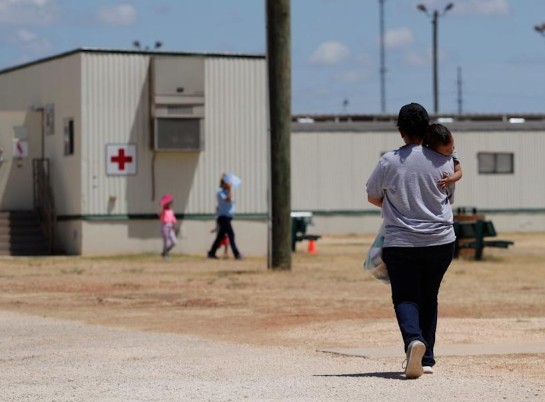
The US president was met at Belfast international airport by the British prime minister on Tuesday night for the start of a visit expected to mix delicate political choreography with economic announcements and events linked to Biden’s Irish and Catholic heritage.

A second meeting with Sunak will take place on Wednesday mid-morning, along with local party leaders, on the fringes of the main event at Ulster University’s new campus in Belfast at 1pm.

Downing Street on Tuesday was forced to deny a New York Times report that the White House had scaled back Biden’s meeting with Sunak from a bilateral event to a low-key coffee meeting.

“I wouldn’t characterise it as that,” said a No 10 spokesperson. “We continue to have an incredibly positive working relationships with the president and the US government.”

However it is believed that the visit to Belfast was shortened after early consideration of a visit to Stormont to meet the political parties was ruled out.

There had also been talk of Biden unveiling a plaque to the former US senator George Mitchell, who chaired the peace talks 25 year ago, but that is not on the schedule either.

The low-key and shortened visit reflects the political sensitivities that prevail after Sunak’s recent deal with the EU on Brexit and the continued boycott of Stormont by the Democratic Unionist party.

The former prime minister Tony Blair had advised the president to be cautious in using his influence to lobby the DUP to revive Stormont. “The Americans can play a real role, but it’s something that you need to do carefully,” he said.

Speaking to reporters before taking off in Air Force One, Biden said he wanted to safeguard the Good Friday agreement, which was signed 25 years ago this week, and support Sunak’s post-Brexit deal for the region. Asked what his priorities for the trip were, he said: “Make sure the Irish accords and Windsor agreements stay in place. Keep the peace and that’s the main thing. It looks like we’re going to keep our fingers crossed.”

The Northern Ireland secretary, Chris Heaton-Harris, and King Charles’s personal representative for County Antrim, Lord-Lieutenant David McCorkell, were also among the welcoming party.

The two leaders met briefly before the president drove away in an armoured car amid relentless rain.

Heavy security on both sides of the border preceded the US entourage, which included the economic envoy to Northern Ireland, Joseph Kennedy III.

Dozens of police and US Secret Service vehicles sealed off rain-drenched streets around central Belfast on Tuesday morning as Biden and his entourage emerged from the four floors they had taken over in a central city hotel.

Manhole covers were lifted and checked and sniffer dogs inspected hotel rooms as part of a £7m security operation – bolstered by 300 extra police from the British mainland.

In Derry, police recovered four suspected pipe bombs from a cemetery where republicans had staged an Easter Monday commemoration that led to petrol bomb attacks on police. The discovery was a “sinister and worrying development”, said the Police Service of Northern Ireland assistant chief constable Bobby Singleton, with the Police Federation for Northern Ireland saying it was a clear statement of intent to cause harm to police officers.

Biden is expected to leave Belfast in the early afternoon to head south across the border for three days of pomp and pilgrimage in Ireland.

He will fly to Dublin and then be taken by helicopter to Dundalk and Carlingford, where his great-grandfather James Finnegan was born, with a walkabout in both towns and a visit to ancestral graves in Kilwirra cemetery.

On Thursday, he will hold separate meetings with the Irish president, Michael D Higgins, and the taoiseach, Leo Varadkar, before making a speech to a joint sitting of parliament, following in the footsteps of John F Kennedy in 1963, Ronald Reagan in 1984 and Bill Clinton in 1995. There will be a banquet dinner at Dublin Castle.

On Friday, Biden will fly to County Mayo and tour the Sanctuary of Our Lady of Knock, a Catholic shrine, where he is expected to pray.

ALSO READ-Biden begins Ireland trip
Previous Story

TTP still using Afghan soil against Pakistan: Pak Minister

Next Story

Labour puts up ads targeting UK PM, wife

Previous Story

TTP still using Afghan soil against Pakistan: Pak Minister

Next Story

Labour puts up ads targeting UK PM, wife

Latest from -Top News

Pakistan Risks Overstretching Itself in Yemen War

Pakistan’s expanding military role in Saudi Arabia amid the Yemen conflict could strain its defence resources and fragile finances…reports Asian Lite News Desk Pakistan’s military involvement in the war in Yemen may prove unsustainable because of mounting financial pressures and competing security demands, according to a new report. Islamabad’s growing military presence in Saudi Arabia risks stretching its defence resources while exposing the country to greater strategic and economic challenges. An article by Andrew Wilson in One World Outlook describes Pakistan’s involvement as a case of “fiscal and strategic overreach”, arguing that the country lacks the financial flexibility to sustain an expanded military commitment. Pakistan’s external finances depend heavily on an International Monetary Fund (IMF) programme, financial support from Gulf countries and remittances from Pakistani workers in the region. The report argues that deeper military involvement in the conflict could place additional pressure on these sources of financial stability. It also warns that deploying troops and military equipment abroad could weaken Pakistan’s capacity to address security challenges along its eastern border and deal with two domestic insurgencies. The move could also draw Islamabad into a conflict it has sought to approach cautiously. A Reuters report in May, citing Pakistani security and government sources, said Islamabad had deployed around 8,000 troops, a squadron of approximately 16 aircraft, mostly JF-17 fighter jets, two drone squadrons and a Chinese HQ-9 air-defence battery to Saudi Arabia. According to those sources, Riyadh was financing the deployment, with Pakistani personnel operating the equipment. The sources also said a confidential agreement contemplated the possibility of deploying up to 80,000 troops. Islamabad has not confirmed those figures, although it has acknowledged its military presence in Saudi Arabia, including the deployment of fighter jets at King Abdulaziz Air Base from April. The One World Outlook article argues that Saudi financial support can cover allowances and operating expenses but cannot easily replace military equipment needed elsewhere or resolve the political and strategic challenges of participating in the Yemen conflict. Pakistan’s defence budget is another concern. For the 2026-27 financial year, the federal government allocated PKR 3 trillion, or approximately $10.8 billion, to defence services. The allocation represents an 18 per cent increase from the original PKR 2.55 trillion provision and amounts to around 2.1 per cent of projected gross domestic product (GDP). Defence spending accounts for approximately 16 per cent of the federal government’s PKR 18.8 trillion expenditure. Military pensions are budgeted separately at PKR 822 billion, while debt servicing costs stand at approximately PKR 8 trillion, more than two-and-a-half times the defence allocation. The report argues that these competing financial obligations leave little room for additional military expenditure without placing further pressure on public finances. Pakistan’s reliance on IMF assistance also limits its fiscal flexibility. The country must meet the conditions attached to the programme, including a primary budget surplus target of 2 per cent of GDP and continued restraint on development spending. According to the article, these requirements make it difficult for Islamabad to finance an additional military commitment without compromising other budgetary priorities. Pakistan’s economic indicators offer limited reassurance. Economic growth for the 2025-26 financial year is estimated at between 3.6 and 3.7 per cent, while inflation reached approximately 10.3 per cent in September following an energy price shock. Foreign exchange reserves stood at around $21.5 billion at the end of September. Although this marks an improvement from the low levels recorded in 2023, the report notes that the reserves cover only a few months of imports. Financial assistance from Gulf partners remains central to Pakistan’s external stability. The article says Islamabad holds approximately $8 billion in Saudi deposits at its central bank. In July, the State Bank of Pakistan said Riyadh had extended the maturity of $5 billion in deposits to December 2028, easing the country’s immediate external financing requirements. A further $3 billion deposit was also extended in the spring. However, the article argues that these arrangements provide temporary relief rather than long-term financial independence, particularly as regional conflict threatens the stability of the Gulf economies on which Pakistan relies. The report concludes that Pakistan faces a difficult balance between supporting Saudi Arabia militarily and preserving the financial and military resources needed to address its domestic and regional challenges.

UK and Germany Ratify Kensington Treaty

Britain and Germany ratify the Kensington Treaty, agreeing new cooperation on AI, quantum research, defence and security while targeting investment, jobs and Russian hybrid threats…reports Asian Lite News Desk Britain and Germany

Economic tide is turning in Bangladesh

If there is one thing that can bring some comfort to the struggling Bangladeshi economy, it is good relations with India. Bangladesh should remember that Delhi’s backing, through easy supplies of essentials
Go toTop

Don't Miss

Sunak camp accuses Truss of avoiding scrutiny

Robinson himself took to Twitter to say he was disappointed

Biden acknowledges age, bad debate performance

The campaign held an “all hands on deck” meeting on