Lu remarked that it depends because Crimea was “first Russian” before raising more general concerns about the position of post-Soviet republics…reports Asian Lite News
Former Soviet states do not actually have the status of independent nations, China’s ambassador to France, Lu Shaye said in a statement, bringing Beijing’s efforts to mediate a settlement between Russia and Ukraine into doubt, according to The Sydney Morning Herald.
The remarks were made by the Chinese envoy while speaking to France’s free-to-air television La Chaine Info when he was questioned about the status of Russia’s annexed region, Crimea. Lu remarked that it depends because Crimea was “first Russian” before raising more general concerns about the position of post-Soviet republics.
“These ex-USSR countries don’t have actual status in international law because there is no international agreement to materialise their sovereign status,” the Chinese ambassador said, according to The Sydney Morning Herald.
The comments of Lu reportedly sparked angry reactions from all across Europe, as European Union (EU)’s Foreign Affairs representative Josep Borrell Fontelles asked China for clarification.
Taking to Twitter, Borrell wrote, “Unacceptable remarks of the Chinese ambassador to France questioning the sovereignty of the countries, which became independent with the end of the Soviet Union in 1991.”
The EU can only suppose these declarations do not represent China’s official policy, his tweet read further.
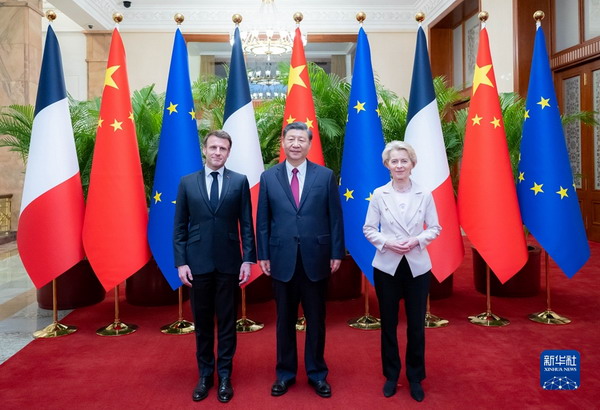
The ambassador’s remarks come after French President Emmanuel Macron’s three-day state visit to Beijing, during which he called for Europe to achieve “strategic autonomy” from the United States and said the continent should stay out of any disputes between the two superpowers over Taiwan, which China has threatened to annex militarily, reported The Sydney Morning Herald on Sunday.
The French Foreign Ministry also reacted to the Chinese Ambassador’s remarks and showed dismay.
“Concerning Ukraine specifically, it was internationally recognised within the borders including Crimea in 1991 by the whole international community, including China, at the fall of the USSR as a new member state of the United Nations. The annexation of Crimea by Russia in 2014 is illegal under international law. The charter of the United Nations, based on the principle of sovereignty and territorial integrity, prohibits the acquisition of territories by force,” the Sydney Morning Herald wrote, citing the French Foreign Ministry. (ANI)