Japanese Prime Minister said North East India, which is surrounded by land, still has unexploited economic potential, reports Ateet Sharma
Political and economic stability in countries across the Indian Ocean region is becoming increasingly important for India and Japan as they work closely together to realise a ‘Free and Open Indo-Pacific’ (FOIP).
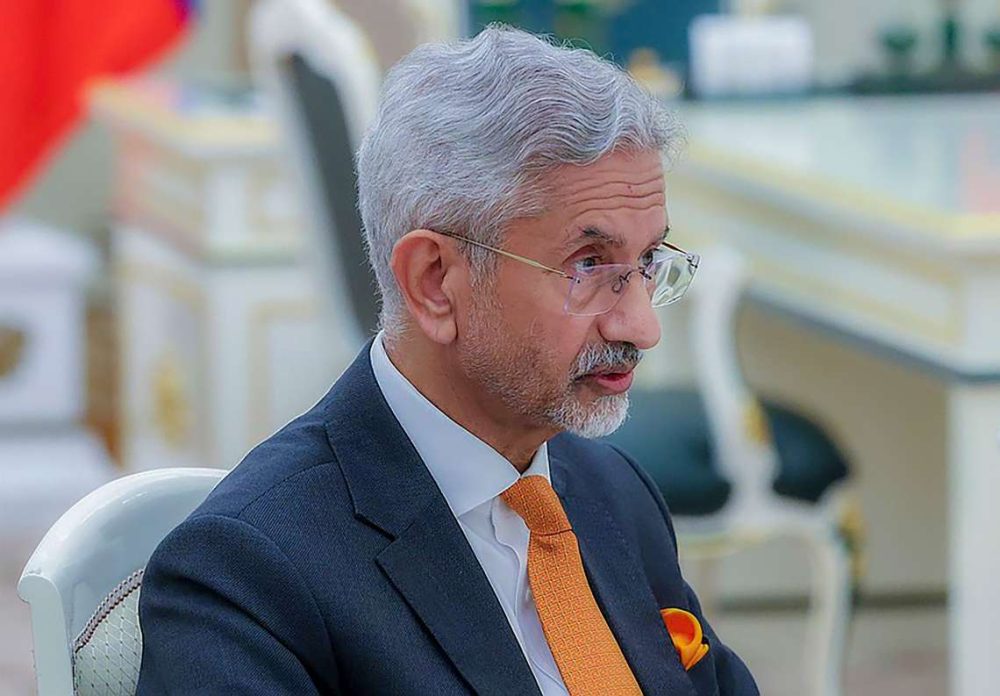
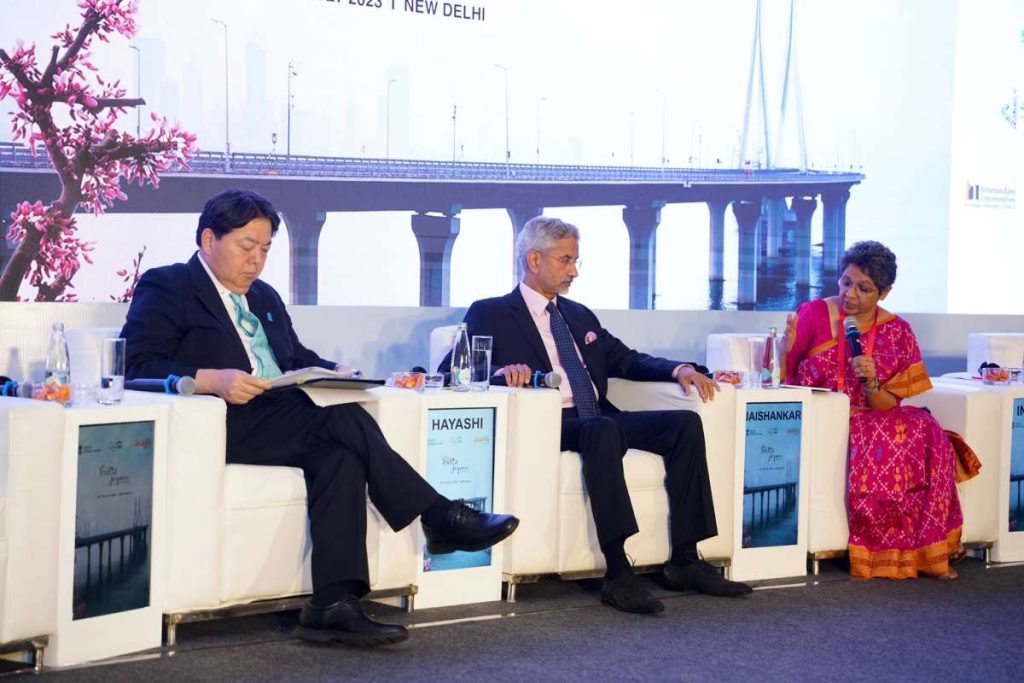
External Affairs Minister (EAM) S Jaishankar and Japanese Foreign Minister Yoshimasa Hayashi delivered the message loud and clear as they addressed the India-Japan Forum in New Delhi on Friday.
In the Indian capital for a little over 24 hours, Hayashi held in-depth discussions with Jaishankar during the India-Japan Foreign Ministers’ Strategic Dialogue that lasted nearly two-and-a-half hours late Thursday evening.
Early Friday, both ministers were at the 2nd India-Japan Forum 2023, not only discussing the progress made in the India-Japan Special Strategic and Global Partnership but also their ongoing partnership towards the future of the Indo-Pacific.
Jaishankar pointed out that the increasing New Delhi-Tokyo convergences happened as Japan was desirous of stepping out of its comfort zone and India ready to Look and Act East.

“I think that’s where the big intersection in a way has happened. And bear in mind that each in their own way were also globalising and today when Minister Hayashi speaks about Bangladesh or yesterday we had a discussion about Sri Lanka and that is where he’s going from here, we find today ability and interest and inclination to work with Japan in a number of third countries,” mentioned the EAM.
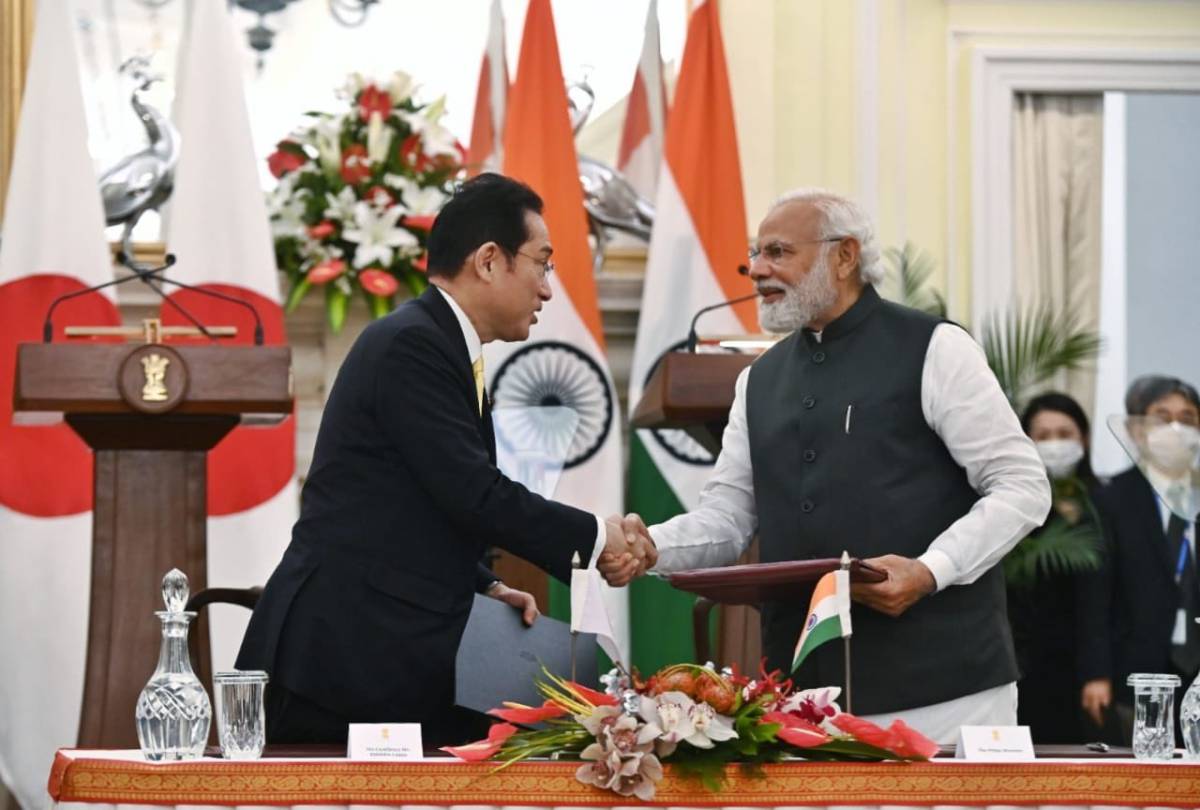
Calling India an “indispensable partner”, it was in New Delhi a few months ago that Japanese Prime Minister Fumio Kishida outlined his new Indo-Pacific strategy that includes integrated development of Northeast India and Bangladesh as part of a broader Bay of Bengal community.
Kishida had listed three important regions – Southeast Asia, South Asia, and the Pacific Islands – where multi-layered connectivity could overcome vulnerabilities and boost economic growth.
“North East India, which is surrounded by land, still has unexploited economic potential. Viewing Bangladesh and other areas to the south as a single economic zone, we will promote the Bay of Bengal-Northeast India industrial value chain concept in cooperation with India and Bangladesh to foster the growth of the entire region,” the Japanese PM said while delivering a policy speech at the Indian Council of World Affairs (ICWA) on March 20.
Citing the critical situation in Sri Lanka, Kishida had also made it clear that Japan will closely collaborate with India in the South Asian region.
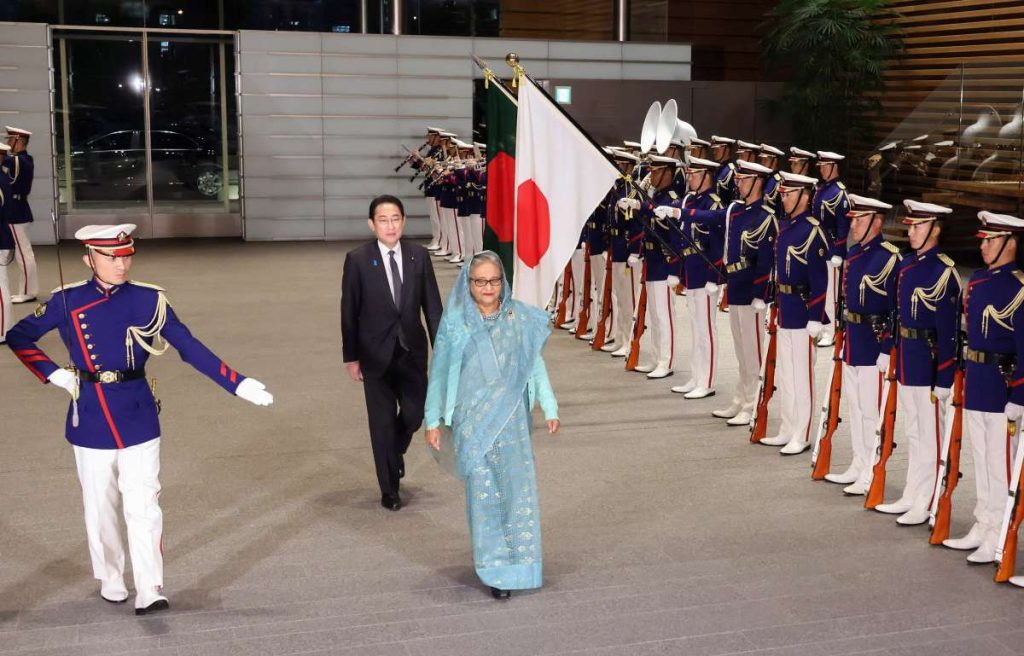
A few weeks later, Bangladesh Prime Minister Sheikh Hasina flew to Tokyo where Kishida expressed his desire to create synergies by organically linking cooperation under the ‘Bay of Bengal Industrial Growth Belt’ (BIG-B) initiative with the development of the North Eastern Region of India. He also laid out the plan for the ‘Industrial Value Chain’ concept, which aims to improve the connectivity of the entire Bay of Bengal region.
In May, Lankan President Ranil Wickremesinghe and Kishida held a summit meeting in Tokyo where the two leaders welcomed the holding of the Creditors Committee meeting on restructuring of Sri Lanka’s debt under the three co-chairs – India, France and Japan.
On Friday, the Japanese Foreign Minister admitted that, as the world faces difficult challenges at a turning point in history, close coordination with India will be key to bringing peace and stability to the Indo-Pacific at large.
“In that vein, Japan intends to drive forward our cooperation in all areas to expand our Special Strategic and Global Partnership with India,” he said.
As you read this, Hayashi would have already landed in Colombo – his second stop on the tour of Southwest Asia and Africa and the first visit of a Japanese Foreign Minister to Sri Lanka since 2019.
It will be followed by a visit to the Maldives over the weekend and South Africa, Uganda and Ethiopia next week as Japan and India – the respective chairs of G7 and G20, currently – continue to strengthen engagement with the Global South.
ALSO READ: India, Japan cement ties, call for rules-based Indo-Pacific