October 2, 2023
2 mins read

UAE’s Lifeline to Libya: 37 Aid Flights Sent

Powered by cutting-edge equipment and technology, the Emirati team stationed in Libya is steadfast in its efforts to support the most affected…reports Asian Lite News

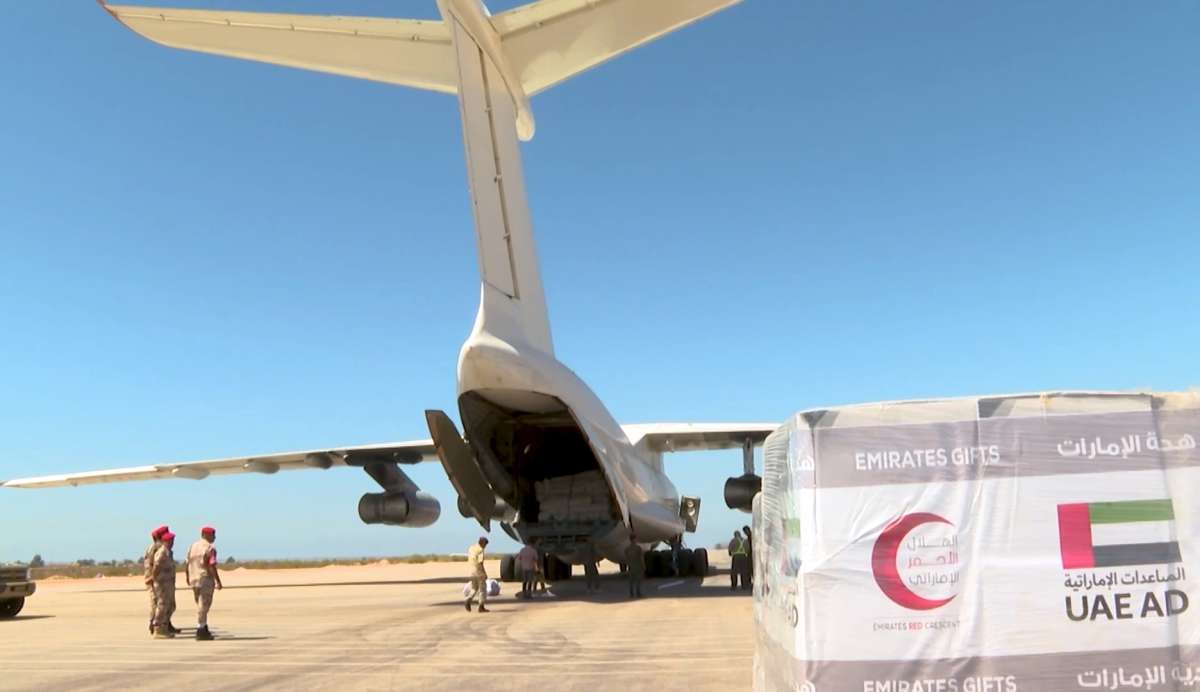
The UAE-launched air bridge to Libya is continuing to provide relief aid to the Libyan people affected by Hurricane Daniel, in line with the directives of President His Highness Sheikh Mohamed bin Zayed Al Nahyan.

To date, 37 aircraft, carrying 815 tonnes of food and medical supplies, shelter materials, as well as first aid supplies, reached Libya, offering support to the areas most affected by the fallout of the disaster, especially eastern Libya. The number of families that benefitted from the UAE-provided aid stands at 7,342.

Powered by cutting-edge equipment and technology, the Emirati team stationed in Libya is steadfast in its efforts to support the most affected.

The Emirates Red Crescent (ERC) team, currently present in the stricken areas in Eastern Libya, is also delivering aid to those affected, in addition to assessing the situation on the field and identifying needs to meet them through the ongoing air bridge flights.

The UAE relief campaign in Libya comprises teams from the ERC, the Zayed Bin Sultan Al Nahyan Charitable and Humanitarian Foundation, the Khalifa bin Zayed Al Nahyan Foundation, and the Mohammed bin Rashid Al Maktoum Charity and Humanitarian Foundation.

More than 16,000 children have been displaced in eastern Libya following the catastrophic floods triggered by Storm Daniel, with their psychosocial well-being at stake, the Unicef has said.

Many more children have also been affected due to lack of essential services, such as health, schooling and safe water supply, Xinhua news agency quoted Unicef as saying in a statement.

While the number of children among the casualties is not yet confirmed, the UN body fears hundreds of children may have died in the disaster, given that children account for about 40 per cent of the population, it said.

Significant damage to health and education infrastructure means children once again risk further disruption to their learning and the outbreak of deadly diseases.

Waterborne illnesses are a growing concern due to water supply issues, significant damage to water sources and sewer networks, and the risk of contamination of the groundwater. In Derna alone, 50 percent of water systems are estimated to have been damaged, the UN agency said.

Unicef claimed that it has been actively supporting the children in eastern Libya since day two of the crisis.

Sixty-five metric tonnes of relief supplies have been delivered to affected areas, including medical supplies for 50,000 people for three months, family hygiene kits for almost 17,000 people, 500 children’s winter clothing sets, 200 school-in-a-box kits and 32,000 water purification tablets.

Unicef has also dispatched mobile child protection and psychosocial support teams to help children cope with the emotional toll of the disaster, it said.

ALSO READ:
Previous Story

Swiss-Ugandan Artist Awori Finds Endless Possibilities in Music

Next Story

COP28 Chief Calls On Industries to Work Together

Previous Story

Swiss-Ugandan Artist Awori Finds Endless Possibilities in Music

Next Story

COP28 Chief Calls On Industries to Work Together

Latest from -Top News

Pakistan Risks Overstretching Itself in Yemen War

Pakistan’s expanding military role in Saudi Arabia amid the Yemen conflict could strain its defence resources and fragile finances…reports Asian Lite News Desk Pakistan’s military involvement in the war in Yemen may prove unsustainable because of mounting financial pressures and competing security demands, according to a new report. Islamabad’s growing military presence in Saudi Arabia risks stretching its defence resources while exposing the country to greater strategic and economic challenges. An article by Andrew Wilson in One World Outlook describes Pakistan’s involvement as a case of “fiscal and strategic overreach”, arguing that the country lacks the financial flexibility to sustain an expanded military commitment. Pakistan’s external finances depend heavily on an International Monetary Fund (IMF) programme, financial support from Gulf countries and remittances from Pakistani workers in the region. The report argues that deeper military involvement in the conflict could place additional pressure on these sources of financial stability. It also warns that deploying troops and military equipment abroad could weaken Pakistan’s capacity to address security challenges along its eastern border and deal with two domestic insurgencies. The move could also draw Islamabad into a conflict it has sought to approach cautiously. A Reuters report in May, citing Pakistani security and government sources, said Islamabad had deployed around 8,000 troops, a squadron of approximately 16 aircraft, mostly JF-17 fighter jets, two drone squadrons and a Chinese HQ-9 air-defence battery to Saudi Arabia. According to those sources, Riyadh was financing the deployment, with Pakistani personnel operating the equipment. The sources also said a confidential agreement contemplated the possibility of deploying up to 80,000 troops. Islamabad has not confirmed those figures, although it has acknowledged its military presence in Saudi Arabia, including the deployment of fighter jets at King Abdulaziz Air Base from April. The One World Outlook article argues that Saudi financial support can cover allowances and operating expenses but cannot easily replace military equipment needed elsewhere or resolve the political and strategic challenges of participating in the Yemen conflict. Pakistan’s defence budget is another concern. For the 2026-27 financial year, the federal government allocated PKR 3 trillion, or approximately $10.8 billion, to defence services. The allocation represents an 18 per cent increase from the original PKR 2.55 trillion provision and amounts to around 2.1 per cent of projected gross domestic product (GDP). Defence spending accounts for approximately 16 per cent of the federal government’s PKR 18.8 trillion expenditure. Military pensions are budgeted separately at PKR 822 billion, while debt servicing costs stand at approximately PKR 8 trillion, more than two-and-a-half times the defence allocation. The report argues that these competing financial obligations leave little room for additional military expenditure without placing further pressure on public finances. Pakistan’s reliance on IMF assistance also limits its fiscal flexibility. The country must meet the conditions attached to the programme, including a primary budget surplus target of 2 per cent of GDP and continued restraint on development spending. According to the article, these requirements make it difficult for Islamabad to finance an additional military commitment without compromising other budgetary priorities. Pakistan’s economic indicators offer limited reassurance. Economic growth for the 2025-26 financial year is estimated at between 3.6 and 3.7 per cent, while inflation reached approximately 10.3 per cent in September following an energy price shock. Foreign exchange reserves stood at around $21.5 billion at the end of September. Although this marks an improvement from the low levels recorded in 2023, the report notes that the reserves cover only a few months of imports. Financial assistance from Gulf partners remains central to Pakistan’s external stability. The article says Islamabad holds approximately $8 billion in Saudi deposits at its central bank. In July, the State Bank of Pakistan said Riyadh had extended the maturity of $5 billion in deposits to December 2028, easing the country’s immediate external financing requirements. A further $3 billion deposit was also extended in the spring. However, the article argues that these arrangements provide temporary relief rather than long-term financial independence, particularly as regional conflict threatens the stability of the Gulf economies on which Pakistan relies. The report concludes that Pakistan faces a difficult balance between supporting Saudi Arabia militarily and preserving the financial and military resources needed to address its domestic and regional challenges.

UK and Germany Ratify Kensington Treaty

Britain and Germany ratify the Kensington Treaty, agreeing new cooperation on AI, quantum research, defence and security while targeting investment, jobs and Russian hybrid threats…reports Asian Lite News Desk Britain and Germany

Economic tide is turning in Bangladesh

If there is one thing that can bring some comfort to the struggling Bangladeshi economy, it is good relations with India. Bangladesh should remember that Delhi’s backing, through easy supplies of essentials

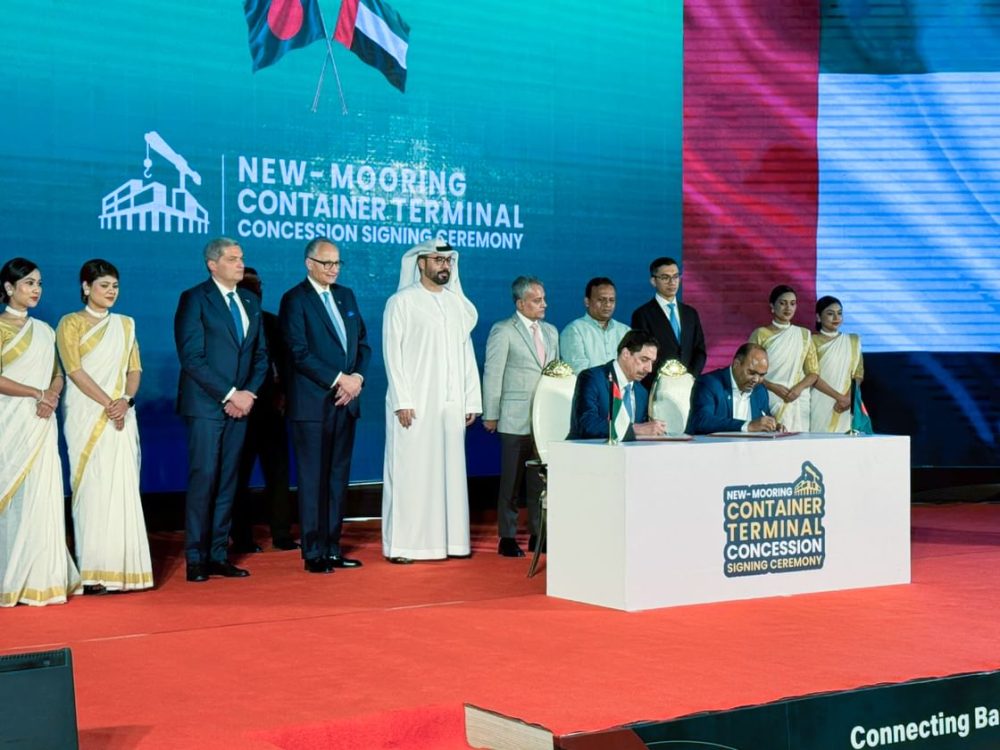
DP World Lands 15-Year Bangladesh Port Deal

The agreement between the Chittagong Port Authority (CPA) and DP World covers the New Mooring Container Terminal…reports Asian Lite News Desk Bangladesh has signed a 15-year concession agreement with global ports operator
Go toTop

Don't Miss

FAO lauds UAE’s pivotal role in enhancing food security

Al Jaf said that MoCCAE and Dubai Municipality are key

UAE plans to buy L-15 aircraft from China

The UAE Ministry of Defense has said that it plans