The main roadblock to adopting the convention proposed by India in 1996 is the dispute over the definition of terrorists…writes Arul Louis
A UN counter-terrorism official has decried the failure of the General Assembly to agree on a global agreement to fight terrorism proposed by India.
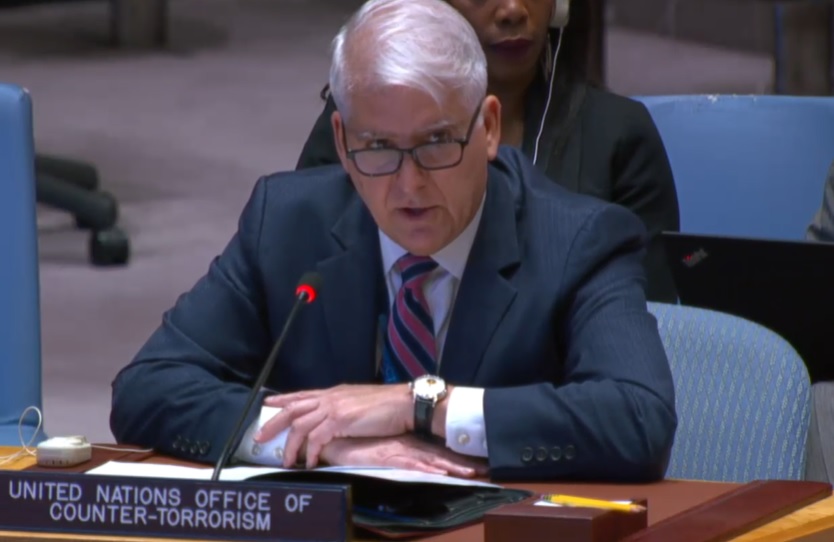
Raffi Gregorian, the Director of the UN Office of Counter-Terrorism (UNOCT), told the Security Council on Monday, “Unfortunately, there has not yet been consensus at the General Assembly on the draft Comprehensive Convention on International Terrorism, including in relation to how the definition of terrorism would precisely apply in situations of armed conflict.”
Neither does the Assembly give the UNOCT “the mandate to investigate or ascertain the conduct of states and other actors, nor to determine what constitutes an act of terrorism, whether by a state, a group or an individual,” he added.
This despite the Assembly setting up the UNOCT “with the clear intention of helping member states implement General Assembly and Security Council resolutions related to the fight against terrorism,” he said.
The main roadblock to adopting the convention proposed by India in 1996 is the dispute over the definition of terrorists, with some countries claiming that their favoured terrorists are “freedom fighters”.
Speaking at a Council meeting convened at the request of Russia on threats to international peace and security, Gregorian pointed out these two barriers to the UN effectively dealing with terrorism.
“For these reasons, I regret that I have nothing else to contribute to the substance of today’s discussion,” he said.
However, while criticising the Assembly and praising the Council’s “admirable record”, Gregorian was silent on the Council’s failure to act against some terrorists because of China’s opposition.
In the latest case of Beijing providing cover for Pakistan-based terrorists, China blocked in June designating Lashkar-e-Taiba commander Sajid Mir as an international terrorist.
Mir was one of the leaders behind the 26/11 attack on Mumbai launched from Pakistan in 2008.
On the other hand, Gregorian claimed that the “Council has had a long and admirable record of consensus when it comes to the issue of terrorism”.
To back his assertion, he referred to the Council resolutions on al-Qaeda and the Islamic State terror organisation also known as Da’esh, and the setting up of the Counter-Terrorism Committee.
In June, the Assembly urged its 193 members in a resolution “to make every effort to conclude a comprehensive convention on international terrorism”.
However, there has been no fresh effort toward adopting the agreement.
The Council meeting generally focused on the Ukraine war, with only mentions of the global terrorism menace by representatives of countries like Ghana and Mozambique.
Russia’s Deputy Permanent Representative Dmitry Polyanskiy said that Moscow asked for the Council meeting to discuss “the terrorist essence of the Ukraine regime”.
He asserted that Ukraine bombing the bridge connecting Crimea with the Russian mainland and using the Crimean people as “hostages” for negotiations amounted to terrorism.
Only China backed Russia, while most members of the Council heavily criticised Moscow’s invasion of Ukraine.
US Deputy Political Counsellor, Trina Saha, said that Moscow asking for the meeting was an effort “to divert the council’s attention from the core issues at hand or a transparent ploy to distract from its own aggression”.
“Russia’s complaints about the impacts of a war it began should remind us all of a simple truth,” she said.
“This war would end today if Russia withdrew its forces from Ukraine’s sovereign territory and abandoned its relentless, brutal attacks against Ukraine cities and civilian infrastructure,” she added.
Britain’s Political Coordinator Fergus Eckersley said that it was Russia that “is inflicting terror on the Ukrainian people, and in parallel, it is inflicting suffering on its own population, and millions across the world”.