April 8, 2024
3 mins read

Pakistan Army doing a ‘Balochistan’ in Pashtun-majority areas

Once considered the closest allies of Punjabi Pakistan, the Pashtuns today face deportation and humiliation for no fault of their own. The army, which they used to serve with great pride, has become the enemy. Like the Baloch, victims of the army’s jackboot policy for decades, the Pashtuns are on the streets to protest and express their anger … writes Dr Sakariya Kareem

The Pakistan Army is now set up on demolishing the great Pashtun community by killing many of the young leaders under the guise of counter-terrorism since 2001, then calling the protesting Pashtuns as enemies and now snatching their only right to a just share in federal politics by intimidation and manipulation of the election process. They are repeating a Balochistan in Pashtun-dominated tribal areas.

The anger against the army has been growing for years in these areas abutting the controversial Durand Line. Millions of Pashtuns live on either side of the disputed border with Pashtuns refusing to accept the British-drawn boundary line, cutting through their community. Scores of them have homes and hearth on both sides of the border. Many cross and return across the border for trade, family functions and other daily rituals. For the past two years, everything has changed.

Pashtuns have been dubbed as foreigners. They need travel documents to live and move about in their homeland. Trades have stopped. Family ties are broken. There is mounting anger among the Pashtuns who had been nursing a grouse since 2001 when their homes were bombed and they were uprooted in the name of counter-terrorist operations conducted by the Pakistan Army on behalf of the United States.
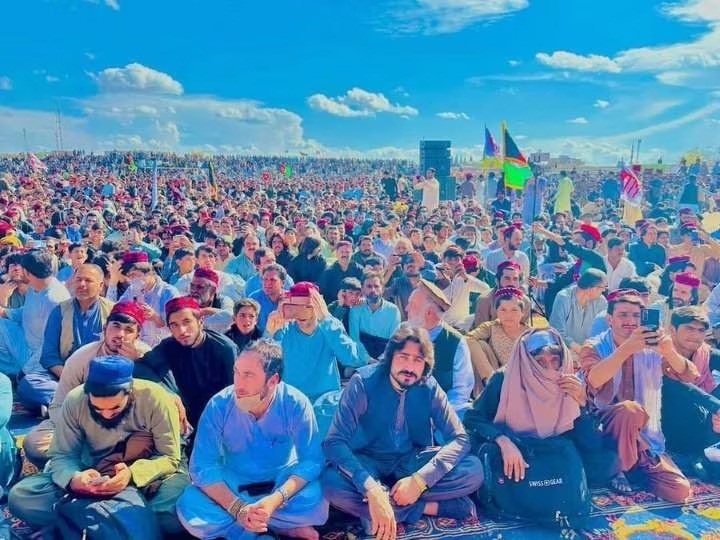
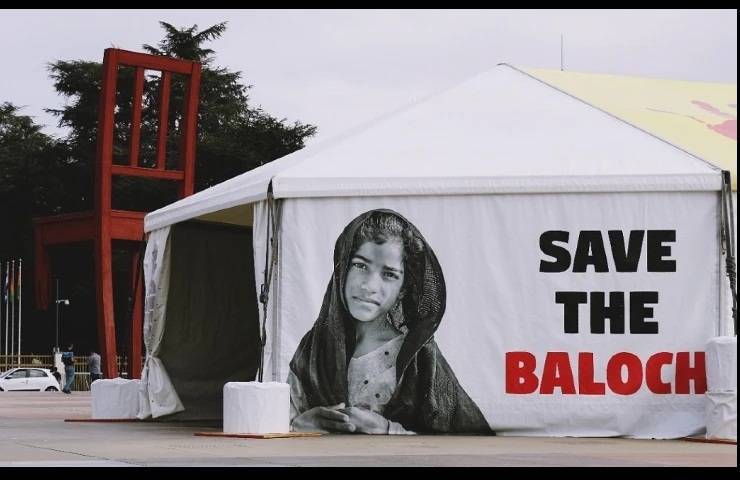
Balochistan rocked by Pashtun and Baloch protests.(photo:IN)

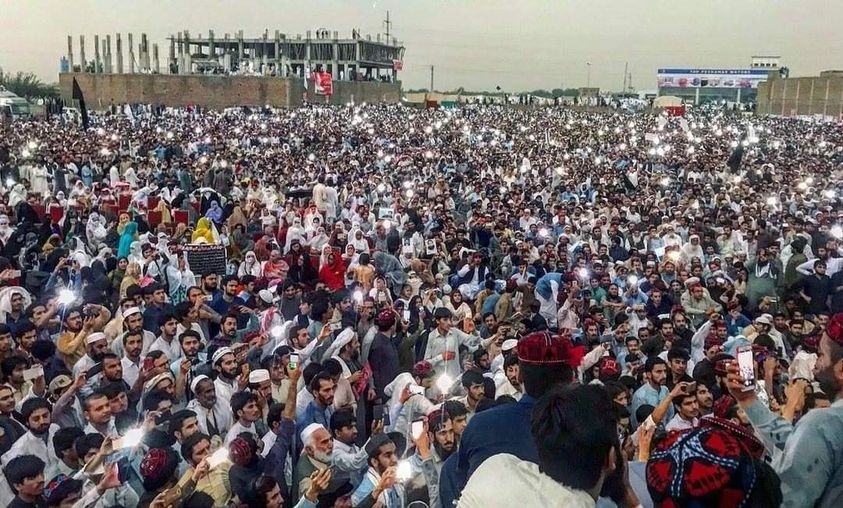
Once considered the closest allies of Punjabi Pakistan, the Pashtuns today face deportation and humiliation for no fault of their own. The army, which they used to serve with great pride, has become the enemy. Like the Baloch, victims of the army’s jackboot policy for decades, the Pashtuns are on the streets to protest and express their anger.

There is no place more telling about the Pashtun anger than the border town of Chaman, where for the past six months the local Pashtuns have been sitting on protest against Pakistan’s new policy of dividing the Pashtun community spread across the border. The Pashtuns now need special travel documents to move across the border which once was merely a walk across the border. Many of the Pashtuns shared the border in their property; families lived on both sides of the Durand Line without any hitch; trade across the border was normal. Now all that has changed permanently because the Pakistan Army and its state believe that Pashtuns can no longer be trusted.

The distrust between the army and the community became sharper during the recent elections in which the army carried out a systematic campaign to oust popular leaders like Mohsin Dawar through targeted attacks and manipulation of the poll process during the recent elections.

How the election results were declared showed the brazen manner in which the army manipulated the results. The winner was Jamiat Ulema-e-Islam-Fazl (JUIF) candidate Mufti Misbahuddin. He was declared winner four days after the elections, a telling sign of the army’s duplicitous games during the elections.

In the protests since then, two persons have been killed and six others have escaped assassination attempts by a thread. When the killings and targeted attacks on Pashtun leaders failed, the army posted pliable government staff as presiding officers so that the election process and results could be managed without fail. The next step was to declare primary schools, often two rooms, as combined polling stations for both male and female voters, a clever ploy to prevent women from voting. Even when these measures failed, the polling staff in some areas were taken to the nearest army and Frontier Corps barracks and they were forced to sign blank Form 45.

These blatant manipulations in the February elections have been like the last straws on the back of the already burdened camel, leaving Pashtuns angry and disheartened. Pakistan has added a few more million disgruntled citizens on the streets in protest.

Previous Story

Gaza Sees Largest Aid Convoy Since Conflict Began

Next Story

Balochistan Politician Protests Pakistan Coast Guard’s Exploitation

Previous Story

Gaza Sees Largest Aid Convoy Since Conflict Began

Next Story

Balochistan Politician Protests Pakistan Coast Guard’s Exploitation

Latest from Arab News

Pakistan Risks Overstretching Itself in Yemen War

Pakistan’s expanding military role in Saudi Arabia amid the Yemen conflict could strain its defence resources and fragile finances…reports Asian Lite News Desk Pakistan’s military involvement in the war in Yemen may prove unsustainable because of mounting financial pressures and competing security demands, according to a new report. Islamabad’s growing military presence in Saudi Arabia risks stretching its defence resources while exposing the country to greater strategic and economic challenges. An article by Andrew Wilson in One World Outlook describes Pakistan’s involvement as a case of “fiscal and strategic overreach”, arguing that the country lacks the financial flexibility to sustain an expanded military commitment. Pakistan’s external finances depend heavily on an International Monetary Fund (IMF) programme, financial support from Gulf countries and remittances from Pakistani workers in the region. The report argues that deeper military involvement in the conflict could place additional pressure on these sources of financial stability. It also warns that deploying troops and military equipment abroad could weaken Pakistan’s capacity to address security challenges along its eastern border and deal with two domestic insurgencies. The move could also draw Islamabad into a conflict it has sought to approach cautiously. A Reuters report in May, citing Pakistani security and government sources, said Islamabad had deployed around 8,000 troops, a squadron of approximately 16 aircraft, mostly JF-17 fighter jets, two drone squadrons and a Chinese HQ-9 air-defence battery to Saudi Arabia. According to those sources, Riyadh was financing the deployment, with Pakistani personnel operating the equipment. The sources also said a confidential agreement contemplated the possibility of deploying up to 80,000 troops. Islamabad has not confirmed those figures, although it has acknowledged its military presence in Saudi Arabia, including the deployment of fighter jets at King Abdulaziz Air Base from April. The One World Outlook article argues that Saudi financial support can cover allowances and operating expenses but cannot easily replace military equipment needed elsewhere or resolve the political and strategic challenges of participating in the Yemen conflict. Pakistan’s defence budget is another concern. For the 2026-27 financial year, the federal government allocated PKR 3 trillion, or approximately $10.8 billion, to defence services. The allocation represents an 18 per cent increase from the original PKR 2.55 trillion provision and amounts to around 2.1 per cent of projected gross domestic product (GDP). Defence spending accounts for approximately 16 per cent of the federal government’s PKR 18.8 trillion expenditure. Military pensions are budgeted separately at PKR 822 billion, while debt servicing costs stand at approximately PKR 8 trillion, more than two-and-a-half times the defence allocation. The report argues that these competing financial obligations leave little room for additional military expenditure without placing further pressure on public finances. Pakistan’s reliance on IMF assistance also limits its fiscal flexibility. The country must meet the conditions attached to the programme, including a primary budget surplus target of 2 per cent of GDP and continued restraint on development spending. According to the article, these requirements make it difficult for Islamabad to finance an additional military commitment without compromising other budgetary priorities. Pakistan’s economic indicators offer limited reassurance. Economic growth for the 2025-26 financial year is estimated at between 3.6 and 3.7 per cent, while inflation reached approximately 10.3 per cent in September following an energy price shock. Foreign exchange reserves stood at around $21.5 billion at the end of September. Although this marks an improvement from the low levels recorded in 2023, the report notes that the reserves cover only a few months of imports. Financial assistance from Gulf partners remains central to Pakistan’s external stability. The article says Islamabad holds approximately $8 billion in Saudi deposits at its central bank. In July, the State Bank of Pakistan said Riyadh had extended the maturity of $5 billion in deposits to December 2028, easing the country’s immediate external financing requirements. A further $3 billion deposit was also extended in the spring. However, the article argues that these arrangements provide temporary relief rather than long-term financial independence, particularly as regional conflict threatens the stability of the Gulf economies on which Pakistan relies. The report concludes that Pakistan faces a difficult balance between supporting Saudi Arabia militarily and preserving the financial and military resources needed to address its domestic and regional challenges.

Houthis Claim Missile Strike on Riyadh Airport

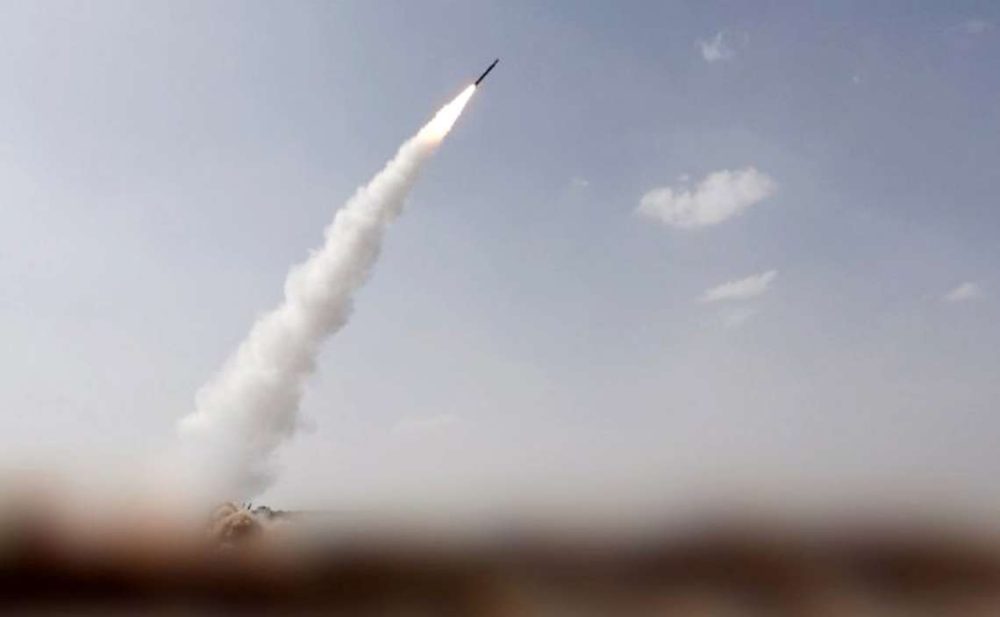
Yemen’s Houthi group claims a ballistic missile struck Riyadh’s King Khalid International Airport, with Saudi authorities yet to confirm the latest attack…reports Asian Lite News Desk Yemen’s Houthi group has claimed responsibility

Saudi Arabia to receive forces under Mecca Defence Alliance

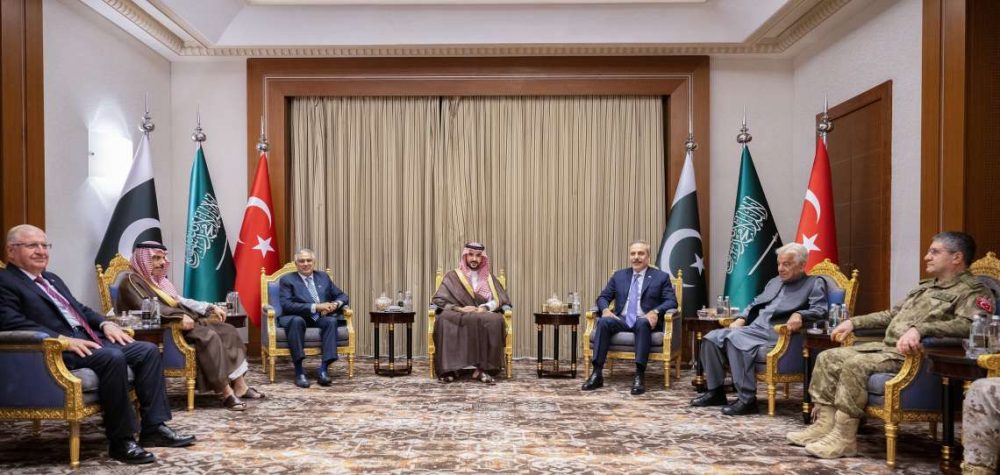
Saudi Arabia, Pakistan and Turkiye have activated collective-defence commitments, agreeing to deploy military capabilities as regional tensions and threats against the Kingdom persist…reports Asian Lite News Desk Saudi Arabia, Pakistan and Turkiye

India-UAE Trade Ties in Focus

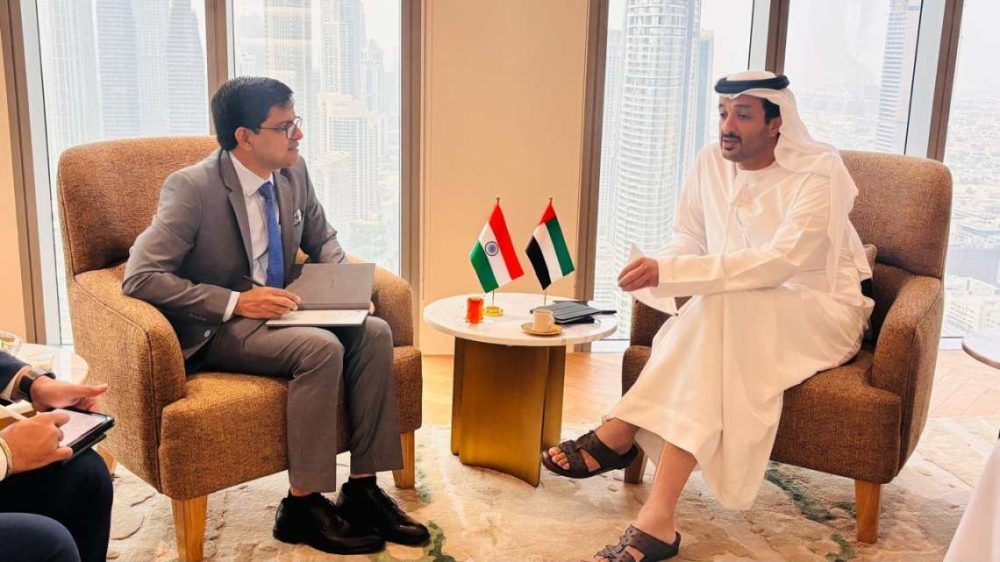
India and the UAE have discussed expanding bilateral trade, investment and business partnerships amid broader economic cooperation…reports Asian Lite News Desk India and the United Arab Emirates (UAE) discussed ways to further
Go toTop