March 7, 2024
3 mins read

UK’s Labour Delegation Visits India to Deepen Ties

Throughout the trip MPs Angela Rayner and Navendu Mishra built the foundations for stronger future economic relations.

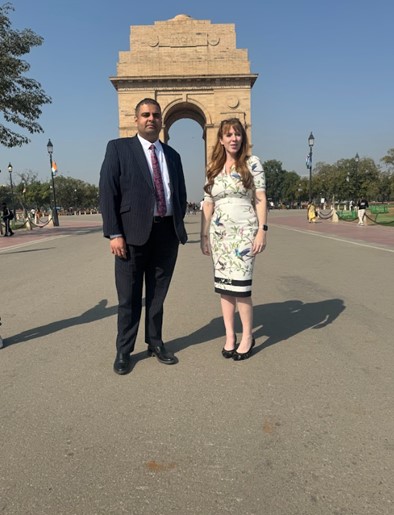
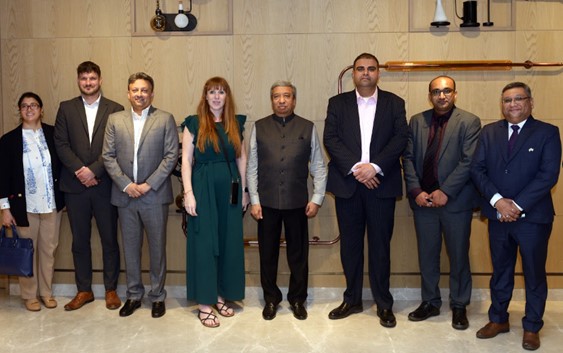
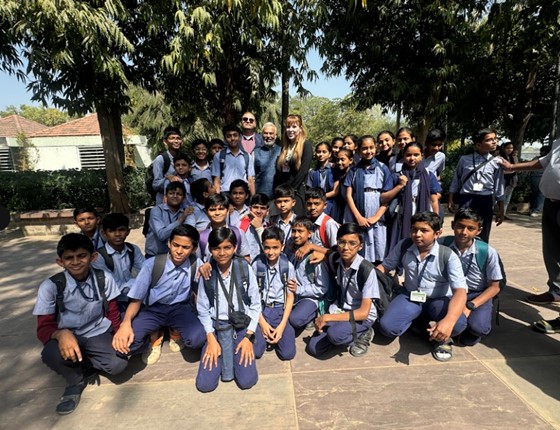
The Shadow Deputy Prime Minister Angela Rayner MP and Navendu Mishra MP visited India in February to strengthen relations between Britain’s official opposition party Labour, and Indian business, faith, community and political leaders. During the trip the Labour delegation – which also included Councillor Vimal Choksi of Tameside Council – visited New Delhi, Ahmedabad in Gujarat, and Agra in Uttar Pradesh. The visit was organised by the Labour Convention of Indian Organisations, which continues to strengthen Labour Party’s relationship with the British Indian diaspora.
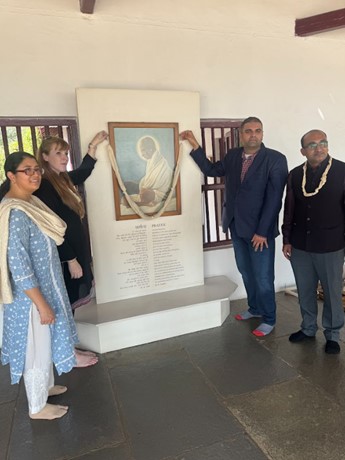
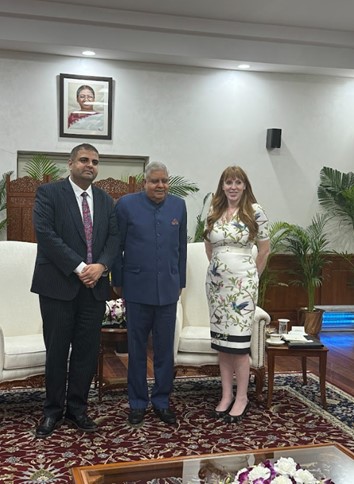
The trip provided several important opportunities for the Labour delegation to meet political leaders at a provincial and national level. Rayner and Mishra visited Upa-Rashtrapati Niwas where they met the Vice-President of India Jagdeep Dhankhar. During the Raisina Dialogue, they met Minister Jaishankar, the Minister of External Affairs for India. At this event they discussed the importance of meaningful engagement with India and the broader IndoPacific region with other regional partners such as Matt Keogh, the Australian Labor MP and Minister for Veterans’ Affairs. A visit to the Sabarmati Ashram in Ahmedabad served as a reminder of Mahatma Gandhi’s life mission and those of others who have fought a similar struggle. In Delhi the MPs also met leaders from the opposition party, the Indian National Congress.
Throughout the trip Rayner and Mishra built the foundations for stronger future economic relations. At a roundtable with business leaders from the Federation of Indian Chambers of Commerce and Industry the Labour delegation engaged with business leaders from across India and strengthened economic ties which will be crucial in delivering secure, well-paying jobs in both nations. They were also hosted by the UK India Business Council to discuss the UK-India economic partnership in greater detail and expand on the huge opportunity which India presents for British companies. In Gujarat, they also met with Zydus Life Sciences to learn about pharmaceutical production in India, and recent Indian pharmaceutical investments in Britain. In all these meetings, the Labour delegation built on Labour Leader Sir Keir Starmer’s commitment to put trade relations with India at the heart of future economic growth.
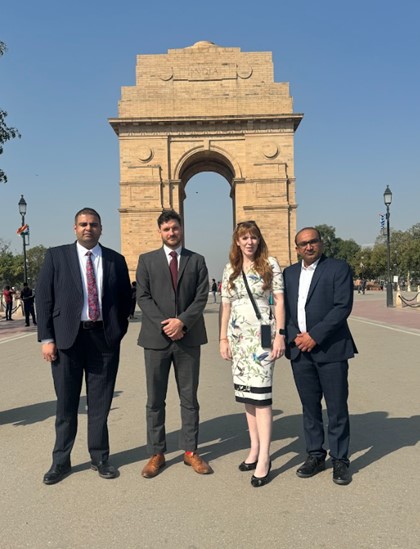
Women’s empowerment was another important goal of the trip. In her speech at the Raisina Dialogue conference, Angela Rayner called for future economic collaboration between Britain and India to follow the lead of recent Indian policies, and prioritise women’s economic empowerment going forwards. The delegation also met Smriti Irani, the Minister of State for Women and Children and Minority Affairs.
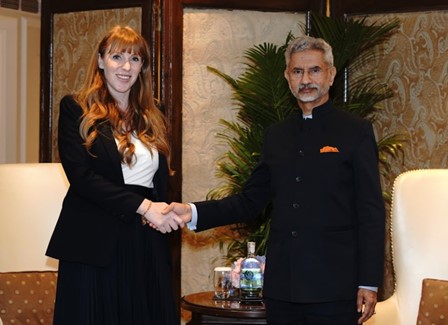
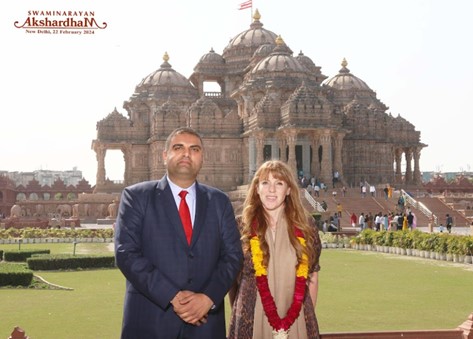
The Labour delegation also visited a large renewable energy initiative, the Dholera solar park, a five gigawatt solar power project being developed in two phases in Gujarat. This is one part of a larger expansion in the output of green energy throughout India, boosting both sustainability and economic output. This visit was insightful for leaders of Labour, whose Green Prosperity Plan will achieve a similar transformation in Britain. The Labour delegation also visited the Akshardham Temple in New Delhi.
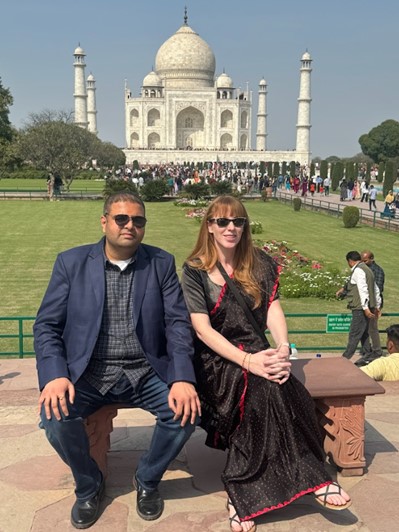
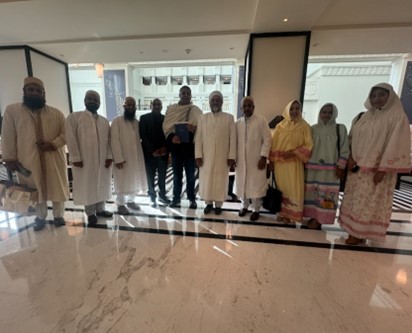
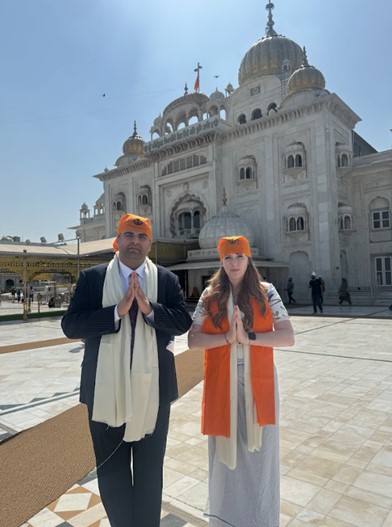
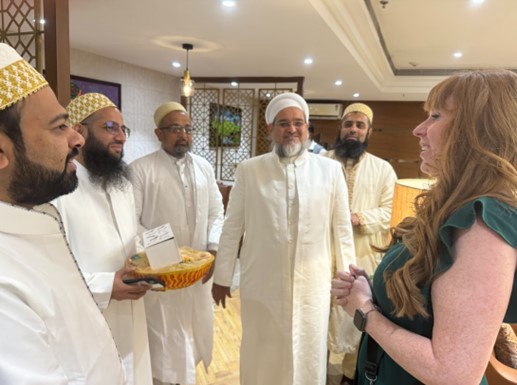
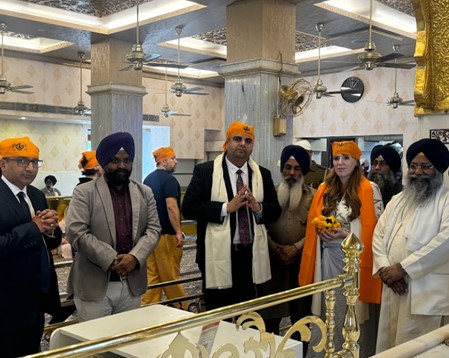
A major place of worship, the Temple is dedicated to devotion, learning and harmony. A similar visit took them to the iconic Mughal-era Mausoleum in Agra, the Taj Mahal, which houses a significant Mosque. The delegation also visited the Gurudwara Bangla Sahib, one of the most prominent Sikh temples of worship in New Delhi. The Labour MPs also met with the Bohra community in Ahmedabad as part of engagement with faith communities.
These delegations will help the Labour leadership to understand the global connections and faith commitments felt by many among the almost 1.8 million people of Indian heritage in Britain, and will be vital as Labour seeks to better represent all of the UK’s diverse communities. This is especially given Angela Rayner MP’s responsibility for faith and community, which form important parts of her policy brief of levelling up, housing and communities.
Newsdesk

Newsdesk

Aravind Rajeev is Deputy News Editor at Asian Lite, mostly covering the Middle East and GCC. He has over eight years of experience as a journalist, with a background in ground-level reporting, crime reporting, as well as international and regional news.

Previous Story

Leaders Targeted: Missile Scare in Odesa

Next Story

Women Leaders Transforming Political Landscapes

Previous Story

Leaders Targeted: Missile Scare in Odesa

Next Story

Women Leaders Transforming Political Landscapes

Latest from -Top News

Pakistan Risks Overstretching Itself in Yemen War

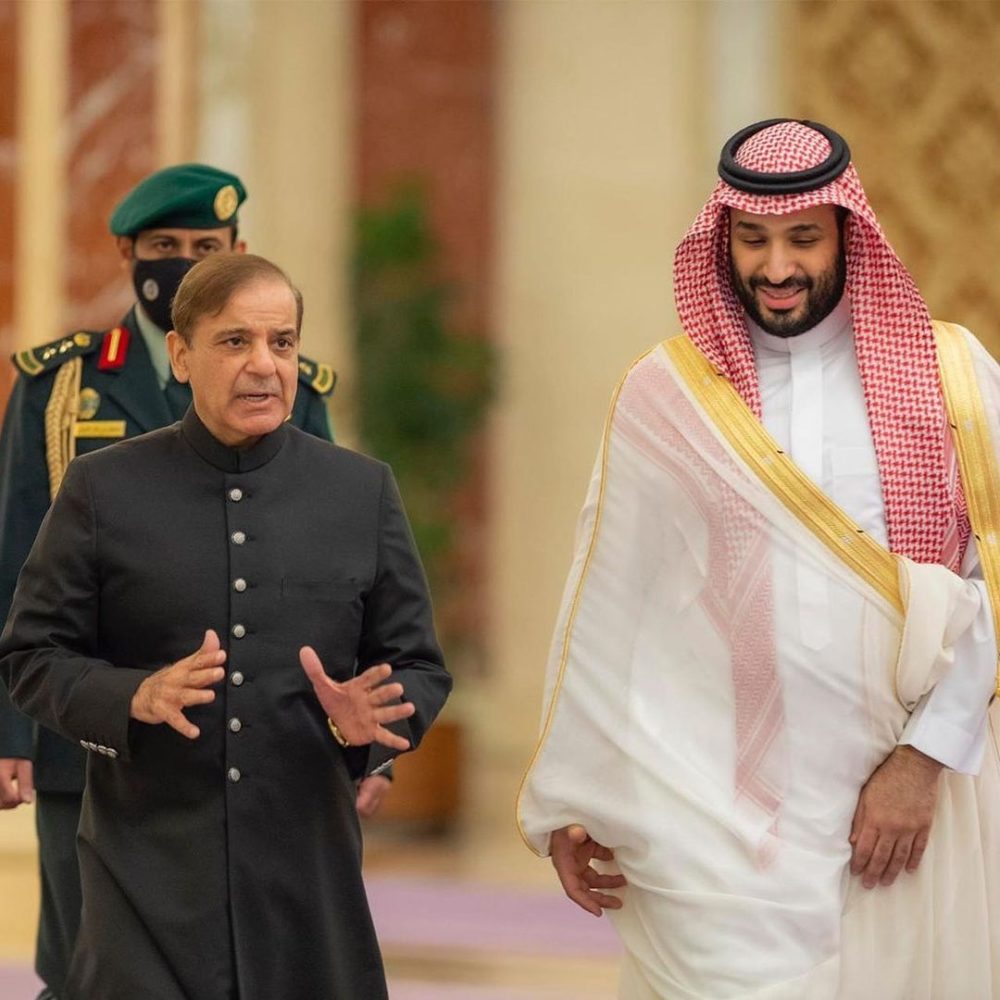
Pakistan’s expanding military role in Saudi Arabia amid the Yemen conflict could strain its defence resources and fragile finances…reports Asian Lite News Desk Pakistan’s military involvement in the war in Yemen may prove unsustainable because of mounting financial pressures and competing security demands, according to a new report. Islamabad’s growing military presence in Saudi Arabia risks stretching its defence resources while exposing the country to greater strategic and economic challenges. An article by Andrew Wilson in One World Outlook describes Pakistan’s involvement as a case of “fiscal and strategic overreach”, arguing that the country lacks the financial flexibility to sustain an expanded military commitment. Pakistan’s external finances depend heavily on an International Monetary Fund (IMF) programme, financial support from Gulf countries and remittances from Pakistani workers in the region. The report argues that deeper military involvement in the conflict could place additional pressure on these sources of financial stability. It also warns that deploying troops and military equipment abroad could weaken Pakistan’s capacity to address security challenges along its eastern border and deal with two domestic insurgencies. The move could also draw Islamabad into a conflict it has sought to approach cautiously. A Reuters report in May, citing Pakistani security and government sources, said Islamabad had deployed around 8,000 troops, a squadron of approximately 16 aircraft, mostly JF-17 fighter jets, two drone squadrons and a Chinese HQ-9 air-defence battery to Saudi Arabia. According to those sources, Riyadh was financing the deployment, with Pakistani personnel operating the equipment. The sources also said a confidential agreement contemplated the possibility of deploying up to 80,000 troops. Islamabad has not confirmed those figures, although it has acknowledged its military presence in Saudi Arabia, including the deployment of fighter jets at King Abdulaziz Air Base from April. The One World Outlook article argues that Saudi financial support can cover allowances and operating expenses but cannot easily replace military equipment needed elsewhere or resolve the political and strategic challenges of participating in the Yemen conflict. Pakistan’s defence budget is another concern. For the 2026-27 financial year, the federal government allocated PKR 3 trillion, or approximately $10.8 billion, to defence services. The allocation represents an 18 per cent increase from the original PKR 2.55 trillion provision and amounts to around 2.1 per cent of projected gross domestic product (GDP). Defence spending accounts for approximately 16 per cent of the federal government’s PKR 18.8 trillion expenditure. Military pensions are budgeted separately at PKR 822 billion, while debt servicing costs stand at approximately PKR 8 trillion, more than two-and-a-half times the defence allocation. The report argues that these competing financial obligations leave little room for additional military expenditure without placing further pressure on public finances. Pakistan’s reliance on IMF assistance also limits its fiscal flexibility. The country must meet the conditions attached to the programme, including a primary budget surplus target of 2 per cent of GDP and continued restraint on development spending. According to the article, these requirements make it difficult for Islamabad to finance an additional military commitment without compromising other budgetary priorities. Pakistan’s economic indicators offer limited reassurance. Economic growth for the 2025-26 financial year is estimated at between 3.6 and 3.7 per cent, while inflation reached approximately 10.3 per cent in September following an energy price shock. Foreign exchange reserves stood at around $21.5 billion at the end of September. Although this marks an improvement from the low levels recorded in 2023, the report notes that the reserves cover only a few months of imports. Financial assistance from Gulf partners remains central to Pakistan’s external stability. The article says Islamabad holds approximately $8 billion in Saudi deposits at its central bank. In July, the State Bank of Pakistan said Riyadh had extended the maturity of $5 billion in deposits to December 2028, easing the country’s immediate external financing requirements. A further $3 billion deposit was also extended in the spring. However, the article argues that these arrangements provide temporary relief rather than long-term financial independence, particularly as regional conflict threatens the stability of the Gulf economies on which Pakistan relies. The report concludes that Pakistan faces a difficult balance between supporting Saudi Arabia militarily and preserving the financial and military resources needed to address its domestic and regional challenges.
Go toTop

Don't Miss

China’s new maritime law may escalate tensions in Indo-Pacific

The agency can also block overseas ships from intruding into

PM for everyone’s effort for inclusive development

On the 75th anniversary of India’s Independence, Prime Minister Narendra