October 7, 2024
4 mins read

Bypolls on 10 UP assembly seats big test for INDIA bloc

Samajwadi Party and Congressm have not been able to firm-up a seat-sharing pact for the bypolls yet…reports Asian Lite News

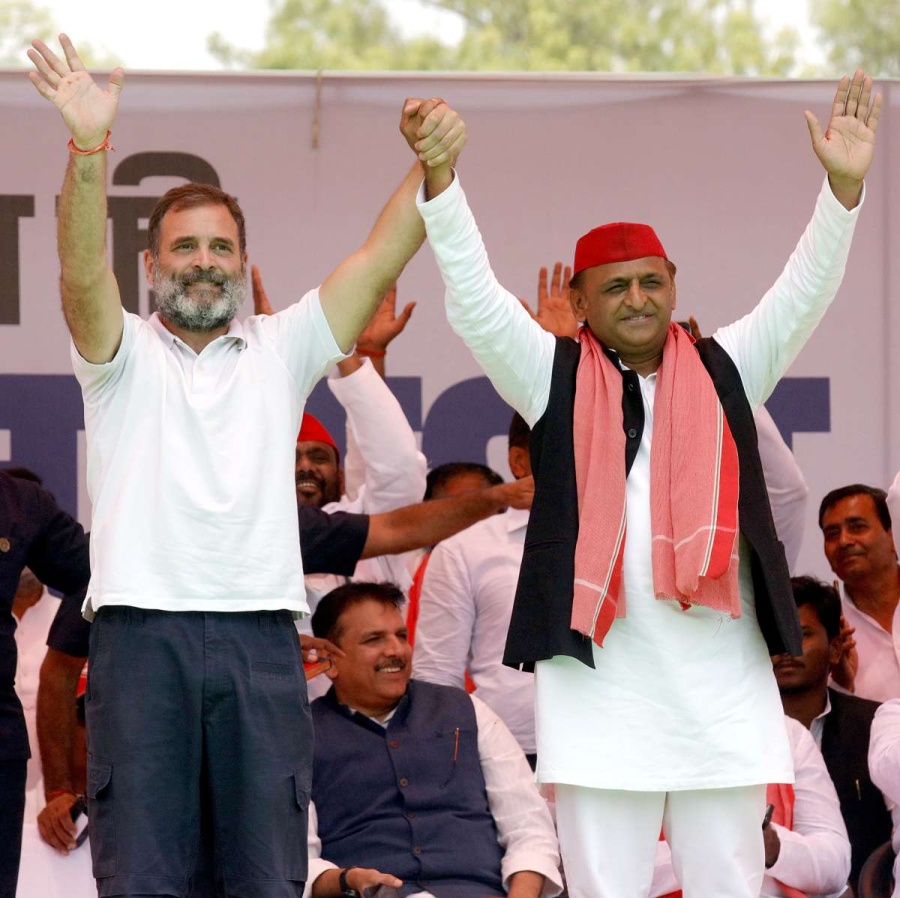
Bypolls to 10 assembly seats in Uttar Pradesh will be a litmus test for the INDIA bloc’s unity after the group’s success in the recent Lok Sabha polls when they won more than 40 seats, significantly contributing to the BJP’s failure to win a simple majority in parliament.

However, the two INDIA bloc allies in Uttar Pradesh — Samajwadi Party and Congress — have not been able to firm-up a seat-sharing pact for the bypolls even though the Congress has staked claims to contest five of the 10 seats, a proposition the SP may not agree with.

Leaders from both the parties say their aim is to defeat the BJP, and they are confident they would contest the bypolls together.

Uttar Pradesh Congress chief Ajay Rai told PTI, “The party is holding ‘Samvidhan Bachao Sammelan’ (save Constitution conferences) on all 10 assembly seats that are going to polls. Two such conferences have already been held. We have appointed incharges and observers on all the 10 seats and ground work is on.”

The assembly seats where bypolls are due are: Katehari (Ambedkar Nagar), Karhal (Mainpuri), Milkipur (Ayodhya), Meerapur (Muzaffarnagar), Ghaziabad, Majhawan (Mirzapur), Sishamau (Kanpur city), Khair (Aligarh), Phulpur (Prayagraj) and Kundarki (Moradabad).

Nine of these seats fell vacant after their MLAs were elected as MPs in the Lok Sabha polls, while bypolls are being held on the Sishamau seat due to the disqualification of SP MLA Irfan Solanki, who was convicted in a criminal case.

Asked if he hopes the alliance will continue in these bypolls, Rai said, “Yes. We will contest in alliance. The aim of both the Congress and the SP is to defeat the BJP.”

“We have given a proposal to contest five assembly seats — Majhwa (Mirzapur), Phulpur (Allahabad), Ghaziabad, Khair (Aligarh) and Meerapur (Muzaffarnagar) to our leadership. These seats are those, where BJP candidates had won,” Rai said.

In the 2022 assembly polls, Sisamau, Katehari, Karhal, Milkipur and Kundarki seats were won by the SP; while Phulpur, Ghaziabad, Majhawan and Kahir elected BJP MLAs. The Meerapur seat was held by the RLD.

When asked whether his party had any talks with the SP in this regard, Rai said, “A meeting was held in which it was discussed. We have told the leadership and our UP incharge Avinash Pande about it.”

Asked specifically whether he sees the alliance continuing in the bypolls, Rai said, “Yes, 100 per cent. Ummid nahi, pucca hai (it’s just a hope, but a certainty).”

In the Lok Sabha polls held in April-May, INDIA bloc partners Samajwadi Party won 37 seats the while Congress got six. The BJP had won 33 seats (down from 62 in 2019) while its ally Rashtriya Lok Dal (RLD) and Apna Dal (Sonelal) got two and one seat respectively.

The Azad Samaj Party had won one seat.

When asked about the bypolls, SP chief spokesperson and National Secretary Rajendra Chowdhury said, “We are fully prepared for the polls. The INDIA bloc will win all the 10 seats.”

On seat-sharing and the Congress’ demand of five seats, Chowdhury said, “Baith ke tay hoga’ (We will sit together and decide). He did not elaborate further, just saying that the party leadership will decide.

This time BJP will not be able to do anything unwanted at polling booths, he said. “We are doing our preparations upto the booth level and emphasising on making our party strong at booth level,” Chowdhury said.

The dates of by-elections have not been announced yet.

While Karhal seat fell vacant due to SP chief Akhilesh Yadav getting elected from Kannauj as MP, Katehari has been vacated by the party’s Lalji Verma after he was elected as MP from the Ambedkar Nagar Lok Sabha seat.

SP leader Awadhesh Prasad’s election to Lok Sabha from Ayodhya led to his resignation from Milkipur seat, while SP leader Zia-ur Rahman Barq’s Kundarki assembly seat in Moradabad has fallen vacant following his election to the Sambhal Lok Sabha seat.

Chandan Chauhan of the Rashtriya Lok Dal resigned from his Meerapur assembly seat of Muzaffarnagar following his election to Lok Sabha from Bijnor. The Ghaziabad seat fell vacant after the BJP’s Atul Garg was elected to the Ghaziabad LS seat.

The BJP’s Vinod Kumar Bind resigned from his Majhawan assembly seat of Mirzapur following his election to Lok Sabha from Bhadohi, while party leader Anoop Singh alias Anoop Pradhan Balmiki resigned from his Khair assembly seat of Aligarh following his election from Hathras Lok Sabha seat.

The BJP’s Praveen Patel resigned from Phulpur assembly seat of Prayagraj following his election to Lok Sabha from the Lok Sabha seat with the same name.
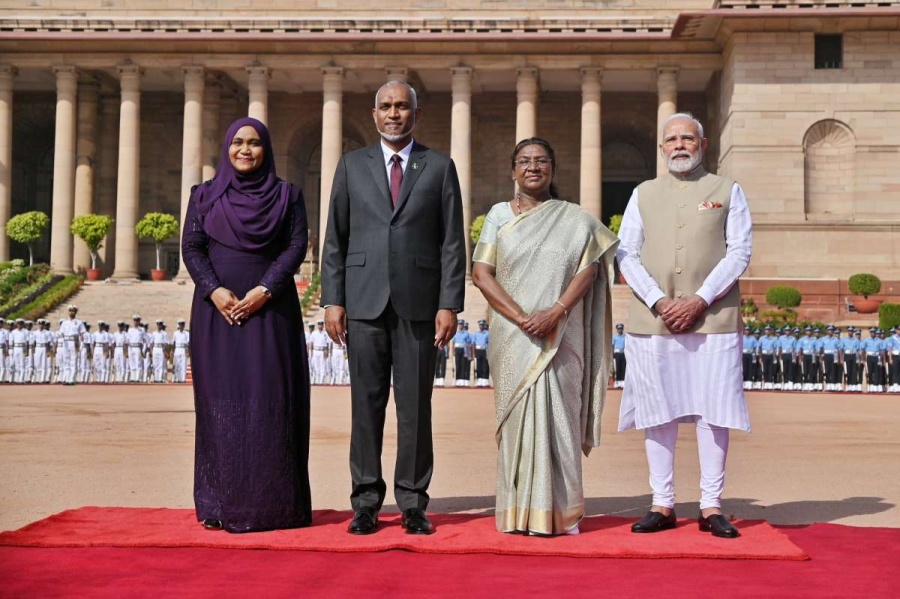
ALSO READ: Maldives President Muizzu to Begin India Visit

Previous Story

Muizzu to meet Modi

Next Story

‘Thalapathy 69’ kicks off with grand Muhurat Puja

Previous Story

Muizzu to meet Modi

Next Story

‘Thalapathy 69’ kicks off with grand Muhurat Puja

Latest from Asia News

Nepal Floods Cause $1.66 Billion In Damage, Says World Bank

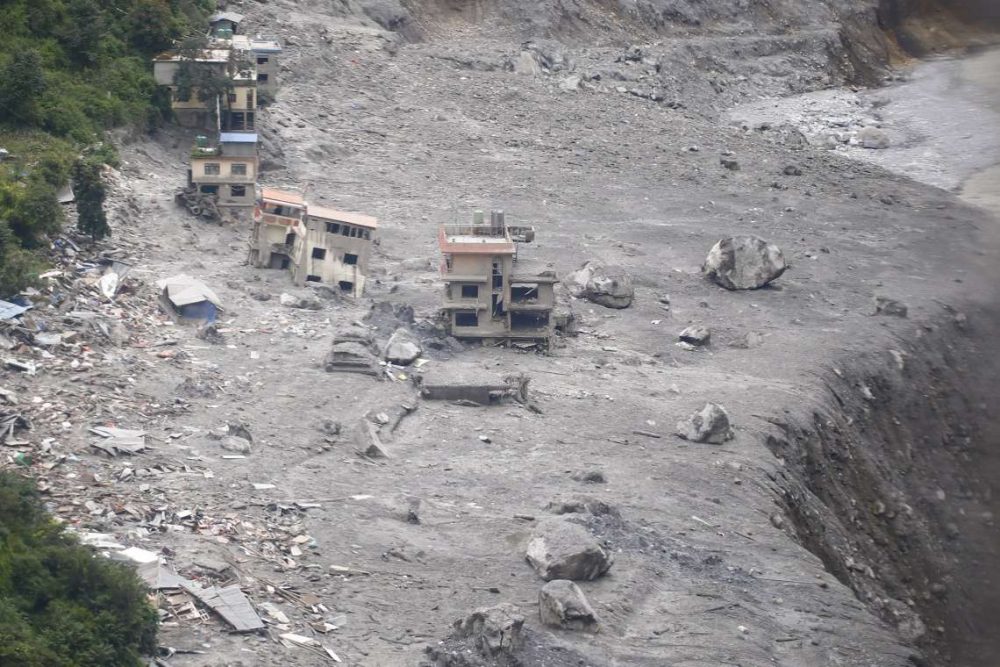
Nepal’s August 2026 floods caused an estimated US$1.66 billion in direct physical damage, with infrastructure accounting for 83 per cent of the total…reports Asian Lite News Desk Nepal’s devastating floods in August 2026 caused an estimated US$1.66 billion in direct physical damage, with infrastructure accounting for 83 per cent of the total, according to a World Bank report. The estimate, included in the World Bank’s Nepal Development Update unveiled this week, is close to the Nepal government’s preliminary Rapid Damage and Needs Assessment (RDNA), which put physical damage at US$1.81 billion. The government’s assessment also estimated losses beyond physical assets at US$883.32 million, taking the total economic effects of the disaster to approximately US$2.7 billion. The World Bank’s Global Rapid Post-Disaster Damage Estimation (GRADE) found that infrastructure suffered the greatest damage, estimated at US$1.38 billion, or 83 per cent of the total. Residential buildings accounted for US$185 million, or 11 per cent, while non-residential buildings sustained damage worth US$101 million, or 6 per cent. The floods along the Bhotekoshi and Trishuli rivers caused extensive damage to hydropower projects, solar energy facilities, electricity transmission infrastructure and transport networks. The energy sector, particularly hydropower, was among the worst affected. The August 2026 floods affected 12 hydropower projects and one solar project, involving 281.1 MW of operational capacity and 395.02 MW of capacity under construction. Damage to transmission lines and substations also disrupted the transmission of 149.6 MW of electricity to the national grid. The total affected capacity reached approximately 430.7 MW, equivalent to 10.6 per cent of Nepal’s installed hydropower and solar capacity at the end of fiscal year 2025-26, which concluded in mid-July. The disaster also severely damaged transport infrastructure along the 82-km Rasuwa trade corridor, which connects Kathmandu with the Rasuwagadhi border point with China. More than 55 km of the corridor was damaged, including 40 km that was completely destroyed. The floods also damaged 37 motorable bridges and 68 suspension bridges. The disaster resulted in significant human losses along the affected corridor and beyond. According to Nepal’s National Disaster Risk Reduction and Management Authority, 1,455 people had been confirmed dead, while 5,285 remained missing following the disaster. The World Bank report found that the physical damage was concentrated in three districts in central Nepal: Rasuwa, Nuwakot and Dhading. Rasuwa was the worst-affected district, accounting for US$1.07 billion, or 64 per cent, of the total direct damage. Nuwakot recorded an estimated US$551 million in damage, while Dhading suffered approximately US$39 million. “The findings highlight the concentration of physical damage in a small number of districts and the disproportionate impact on infrastructure, underscoring the scale of the reconstruction challenge facing the affected areas,” the World Bank said. The global development financier said the floods had demonstrated the scale and complexity of disaster risks in Nepal’s Himalayan environment. The event also showed how a single extreme weather event could trigger cascading impacts across sectors and geographical areas. The report said recovery efforts should extend beyond restoring infrastructure to its pre-disaster condition. While the principle of “Build Back Better” remained relevant, the World Bank stressed that rebuilding infrastructure to higher engineering standards in the same locations might not always be sufficient. “In some cases, simply rebuilding the same infrastructure in the same location to a higher engineering standard may not be sufficient. Nepal may need to build differently — based on a better understanding of risk, more careful decisions about location and design, greater redundancy in critical networks, stronger monitoring and early warning, and a more integrated approach to infrastructure development in the Himalayas,” the report said. The World Bank said Nepal’s recovery strategy should incorporate improved risk assessment, more informed infrastructure planning, stronger monitoring systems and better early warning mechanisms. The report emphasised that reconstruction should not only restore damaged assets but also reduce the impact of future disasters, particularly in the country’s vulnerable Himalayan regions.

Vaccine Delays Fuel Bangladesh Measles Outbreak

More than 32,000 suspected cases and over 250 deaths have been reported since mid-March, with children making up most of the fatalities….reports Asian Lite News Desk Bangladesh’s measles outbreak has intensified, with

Tsai: Stand With Taiwan, Strengthen The Indo-Pacific

The former president said stronger international partnerships would help Taiwan withstand mounting military, cyber and economic pressure while reinforcing democratic resilience….repots Asian Lite News Desk Former Taiwan President Tsai Ing-wen has called

Pakistan Knitwear Exporters Seek Relief As Costs Soar

Pakistan’s hosiery and knitwear exporters are seeking urgent government support as rising production, energy and freight costs threaten international competitiveness….reports Asian Lite News Desk Pakistan’s hosiery and knitwear export industry is facing
Go toTop

Don't Miss

WHO chief lauds India’s health coverage during G20 meet

Union Health Minister Mansukh Mandaviya on Friday said that more

India, UAE ink deals to boost defence ties

Several MoUs were signed during the forum between Emirates Defence