Kovind said that during the first four electoral cycles of the country, Lok Sabha and state assembly elections were “synchronised,” which was later broken in the year 1968..reports Asian Lite News
Former President Ram Nath Kovind said that simultaneous elections under the “One Nation, One Election” policy were a vision of India’s constitutional forefathers and that it was the norm during the early years of the republic.
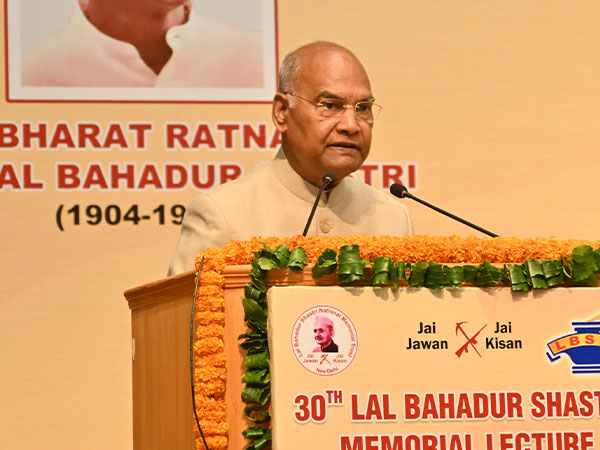
Speaking on “Simultaneous Elections” at the 30th Lal Bahadur Shastri Memorial Lecture on Saturday, Kovind said that during the first four electoral cycles of the country, Lok Sabha and state assembly elections were “synchronised,” which was later broken in the year 1968.
Kovind, who led the ‘One Nation, One Election’ high-level committee, said that it was ironic when we look back on the origin of the disruption of the electoral cycles, while some sections deem simultaneous elections as undemocratic as well as unconstitutional.
“”Simultaneous elections were the norm in the early years of the republic. Elections to the Lok Sabha and state assemblies were synchronised during the first four electoral cycles… This cycle of concurrent elections was broken in the year 1968 when several state assemblies were prematurely dissolved by the then Union Government exercising its power under Article 356…Some sections of society have termed simultaneous elections undemocratic and unconstitutional. It is hard to miss the irony when we look into the genesis of the disruption of electoral cycles… Simultaneous elections were the vision of our constitutional forefathers,” he said.
Kovind said that during the consultation process of the policy, 15 parties did not support the idea, out of which many were there who supported the concept of simultaneous elections in the past.
“During our consultation process, 47 political parties presented their views to the committee. 32 out of these 47 parties supported the idea of simultaneous elections; only 15 parties did not. Many among these 15 parties have supported the concept of simultaneous elections in the past,” he added.
On September 18, the Union Cabinet approved the government’s ‘One Nation, One Election’ proposal, which proposes simultaneous Lok Sabha and Assembly elections, with urban body and panchayat polls to be held within 100 days.
The recommendations were made in a report of a high panel committee led by former President Ram Nath Kovind. (ANI)
ALSO READ: Congress Set For Clean Sweep In Haryana