The message at the 75th anniversary bash was that NATO can do no wrong, including in Ukraine, writes Prof. Madhav Das Nalapat
Fighting the last war while enmeshed in a new conflict has been accepted as a disaster, and yet that is what NATO geared itself to doing once the USSR was replaced by the Russian Federation and a collection of newly independent states by the close of 1991. The US did play a role in the downfall of the USSR, first by increasing its own defence spending to a level impossible for the much weaker Soviet economy to match.
Next, by dangling the carrots of insubstantial concessions before the Soviet leadership in the 1980s so as to get concessions, such as to dismantle the security grid maintaining the hold of the CPSU over a country whose people had tired of the Party. Public disillusionment was kept aflame by sustained infowar from the US, in particular about the benefits of the free i.e., capitalist way of life and economy. Cramped accommodation, lack of essentials (leave alone luxuries) in shops and queues everywhere convinced those under 40 in particular that their only hope was the downfall of the CPSU.
Public disillusion had begun in 1956, once CPSU General Secretary Nikita Khrushchev gave a secret speech against Stalin that soon became known to the public through the then-effective infowar system of the US. The speech was printed and disseminated in multiple languages across the world, including in India, where the memoir written by Khrushchev, titled “Khrushchev Remembers” by publishing houses, was sold at a throwaway price in several languages. The book was an indictment of Joseph Stalin, but what Khrushchev did not realise was that it was also an indictment of the Soviet leadership led by him. His account showed that they were cowards and opportunists who fawned on Stalin and joined in his misdeeds despite fearing and privately disliking him.
Fed until then on a diet that extolled the CPSU leadership, the Soviet people began to distrust and despise their leaders from that time, a mood that remained unchanged during the long tenure of Leonid Brezhnev, who presided over a bureaucratic, inflexible governance mechanism that systematically drove the Soviet economy to the ground. At the same time, Brezhnev was terrified of the Atlantic Alliance, believing the numerous fanciful (often planted) reports that the “warmongers and anti-communists” in key NATO member states were itching to attack the USSR. In fact, fear of such a conflict was even greater on the other side than was the case with the Soviets.
As a consequence, apart from battering Serbia on behalf of Bosnia, and detaching Kosovo from that state without any interference from a compliant Boris Yeltsin (who outdid Gorbachev in selling out the interests of the country he was in charge of), NATO did not enter into a single conflict in Europe until the alliance decided to knacker the Russian Federation through using Ukraine as a proxy. By 2014, this policy came into public view with the Maidan coup that installed a Russophobic government in Kiev. This move led President Putin into taking steps to prevent the newly hostile state from endangering Russian security in the manner that Ukraine and Belarus could do, where the land borders of the Russian Federation were concerned.
The Russian Federation had zero appetite for entering into a war with NATO. However, the alliance took for itself the credit for “keeping a hostile Russia at bay” in order to justify the vast sums that were being expended on an alliance that ought to have been replaced by a construct in tune with 21st century reality. Wars in Asia and in North Africa showed NATO to be an alliance that could not overcome the numerous asymmetric threats that had sprung up. In every Conflict of Choice that NATO in whole or in part entered into since 1999, the alliance in effect often won the battle but inevitably went on to lose the war.
In the process, NATO action has devastated countries such as Iraq, Libya and Syria, while in Afghanistan the Taliban emerged the victor in 2021 in a conflict that dated back to 2001. In the methods used by the alliance partners, no regard was paid to civilian life or to infrastructure in the target countries, which is why it is odd to witness countries within NATO scolding Israel for employing precisely the tactics that have become standard for NATO in countries belonging to the Global South. In Syria, more than a half-million were killed by the civil war that was ignited in 2011 by efforts at regime change in Damascus.
In Iraq, the post-2003 toll of civilian dead in “collateral damage” was at least double the tally in Syria, almost all of it as a consequence of the mishandling of the post-Saddam situation by the Bush administration. Not to mention the tally of civilians dead in Afghanistan and Libya as a consequence of NATO intervention. Of course, sometimes it is the losers who write the history, and in the case of Cambodia for example, almost the entirety of the terrible toll on human lives in that country with its ancient civilization was attributed by western writers to the Khmer Rouge.
In the history of the 1970s Cambodian war as written by the US side, the blanketing of forests and villages with Agent Orange and bombs dropped by B-52 combat aircraft in Cambodia through Nixon’s decision to bomb that country and Laos to smithereens caused very little, if any, casualties. In their accounts, it was implied that practically all the deaths were because of Pol Pot.

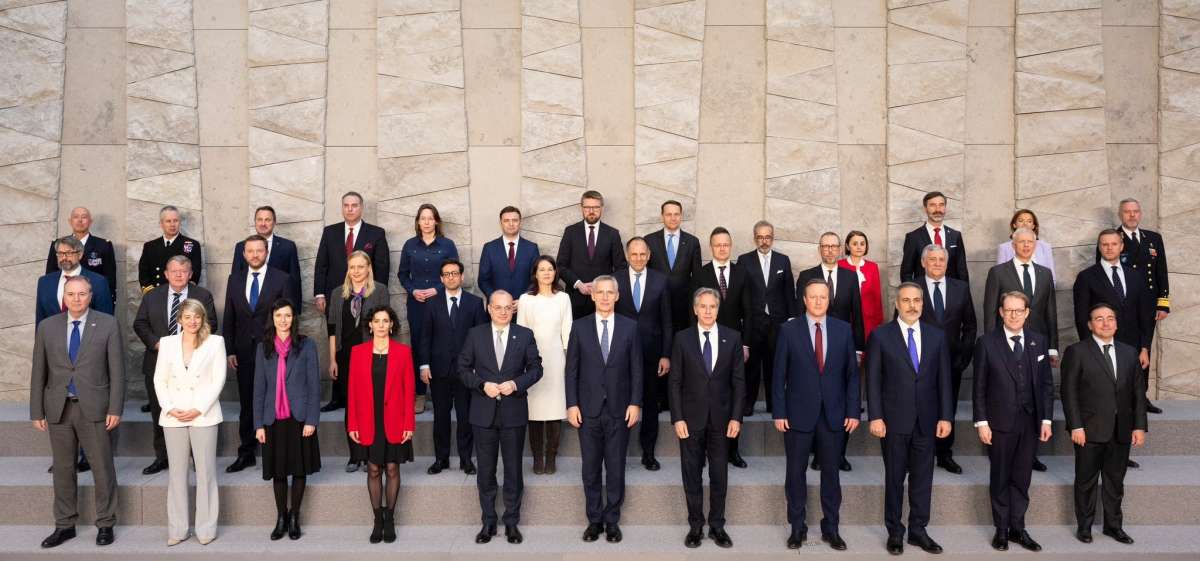
Given the record of civilian fatalities caused by wars conducted by member states of NATO in the Global South, it sounds somewhat hypocritical for some players in NATO to be accusing Israel of doing in Gaza what NATO has repeatedly done in its wars in Asia and in North Africa. The message at the 75th anniversary bash was that NATO can do no wrong, including in Ukraine. President Zelenskyy plunged his country into hell because he believed NATO’s promise that it was going to ensure that Kiev was assisted sufficiently to push Russian forces back even from lands populated by citizens who loathed the Kiev regime and who considered themselves Russian.
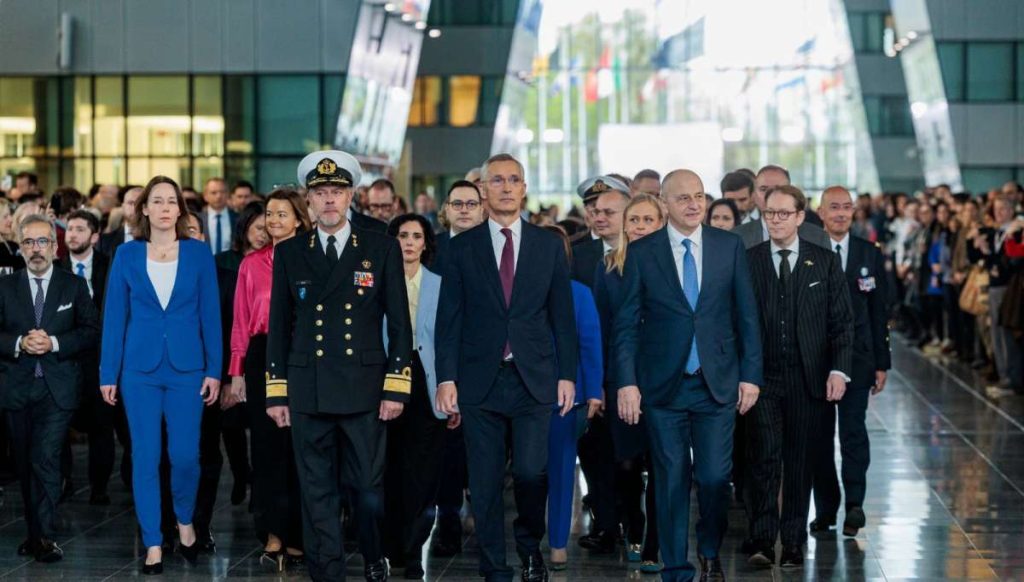
Watching visuals of the 75th anniversary celebrations of an alliance that has never won an actual war except against Serbia, it is difficult to believe that such a level of self-delusion exists within the alliance. NATO Secretary-General Jens Stoltenberg claimed that with the help of the alliance, Ukraine “had won back half of the land it had lost since 2014”. In reality, the country has witnessed half of its entire territory getting converted into something approaching a wasteland.
Whether serving or retired, those in uniform serving in NATO appear to be locked into a time warp, where they are still fighting a Cold War that died together with the USSR in the closing days of 1991. Given the number of “experts” who believe—and act—as though it were Russia that was Enemy Number One rather than China, the fear amongst those in the Global South opposed to CCP expansionism is whether NATO with its Eurocentric, Russophobic outlook will help or be indifferent to their efforts at ensuring that such expansionism gets countered through a global concert of nations.
ALSO READ: Foreign ministers mark 75 years of NATO