June 7, 2024
3 mins read

Eid Al-Adha on June 16

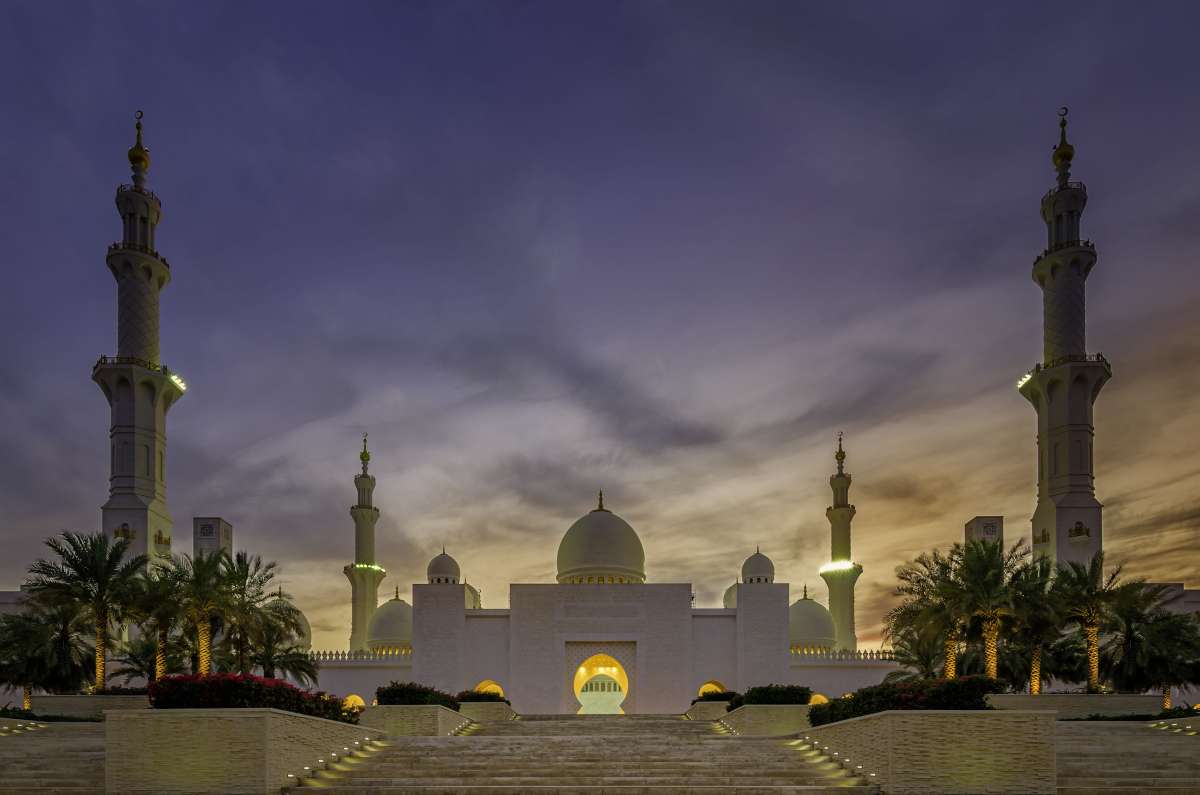
The Saudi Supreme Court confirmed the crescent moon sighting on June 6th, marking June 7th as beginning of Dhul Hijjah and Eid Al-Adha on June 16th….reports Asian Lite News

The Saudi Supreme Court has confirmed the sighting of the crescent moon signifying the beginning of the Islamic month of Dhul Hijjah.

This sighting, which took place on Thursday, June 6th, marks the end of Dhul Qa’adah, making tomorrow Friday, June 7th, the first day of Dhul Hijjah.

Accordingly, the first day of Eid Al-Adha will fall on Sunday, June 16th, which corresponds to the 10th day of Dhul Hijjah.

Eid-ul-Adha is an auspicious festival for Muslims who celebrate it across the world on the tenth of Dhu al-Hijjah (the twelfth month of the Islamic lunar calendar).

This festival is also known as Bakra Eid, Bakrid, Eid Qurban, Bakhreid, Eid al-Adha, Qurban Bayarami or the Feast of Sacrifice. It is the second major Islamic festival celebrated post Eid-ul-Fitr.

While most Gulf countries concur with Saudi Arabia’s declaration, Oman has announced a differing stance. Oman stated that the crescent moon was not sighted within the country on Thursday, thus determining that Eid Al Adha will be celebrated on Monday, June 17.

Meanwhile, the Jeddah Municipality has announced its readiness for the Hajj season and Eid Al-Adha for 1445 AH, aiming to ensure the satisfaction of pilgrims, residents, and visitors during the holiday period.

 The municipality noted that its plan for the Hajj season takes into account areas affected by the increased numbers of pilgrims and visitors. The plan also aims to intensify monitoring activities at the Hajj and Umrah lounges at King Abdulaziz International Airport and the Pilgrims’ City.

 Additionally, the plan includes monitoring restaurants, malls, food and supply establishments, hotels, furnished apartments, and entertainment facilities in the coastal city.

Wi-Fi service for pilgrims

The Ministry of Islamic Affairs, Dawah, and Guidance, represented by its branch in the Makkah Region, has provided free Wi-Fi service for pilgrims at the Al-Tanaim and Al-Hal mosques in the Al-Ji’rranah area, as well as the Qarn Al-Manazil and Wadi Muharram miqats.

This service is part of the Ministry’s approved technical services for the 1445 AH Hajj plan, aiming to enhance the pilgrim experience via access to modern technology and digital platforms.

According to the Saudi Press Agency (SPA), the high-speed Wi-Fi allows pilgrims to browse the Ministry’s electronic services and download them directly to their smart devices. Notably, the Islamic Library’s vast collection of over 3,000 legal and scientific materials in more than 45 languages is accessible through this Wi-Fi.

This free service enables pilgrims to find answers to their Hajj-related questions and view informative and instructional videos produced by the Ministry.

Dubai disburses salaries ealry

 H.H. Sheikh Hamdan bin Mohammed bin Rashid Al Maktoum, Crown Prince of Dubai and Chairman of Dubai Executive Council, has directed the Department of Finance in Dubai to disburse the June salaries to Dubai Government employees on 13th June, ahead of Eid Al Adha.

The decision reflects the Crown Prince’s commitment to helping employees manage their family needs and ensuring their happiness and wellbeing.

Xxx

Eid prayer

The Eid al-Adha prayer is performed any time after the sun completely rises up to just before the entering of Zuhr time, on the tenth of Dhu al-Hijja. In the event of a force majeure (e.g. natural disaster), the prayer may be delayed to the 11th of Dhu al-Hijja and then to the 12th of Dhu al-Hijja.

ALSO READ: UAE leaders congratulate Modi
Previous Story

Netanyahu, Modi vow to deepen ties

Next Story

Priyanka thanks SP for INDIA bloc’s historic performance in UP

Previous Story

Netanyahu, Modi vow to deepen ties

Next Story

Priyanka thanks SP for INDIA bloc’s historic performance in UP

Latest from -Top News

Pakistan Risks Overstretching Itself in Yemen War

Pakistan’s expanding military role in Saudi Arabia amid the Yemen conflict could strain its defence resources and fragile finances…reports Asian Lite News Desk Pakistan’s military involvement in the war in Yemen may prove unsustainable because of mounting financial pressures and competing security demands, according to a new report. Islamabad’s growing military presence in Saudi Arabia risks stretching its defence resources while exposing the country to greater strategic and economic challenges. An article by Andrew Wilson in One World Outlook describes Pakistan’s involvement as a case of “fiscal and strategic overreach”, arguing that the country lacks the financial flexibility to sustain an expanded military commitment. Pakistan’s external finances depend heavily on an International Monetary Fund (IMF) programme, financial support from Gulf countries and remittances from Pakistani workers in the region. The report argues that deeper military involvement in the conflict could place additional pressure on these sources of financial stability. It also warns that deploying troops and military equipment abroad could weaken Pakistan’s capacity to address security challenges along its eastern border and deal with two domestic insurgencies. The move could also draw Islamabad into a conflict it has sought to approach cautiously. A Reuters report in May, citing Pakistani security and government sources, said Islamabad had deployed around 8,000 troops, a squadron of approximately 16 aircraft, mostly JF-17 fighter jets, two drone squadrons and a Chinese HQ-9 air-defence battery to Saudi Arabia. According to those sources, Riyadh was financing the deployment, with Pakistani personnel operating the equipment. The sources also said a confidential agreement contemplated the possibility of deploying up to 80,000 troops. Islamabad has not confirmed those figures, although it has acknowledged its military presence in Saudi Arabia, including the deployment of fighter jets at King Abdulaziz Air Base from April. The One World Outlook article argues that Saudi financial support can cover allowances and operating expenses but cannot easily replace military equipment needed elsewhere or resolve the political and strategic challenges of participating in the Yemen conflict. Pakistan’s defence budget is another concern. For the 2026-27 financial year, the federal government allocated PKR 3 trillion, or approximately $10.8 billion, to defence services. The allocation represents an 18 per cent increase from the original PKR 2.55 trillion provision and amounts to around 2.1 per cent of projected gross domestic product (GDP). Defence spending accounts for approximately 16 per cent of the federal government’s PKR 18.8 trillion expenditure. Military pensions are budgeted separately at PKR 822 billion, while debt servicing costs stand at approximately PKR 8 trillion, more than two-and-a-half times the defence allocation. The report argues that these competing financial obligations leave little room for additional military expenditure without placing further pressure on public finances. Pakistan’s reliance on IMF assistance also limits its fiscal flexibility. The country must meet the conditions attached to the programme, including a primary budget surplus target of 2 per cent of GDP and continued restraint on development spending. According to the article, these requirements make it difficult for Islamabad to finance an additional military commitment without compromising other budgetary priorities. Pakistan’s economic indicators offer limited reassurance. Economic growth for the 2025-26 financial year is estimated at between 3.6 and 3.7 per cent, while inflation reached approximately 10.3 per cent in September following an energy price shock. Foreign exchange reserves stood at around $21.5 billion at the end of September. Although this marks an improvement from the low levels recorded in 2023, the report notes that the reserves cover only a few months of imports. Financial assistance from Gulf partners remains central to Pakistan’s external stability. The article says Islamabad holds approximately $8 billion in Saudi deposits at its central bank. In July, the State Bank of Pakistan said Riyadh had extended the maturity of $5 billion in deposits to December 2028, easing the country’s immediate external financing requirements. A further $3 billion deposit was also extended in the spring. However, the article argues that these arrangements provide temporary relief rather than long-term financial independence, particularly as regional conflict threatens the stability of the Gulf economies on which Pakistan relies. The report concludes that Pakistan faces a difficult balance between supporting Saudi Arabia militarily and preserving the financial and military resources needed to address its domestic and regional challenges.

UK and Germany Ratify Kensington Treaty

Britain and Germany ratify the Kensington Treaty, agreeing new cooperation on AI, quantum research, defence and security while targeting investment, jobs and Russian hybrid threats…reports Asian Lite News Desk Britain and Germany

Economic tide is turning in Bangladesh

If there is one thing that can bring some comfort to the struggling Bangladeshi economy, it is good relations with India. Bangladesh should remember that Delhi’s backing, through easy supplies of essentials
Go toTop

Don't Miss

Exclusive card programmes to power Expo experience

The limited-edition cards are designed to enhance the Expo 2020

MBZ meets with Trump in Florida

His Highness expressed his appreciation for Mr Trump’s efforts in