May 23, 2024
2 mins read

Extraordinary to see the biggest election in world: US envoy

The Lok Sabha elections are being held in India across seven phases. The counting of votes will happen on June 4….reports Asian Lite News

As the Lok Sabha elections are being held in India across seven phases, the US Ambassador to India, Eric Garcetti has said that it is “extraordinary” to witness the world’s largest democracy execute the biggest election in the world.

As a first-time observer, Garcetti said that he was very impressed with the vibrant campaigning, and rallies that were going on across the nation, and added that it was very inspiring to witness all of that.

While speaking to ANI, the US Ambassador said, “It’s extraordinary to see the world’s largest democracy execute the biggest election in the world and we’ve seen incredible, vibrant campaigning, we’ve seen parties, we’ve seen rallies, and it’s something, just as a first-time observer, that is very inspiring to see. So, you know, I wish India and Indians luck…”

The Lok Sabha elections are being held in India across seven phases. The counting of votes will happen on June 4.

While Bharatiya Janata Party under the leadership of Prime Minister Narendra Modi is seeking a third straight term to power, while the Opposition INDIA bloc is aiming to wrest back power from the incumbent BJP.

Prime Minister Narendra Modi, is seeking his third term from Varanasi. He won the seat with massive margins in 2014 and 2019.

Lauding India’s growth, Garcetti said that the two nations are “natural partners”. “India is the fastest-growing economy in the developing world. America is the fastest-growing economy in the developed world,” he said.

“We’re natural partners and we’re friends and if the US and India can continue expanding our economies together, we can not only do good things for our own countries, jobs, and economic prosperity, but we can help the world by diversifying supply chains, going to places like Africa, Southeast Asia, Pacific island countries….” the envoy said, noting that India-US always had a strong bilateral partnership.

He also spoke on the relationship shared between India and the US in terms of space sector.

“You know, our relationship in space is like our relationship on Earth. It is stronger than it’s ever been in our history. We have this ability to be able to make sure that the United States and India aren’t just adding a relationship, but it’s a multiplying relationship. We’re going to put Indians in space this year on an American mission,” Garcetti told ANI.

He noted that both countries are also going to have a satellite together, which will be launched this year.

“We’re going to have a satellite that we built together. It can help save our planet, launching this year. I think we wouldn’t have dreamt of this five years ago…that’s why this theme was so important to us. We often say our relationship is from the sea bed to the stars. Now it is,” Garcetti said. (ANI)

ALSO READ: US embassy in London refuses to pay $18.6 mn in congestion charge
Previous Story

Recognising Palestinian state is a ‘reward for terrorism’, says Netanyahu

Next Story

Zelensky to collect pledges to attend peace summit

Previous Story

Recognising Palestinian state is a ‘reward for terrorism’, says Netanyahu

Next Story

Zelensky to collect pledges to attend peace summit

Latest from -Top News

Pakistan Risks Overstretching Itself in Yemen War

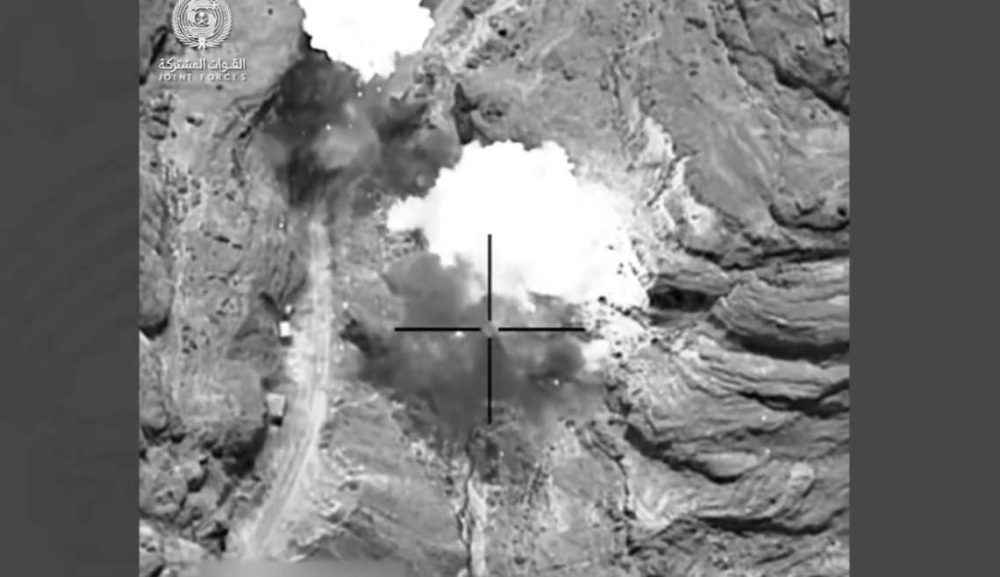
Pakistan’s expanding military role in Saudi Arabia amid the Yemen conflict could strain its defence resources and fragile finances…reports Asian Lite News Desk Pakistan’s military involvement in the war in Yemen may prove unsustainable because of mounting financial pressures and competing security demands, according to a new report. Islamabad’s growing military presence in Saudi Arabia risks stretching its defence resources while exposing the country to greater strategic and economic challenges. An article by Andrew Wilson in One World Outlook describes Pakistan’s involvement as a case of “fiscal and strategic overreach”, arguing that the country lacks the financial flexibility to sustain an expanded military commitment. Pakistan’s external finances depend heavily on an International Monetary Fund (IMF) programme, financial support from Gulf countries and remittances from Pakistani workers in the region. The report argues that deeper military involvement in the conflict could place additional pressure on these sources of financial stability. It also warns that deploying troops and military equipment abroad could weaken Pakistan’s capacity to address security challenges along its eastern border and deal with two domestic insurgencies. The move could also draw Islamabad into a conflict it has sought to approach cautiously. A Reuters report in May, citing Pakistani security and government sources, said Islamabad had deployed around 8,000 troops, a squadron of approximately 16 aircraft, mostly JF-17 fighter jets, two drone squadrons and a Chinese HQ-9 air-defence battery to Saudi Arabia. According to those sources, Riyadh was financing the deployment, with Pakistani personnel operating the equipment. The sources also said a confidential agreement contemplated the possibility of deploying up to 80,000 troops. Islamabad has not confirmed those figures, although it has acknowledged its military presence in Saudi Arabia, including the deployment of fighter jets at King Abdulaziz Air Base from April. The One World Outlook article argues that Saudi financial support can cover allowances and operating expenses but cannot easily replace military equipment needed elsewhere or resolve the political and strategic challenges of participating in the Yemen conflict. Pakistan’s defence budget is another concern. For the 2026-27 financial year, the federal government allocated PKR 3 trillion, or approximately $10.8 billion, to defence services. The allocation represents an 18 per cent increase from the original PKR 2.55 trillion provision and amounts to around 2.1 per cent of projected gross domestic product (GDP). Defence spending accounts for approximately 16 per cent of the federal government’s PKR 18.8 trillion expenditure. Military pensions are budgeted separately at PKR 822 billion, while debt servicing costs stand at approximately PKR 8 trillion, more than two-and-a-half times the defence allocation. The report argues that these competing financial obligations leave little room for additional military expenditure without placing further pressure on public finances. Pakistan’s reliance on IMF assistance also limits its fiscal flexibility. The country must meet the conditions attached to the programme, including a primary budget surplus target of 2 per cent of GDP and continued restraint on development spending. According to the article, these requirements make it difficult for Islamabad to finance an additional military commitment without compromising other budgetary priorities. Pakistan’s economic indicators offer limited reassurance. Economic growth for the 2025-26 financial year is estimated at between 3.6 and 3.7 per cent, while inflation reached approximately 10.3 per cent in September following an energy price shock. Foreign exchange reserves stood at around $21.5 billion at the end of September. Although this marks an improvement from the low levels recorded in 2023, the report notes that the reserves cover only a few months of imports. Financial assistance from Gulf partners remains central to Pakistan’s external stability. The article says Islamabad holds approximately $8 billion in Saudi deposits at its central bank. In July, the State Bank of Pakistan said Riyadh had extended the maturity of $5 billion in deposits to December 2028, easing the country’s immediate external financing requirements. A further $3 billion deposit was also extended in the spring. However, the article argues that these arrangements provide temporary relief rather than long-term financial independence, particularly as regional conflict threatens the stability of the Gulf economies on which Pakistan relies. The report concludes that Pakistan faces a difficult balance between supporting Saudi Arabia militarily and preserving the financial and military resources needed to address its domestic and regional challenges.
Go toTop

Don't Miss

US “coordinating” with Canada amid diplomatic standoff

India, however, rejected the allegations by the Trudeau administration, terming

Blinken to test for Covid as Bennett tests positive

On Sunday, Bennett met with US Secretary of State Antony