February 13, 2024
2 mins read

Guterres Urges Pakistan Election Harmony

Pakistan faces political turmoil as none of the political parties won a clear majority to form a government…reports Asian Lite News

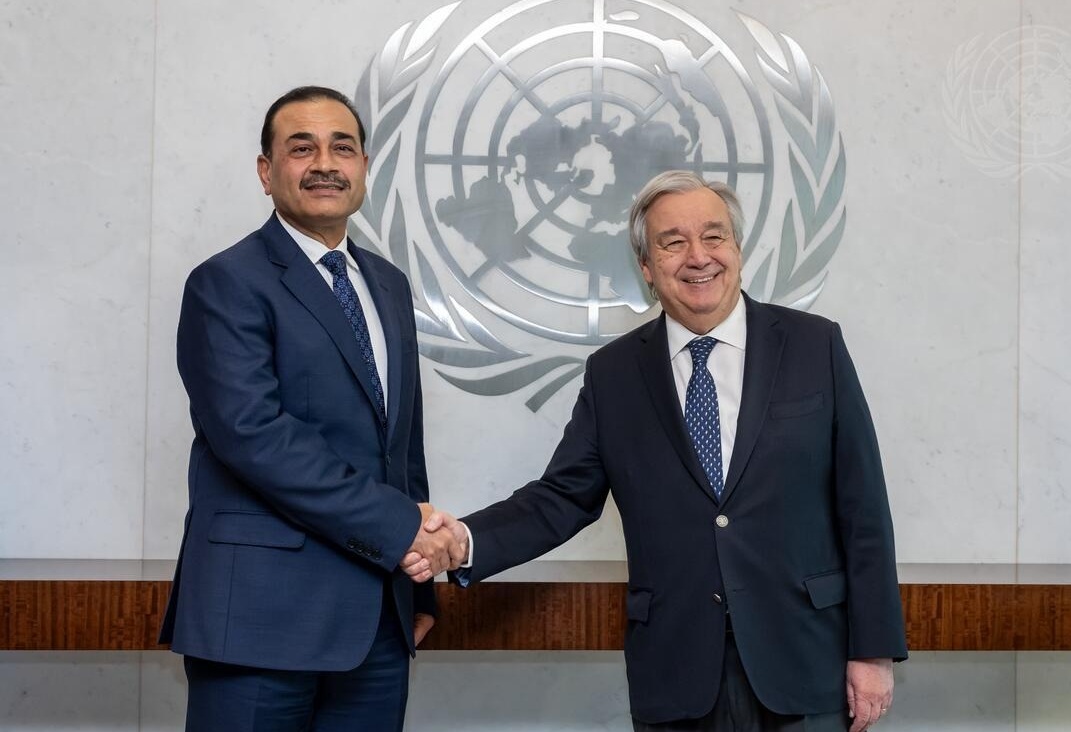
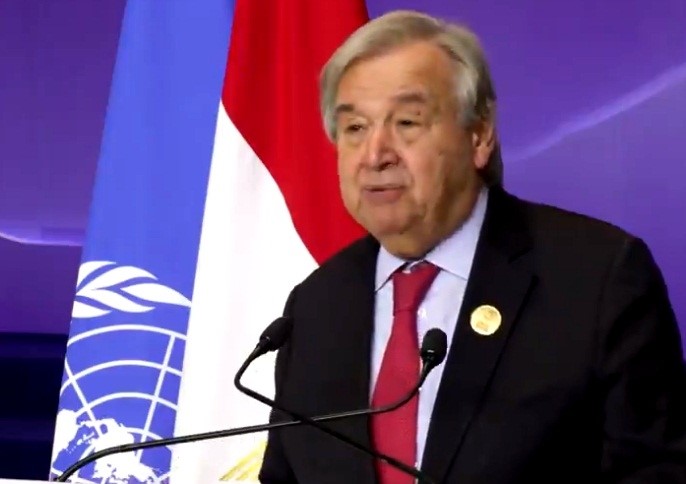
 UN Secretary-General Antonio Guterres has called for resolving the Pakistan election disputes through legal means.

“The Secretary-General urges the authorities, political leaders to maintain a calm atmosphere and to reject and refrain from all forms of violence and avoid any actions that could increase or enflame tensions,” his Spokesperson Stephane Dujarric said on Monday.

Pakistan faces political turmoil as none of the political parties won a clear majority to form a government in Thursday’s elections, with the supporters of imprisoned former Prime Minister Imran Khan emerging unexpectedly strong despite the military’s antagonism towards them amid claims of poll fraud.

Dujarric said that Guterres is following the situation “closely” and “urges the authorities, political leaders to maintain a calm atmosphere and to reject and refrain from all forms of violence and avoid any actions that could increase or enflame tensions”.

“He calls for the resolving of all issues and disputes through the established legal frameworks and for human rights and the rule of law to be fully respected in the interest of the people of Pakistan,” Dujarric added.

Of the 268 National Assembly seats that were contested, independents supporting Khan, founder of Pakistan Tehreek-e-Insaaf (PTI), bagged 93 seats, the most of any group.

Former Prime Minister Nawaz Sharif’s Pakistan Union Muslim League-Nawaz finished second with 75 seats and the Pakistan People’s Party of Bilawal Bhutto Zardari came next with 54 seats.

Khan was convicted in four criminal cases, including violating the official secrets law and contracting an illegal marriage, and given prison sentences totalling 34 years.

The PTI has alleged that there was widespread vote rigging and its supporters held protests across the country on Sunday, clashing in some places with police who tried to enforce bans on public gatherings.

Meanwhile, in Washington, State Department Spokesperson Matthew Miller said, “The claims of interference and fraud that we have seen raised, we want to ensure are fully investigated by Pakistan’s legal system, and we will be continuing to monitor that in the days ahead.”

He added that “political and election-related violence and restrictions on internet and cell phone service” have “negatively impacted the electoral service”.

But he also said that “it was clearly a competitive election in which people were able to exercise their choice”.

ALSO READ: PML-N, PPP Consider Sharing PM Seat in Pakistan’s Coalition Government

Previous Story

Arundhathi Subramaniam’s Ode to ‘Wild Women’ in Indian Poetry

Next Story

Sutapa Sikdar’s Candid Reflections on Life with Irrfan Khan

Previous Story

Arundhathi Subramaniam’s Ode to ‘Wild Women’ in Indian Poetry

Next Story

Sutapa Sikdar’s Candid Reflections on Life with Irrfan Khan

Latest from -Top News

Nepal Floods Cause $1.66 Billion In Damage, Says World Bank

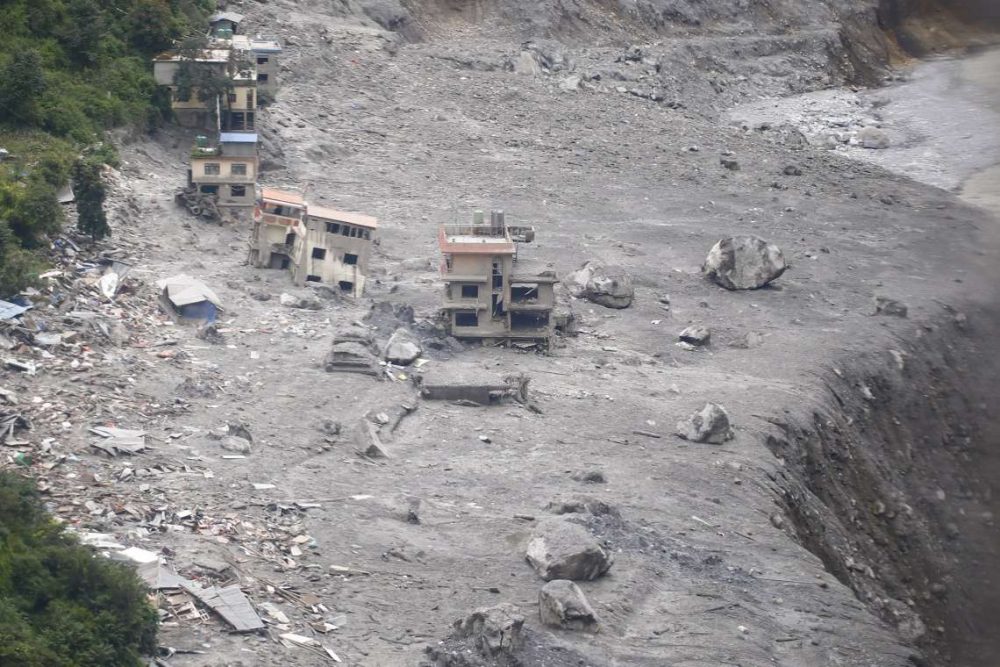
Nepal’s August 2026 floods caused an estimated US$1.66 billion in direct physical damage, with infrastructure accounting for 83 per cent of the total…reports Asian Lite News Desk Nepal’s devastating floods in August 2026 caused an estimated US$1.66 billion in direct physical damage, with infrastructure accounting for 83 per cent of the total, according to a World Bank report. The estimate, included in the World Bank’s Nepal Development Update unveiled this week, is close to the Nepal government’s preliminary Rapid Damage and Needs Assessment (RDNA), which put physical damage at US$1.81 billion. The government’s assessment also estimated losses beyond physical assets at US$883.32 million, taking the total economic effects of the disaster to approximately US$2.7 billion. The World Bank’s Global Rapid Post-Disaster Damage Estimation (GRADE) found that infrastructure suffered the greatest damage, estimated at US$1.38 billion, or 83 per cent of the total. Residential buildings accounted for US$185 million, or 11 per cent, while non-residential buildings sustained damage worth US$101 million, or 6 per cent. The floods along the Bhotekoshi and Trishuli rivers caused extensive damage to hydropower projects, solar energy facilities, electricity transmission infrastructure and transport networks. The energy sector, particularly hydropower, was among the worst affected. The August 2026 floods affected 12 hydropower projects and one solar project, involving 281.1 MW of operational capacity and 395.02 MW of capacity under construction. Damage to transmission lines and substations also disrupted the transmission of 149.6 MW of electricity to the national grid. The total affected capacity reached approximately 430.7 MW, equivalent to 10.6 per cent of Nepal’s installed hydropower and solar capacity at the end of fiscal year 2025-26, which concluded in mid-July. The disaster also severely damaged transport infrastructure along the 82-km Rasuwa trade corridor, which connects Kathmandu with the Rasuwagadhi border point with China. More than 55 km of the corridor was damaged, including 40 km that was completely destroyed. The floods also damaged 37 motorable bridges and 68 suspension bridges. The disaster resulted in significant human losses along the affected corridor and beyond. According to Nepal’s National Disaster Risk Reduction and Management Authority, 1,455 people had been confirmed dead, while 5,285 remained missing following the disaster. The World Bank report found that the physical damage was concentrated in three districts in central Nepal: Rasuwa, Nuwakot and Dhading. Rasuwa was the worst-affected district, accounting for US$1.07 billion, or 64 per cent, of the total direct damage. Nuwakot recorded an estimated US$551 million in damage, while Dhading suffered approximately US$39 million. “The findings highlight the concentration of physical damage in a small number of districts and the disproportionate impact on infrastructure, underscoring the scale of the reconstruction challenge facing the affected areas,” the World Bank said. The global development financier said the floods had demonstrated the scale and complexity of disaster risks in Nepal’s Himalayan environment. The event also showed how a single extreme weather event could trigger cascading impacts across sectors and geographical areas. The report said recovery efforts should extend beyond restoring infrastructure to its pre-disaster condition. While the principle of “Build Back Better” remained relevant, the World Bank stressed that rebuilding infrastructure to higher engineering standards in the same locations might not always be sufficient. “In some cases, simply rebuilding the same infrastructure in the same location to a higher engineering standard may not be sufficient. Nepal may need to build differently — based on a better understanding of risk, more careful decisions about location and design, greater redundancy in critical networks, stronger monitoring and early warning, and a more integrated approach to infrastructure development in the Himalayas,” the report said. The World Bank said Nepal’s recovery strategy should incorporate improved risk assessment, more informed infrastructure planning, stronger monitoring systems and better early warning mechanisms. The report emphasised that reconstruction should not only restore damaged assets but also reduce the impact of future disasters, particularly in the country’s vulnerable Himalayan regions.

Vaccine Delays Fuel Bangladesh Measles Outbreak

More than 32,000 suspected cases and over 250 deaths have been reported since mid-March, with children making up most of the fatalities….reports Asian Lite News Desk Bangladesh’s measles outbreak has intensified, with

Tsai: Stand With Taiwan, Strengthen The Indo-Pacific

The former president said stronger international partnerships would help Taiwan withstand mounting military, cyber and economic pressure while reinforcing democratic resilience….repots Asian Lite News Desk Former Taiwan President Tsai Ing-wen has called
Go toTop

Don't Miss

Imran’s arrest triggers unrest across Pakistan

The former prime minister and PTI chief was arrested by

Baloch situation turning from bad to worse

Balochistan Chief Minister Mir Abdul Qudoos Bizenjo and Balochistan Assembly