April 5, 2024
5 mins read

Judges, intel experts call for halt to Israeli arms sales

The Foreign Office said on Thursday it kept advice on Israel’s adherence to the law under review but that the content of government advice was confidential…reports Asian Lite News

Three former Supreme Court justices have joined more than 600 members of the British legal profession in calling for the government to halt arms sales to Israel, saying it could make Britain complicit in genocide in Gaza.

Their call was also backed by two of the country’s leading intelligence experts, who argued that Britain needed to use any leverage it could to persuade Israel, and its biggest backer the United States, to change course in the conflict.

The British government has been a staunch ally of Israel since the eruption of hostilities on Oct. 7 but Foreign Secretary David Cameron has hardened his language in recent months over the humanitarian situation in Gaza.

Cameron said on March 8 that Israel had to be compliant with international humanitarian law in order for Britain to grant export licenses allowing arms sales to Israel, and that a judgment on that was underway and due in the “coming days.”

The Foreign Office said on Thursday it kept advice on Israel’s adherence to the law under review but that the content of government advice was confidential.

Senior members of Britain’s legal profession said the government needed to halt sales now to avoid “aiding and assisting an international wrongful act.”

“The provision of military assistance and material to Israel may render the UK complicit in genocide as well as serious breaches of International Humanitarian Law,” the judges, barristers and legal academics said in a 17-page letter to Prime Minister Rishi Sunak.

One of the former justices, Jonathan Sumption, told BBC Radio he was concerned the British government had lost sight of its own obligations under international law.

Israeli Prime Minister Benjamin Netanyahu has called any suggestion of genocide as “outrageous,” and has said Israel has an “unwavering commitment to international law.”

Sunak has resisted calls to immediately halt weapons sales to Israel, saying the government adheres to a “very careful licensing regime.”

But the killing of seven aid workers, including three British nationals, in Israeli airstrikes this week has ratcheted up the pressure. Israel said they were mistakenly killed.

Britain licenses the sale of British-made explosive devices, assault rifles and components for military aircraft to Israel but it is a relatively small supplier, with Israeli exports making up about 0.4 percent of Britain’s total global defense sales in 2022, the last full-year data was available.

Two senior figures in Britain’s intelligence community — former national security adviser Peter Ricketts and Alex Younger, the former head of the MI6 foreign spy service — have said those sales should be used as leverage.

Ricketts said there was “now abundant evidence” that Israel was not compliant with international humanitarian law and that a ban would send a message that could stir debate in Washington.

Younger told the BBC that Britain needed to “achieve leverage, and create incentives for more focus to be put on the issue of what is technically called collateral damage but what we would call as killing innocent civilians.”

Earlier this week, Alicia Kearns, the Conservative chair of parliament’s foreign affairs select committee, said ministers had been told by their lawyers that Israel had violated international law in its war in Gaza.

The government has in the past blocked sales to Israel, such as in 2009 when it revoked some licenses and in 1982 when there was a formal restriction on weapon sales after the invasion of Lebanon.

Soames joins calls for UK to stop arming Israel

The Conservative peer Nicholas Soames has joined calls for the UK to stop arming Israel after an airstrike killed seven aid workers in Gaza.

Soames, the grandson of Winston Churchill, said the UK should send a “message” about Israel’s actions in Gaza.

Hundreds of senior lawyers and judges, including three former supreme court justices, have said in a letter that the government is breaching international law by continuing to arm Israel.

Asked whether the UK should stop doing so, Soames said: “It’s probably time that that happened now, yes, I think if we’re determined to show that we are not prepared to countenance these ongoing disasters.”

He added: “Israel have every right to go after Hamas, there’s no shadow of doubt about that.”

The UK’s contribution to Israel’s arsenal “would be tiny and it’s probably parts more than anything else”, Soames said, but stopping the exports would send a message.

“I say this with real sadness because, I mean, first of all, what happened was an absolute tragedy, and secondly, it was absolutely inexcusable,” Soames said of the strike that killed the aid workers, including three Britons, on Monday.

“This is not a fog of war issue with these [aid workers]. They were quite clearly – the whole thing had been deconflicted, organised, everything, and something has gone very, very wrong, and the Israelis need to really get a grip of all this. And secondly, these people were doing the most wonderful work to provide aid to starving Palestinians … I think it is the message that matters.”

Soames joins his fellow Conservative peer Hugo Swire and three Tory MPs – David Jones, Paul Bristow and Flick Drummond – in calling for arms sales to be suspended.

A fourth Tory MP, Mark Logan, called on Thursday for the UK’s arms exports to Israel to be reviewed. “We need to seriously reassess any weapon materials/arms exports to Israel in light of what has happened,” he said in a post on X.

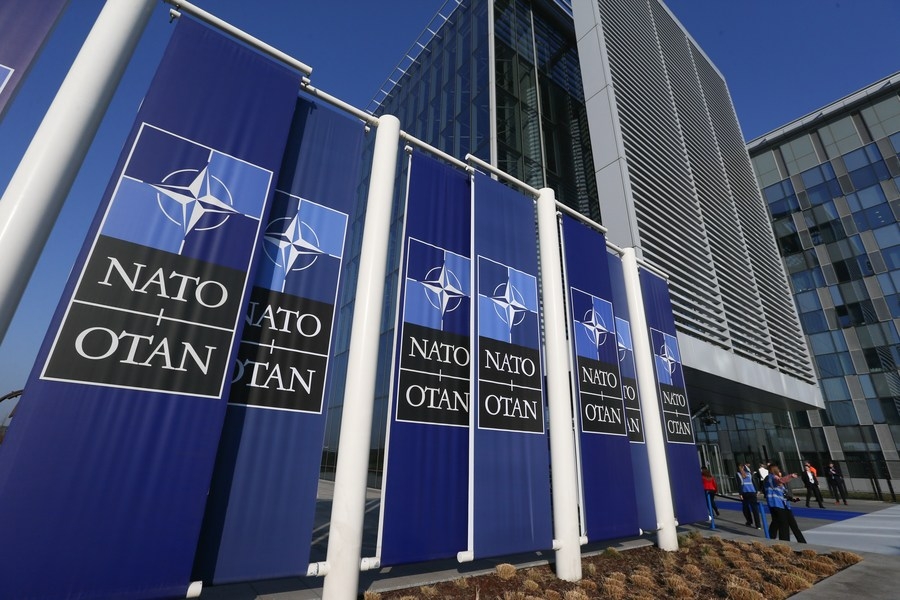
David Cameron, the foreign secretary, refused to answer any questions about Israel and Gaza when he was interviewed by the BBC’s Ukrainecast on Thursday morning. Cameron is in Brussels for a meeting of Nato foreign ministers.

The Liberal Democrats have written to the prime minister’s ethics adviser, Laurie Magnus, urging an investigation into whether continued UK arms sales to Israel could be a breach of the ministerial code.

ALSO READ-UK govt under Tory pressure to stop arming Israel

Previous Story

UAE receives 15th group of wounded Palestinians

Next Story

Foreign ministers mark 75 years of NATO

Previous Story

UAE receives 15th group of wounded Palestinians

Next Story

Foreign ministers mark 75 years of NATO

Latest from -Top News

Pakistan Risks Overstretching Itself in Yemen War

Pakistan’s expanding military role in Saudi Arabia amid the Yemen conflict could strain its defence resources and fragile finances…reports Asian Lite News Desk Pakistan’s military involvement in the war in Yemen may prove unsustainable because of mounting financial pressures and competing security demands, according to a new report. Islamabad’s growing military presence in Saudi Arabia risks stretching its defence resources while exposing the country to greater strategic and economic challenges. An article by Andrew Wilson in One World Outlook describes Pakistan’s involvement as a case of “fiscal and strategic overreach”, arguing that the country lacks the financial flexibility to sustain an expanded military commitment. Pakistan’s external finances depend heavily on an International Monetary Fund (IMF) programme, financial support from Gulf countries and remittances from Pakistani workers in the region. The report argues that deeper military involvement in the conflict could place additional pressure on these sources of financial stability. It also warns that deploying troops and military equipment abroad could weaken Pakistan’s capacity to address security challenges along its eastern border and deal with two domestic insurgencies. The move could also draw Islamabad into a conflict it has sought to approach cautiously. A Reuters report in May, citing Pakistani security and government sources, said Islamabad had deployed around 8,000 troops, a squadron of approximately 16 aircraft, mostly JF-17 fighter jets, two drone squadrons and a Chinese HQ-9 air-defence battery to Saudi Arabia. According to those sources, Riyadh was financing the deployment, with Pakistani personnel operating the equipment. The sources also said a confidential agreement contemplated the possibility of deploying up to 80,000 troops. Islamabad has not confirmed those figures, although it has acknowledged its military presence in Saudi Arabia, including the deployment of fighter jets at King Abdulaziz Air Base from April. The One World Outlook article argues that Saudi financial support can cover allowances and operating expenses but cannot easily replace military equipment needed elsewhere or resolve the political and strategic challenges of participating in the Yemen conflict. Pakistan’s defence budget is another concern. For the 2026-27 financial year, the federal government allocated PKR 3 trillion, or approximately $10.8 billion, to defence services. The allocation represents an 18 per cent increase from the original PKR 2.55 trillion provision and amounts to around 2.1 per cent of projected gross domestic product (GDP). Defence spending accounts for approximately 16 per cent of the federal government’s PKR 18.8 trillion expenditure. Military pensions are budgeted separately at PKR 822 billion, while debt servicing costs stand at approximately PKR 8 trillion, more than two-and-a-half times the defence allocation. The report argues that these competing financial obligations leave little room for additional military expenditure without placing further pressure on public finances. Pakistan’s reliance on IMF assistance also limits its fiscal flexibility. The country must meet the conditions attached to the programme, including a primary budget surplus target of 2 per cent of GDP and continued restraint on development spending. According to the article, these requirements make it difficult for Islamabad to finance an additional military commitment without compromising other budgetary priorities. Pakistan’s economic indicators offer limited reassurance. Economic growth for the 2025-26 financial year is estimated at between 3.6 and 3.7 per cent, while inflation reached approximately 10.3 per cent in September following an energy price shock. Foreign exchange reserves stood at around $21.5 billion at the end of September. Although this marks an improvement from the low levels recorded in 2023, the report notes that the reserves cover only a few months of imports. Financial assistance from Gulf partners remains central to Pakistan’s external stability. The article says Islamabad holds approximately $8 billion in Saudi deposits at its central bank. In July, the State Bank of Pakistan said Riyadh had extended the maturity of $5 billion in deposits to December 2028, easing the country’s immediate external financing requirements. A further $3 billion deposit was also extended in the spring. However, the article argues that these arrangements provide temporary relief rather than long-term financial independence, particularly as regional conflict threatens the stability of the Gulf economies on which Pakistan relies. The report concludes that Pakistan faces a difficult balance between supporting Saudi Arabia militarily and preserving the financial and military resources needed to address its domestic and regional challenges.

UK and Germany Ratify Kensington Treaty

Britain and Germany ratify the Kensington Treaty, agreeing new cooperation on AI, quantum research, defence and security while targeting investment, jobs and Russian hybrid threats…reports Asian Lite News Desk Britain and Germany

Economic tide is turning in Bangladesh

If there is one thing that can bring some comfort to the struggling Bangladeshi economy, it is good relations with India. Bangladesh should remember that Delhi’s backing, through easy supplies of essentials
Go toTop

Don't Miss

UAE Condemns Israel’s Approval Of New Settlements

UAE expressed its categorical rejection of all practices in contravention

Top Biden official doubts Israel can achieve ‘total victory’ in Gaza

Israeli Prime Minister Benjamin Netanyahu has repeatedly vowed to achieve