June 4, 2024
5 mins read

Lotus Withers

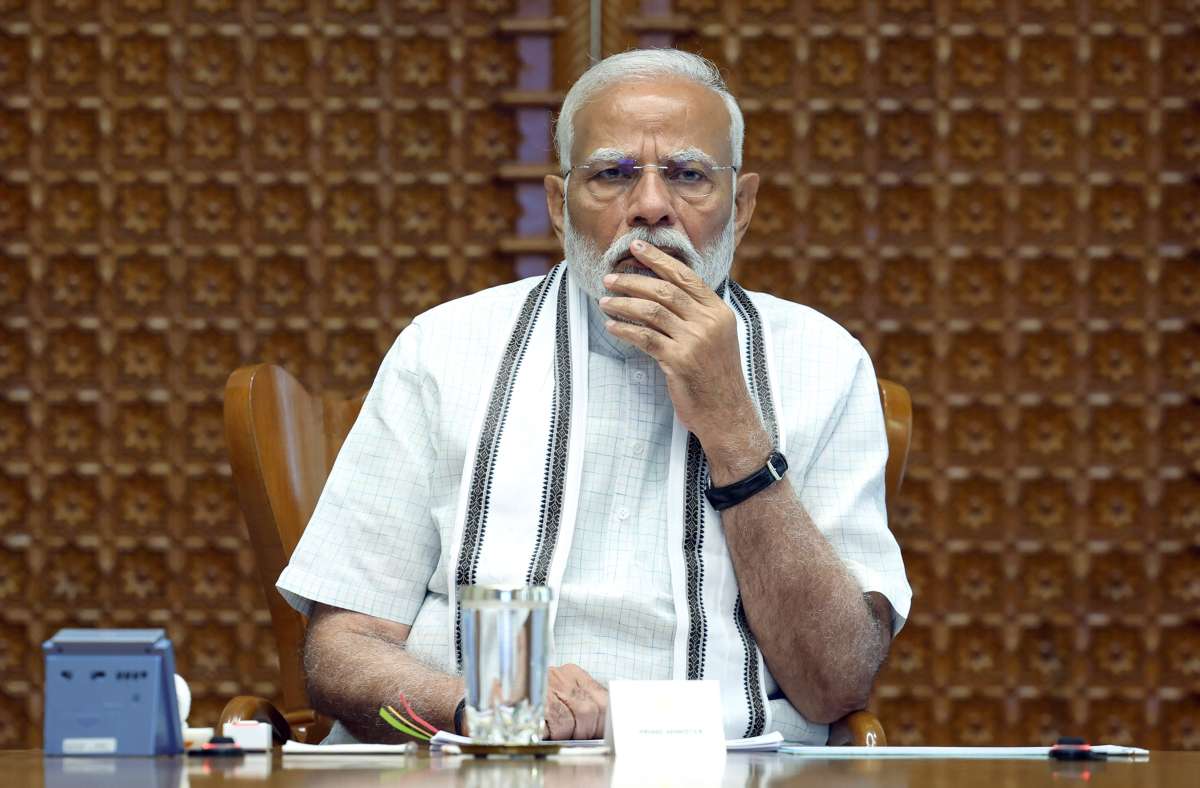
Prime Minister Modi to rely on regional satraps to cobble majority to retain power, The results of the seven-phase, seven-week poll which began on April 19 have left the BJP a lot to worry about after India’s most populous state Uttar Pradesh gave the INDIA block a thumbs-up…reports Asian Lite News

Nearly a billion people have given the Narendra Modi-led NDA government a wake-up call in the Lok Sabha elections.

The results of the seven-phase, seven-week poll which began on April 19 have left the BJP a lot to worry about after India’s most populous state Uttar Pradesh gave the INDIA block a thumbs-up.

BJP’s allies TDP and JD-U have done well and have shown a good strike rate. While TDP is poised to win 16 seats, JD-U is ahead in 15 seats.

The NDA with TDP in the lead is also poised to form government in Andhra Pradesh by ousting the YSCRP government led by YS Jagan Mohan Reddy. TDP is leading on 133 of 175 assembly seats in the state.

The BJP-led NDA is leading on 295 seats, the INDIA bloc is ahead on 231 seats and others on 17, according to the latest Election Commission trends.

In the counting taken up on Tuesday after the marathon seven-phased Lok Sabha election, the states presented contrasting pictures with BJP gaining ground in Odisha and Andhra Pradesh but poised to suffer losses in crucial Hindi heartland states of Uttar Pradesh, Rajasthan and Haryana.

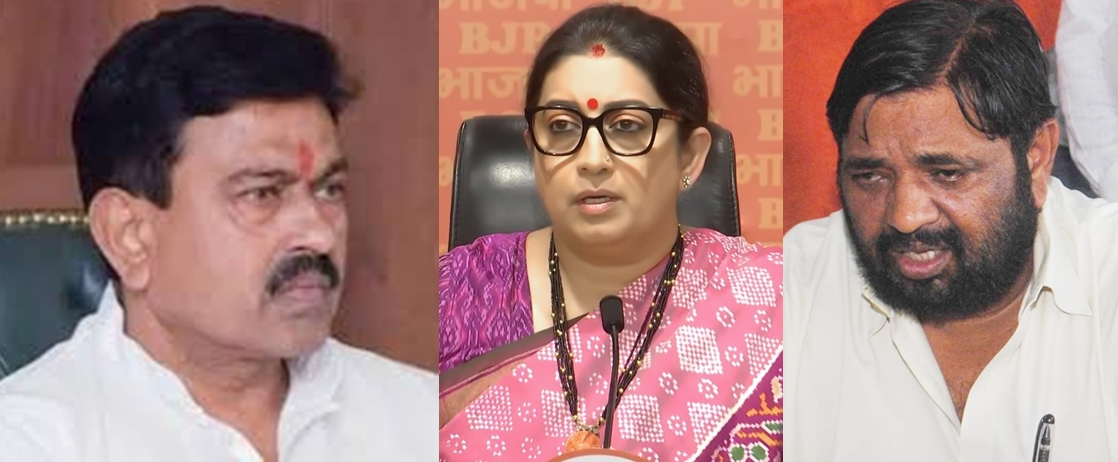
Some big names from the BJP including Union Minister Smriti Irani, Maneka Gandhi and Ajay Kumar Teni are trailing.

The BJP-led NDA appears far from its target of “400 paar” with BJP falling behind a simple majority in Lok Sabha , according to the latest trends.

The BJP had won a majority on its own in the 2014 and 2019 Lok Sabha polls. It won 282 seats in 2014 and improved its tally to 303 seats in 2019 elections. The BJP had set a target of winning 370 seats in the 2024 general elections.

The BJP-led NDA, under the leadership of Prime Minister Narendra Modi, fought Lok Sabha elections for a third straight term in office.

AAP, which contested 22 seats, has not done well and is leading in three seats in Punjab. The party is trailing on all seats in the national capital, where it is in power.

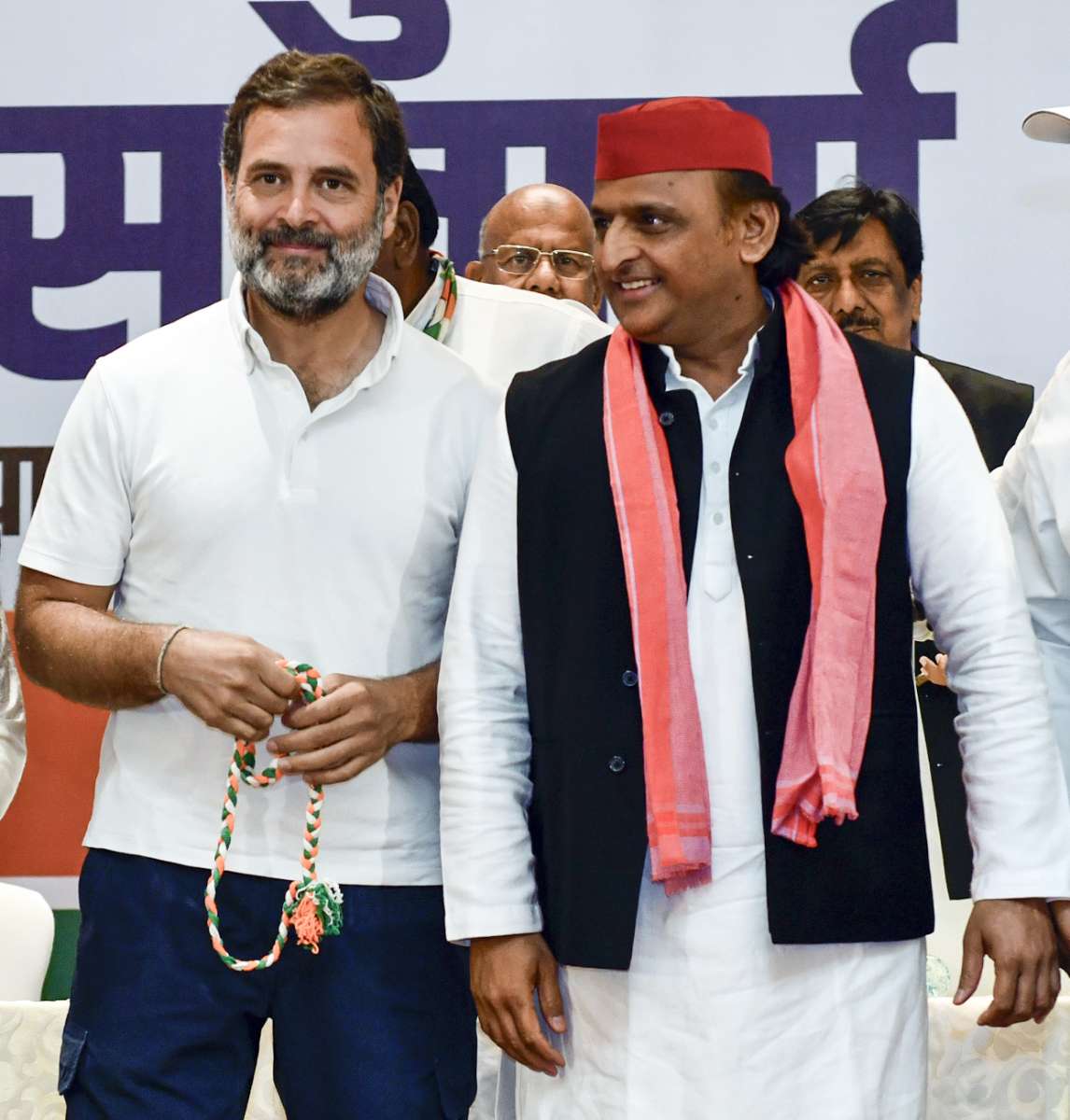
The most remarkable story for the opposition is from Uttar Pradesh where the Samajwadi Party belied the prediction of pollsters and is ahead of BJP, according to the latest trends from the Election Commission. While SP is leading on 37 seats in the state, BJP is leading on 32 seats. The Congress, which fought the election in alliance with the Samajwadi Party, has also done better and is leading on eight seats.

BJP is trailing in Faizabad, which includes the temple town of Ayodhya.

BJP did exceedingly well in Odisha in both assembly and Lok Sabha polls. It looks poised to form its first government in Odisha by removing BJD, which has been in power in the state for over two decades under Chief Minister Naveen Patnaik. The BJP is poised to win 19 Lok Sabha seats in Odisha with Congress and the ruling BJD slated to win one seat each. In assembly polls, the BJP has crossed the halfway mark in trends and is leading in 75 of 147 seats with BJD leading in 55, Congress 15, CPI-M one and independents one.

In Maharashtra, the INDIA alliance parties have given a jolt to the ruling alliance that includes the BJP. The INDIA alliance parties are leading on 30 seats – Congress 12, Shiv Sena (UBT) 11 and NCP (Sharadchandra Pawar) 7. BJP is leading on 11 seats and its allies – Shiv Sena on five seats and NCP one.

In Haryana also, BJP lost its dominance of the last two Lok Sabha polls and is leading on five seats. Congress is also leading on the other five seats in the state. Both Maharashtra and Harayna will face assembly polls later this year.

In West Bengal, Chief Minister Mamata Banerjee-led Trinamool Congress has given a strong fight to BJP and is leading on 31 seats. The BJP, which won 18 seats in 2019, is leading on 10 seats and Congress on one.

The Congress managed to reduce BJP’s domination in Gujarat, the home state of PM Modi and Home Minister Amit Shah. While the BJP is leading on 23 seats, the Congress is leading on two seats. The BJP has already won the Surat Lok Sabha seat.

Congress did not perform according to its expectations in party-ruled Telangana and Karnataka. But it improved its tally compared to 2019 elections. BJP is leading on 16 seats in Karantaka, Congress on 10 and JD-(S) on two. JD-S is an ally of BJP.

In Telangana, BJP and Congress are leading on eight seats each and AIMIM is leading on one.

Punjab presented a mixed bag with Congress leading on seven, AAP on 3, Shiromani Akali Dal on one and independents on two.

BJP retained its domination in Madhya Pradesh, Delhi, Himachal Pradesh, Uttarkhand and Chhattisgarh.

NDA is poised to do well in Bihar, belying the expectations of the INDIA bloc. It is ahead on 33 of 40 Lok Sabah seats. The RJD could not pull votes in its favour in the way Samajawadi Party did in Uttar Pradesh and is leading on three seats. Congress is ahead on one seat.

DMK maintained its domination in Tamil Nadu and the INDIA bloc almost repeated its performance in the southern state. While the Congress-led UDF maintained its dominance in Kerala, there is good news for BJP as well which is posed to open its Lok Sabha account from the southern state. The BJP is ahead on one seat in the state. Congress is ahead on 14 seats, IUML on 2, CPI-M and RSP on one each.

ALSO READ-Congress Leads on 5 Seats, BJP on 4, AAP on 1 in Haryana
Previous Story

Six Union Ministers, Smriti Irani in Jeopardy

Next Story

Modi In A Fix As BJP Majority Eludes

Previous Story

Six Union Ministers, Smriti Irani in Jeopardy

Next Story

Modi In A Fix As BJP Majority Eludes

Latest from -Top News

Pakistan Risks Overstretching Itself in Yemen War

Pakistan’s expanding military role in Saudi Arabia amid the Yemen conflict could strain its defence resources and fragile finances…reports Asian Lite News Desk Pakistan’s military involvement in the war in Yemen may prove unsustainable because of mounting financial pressures and competing security demands, according to a new report. Islamabad’s growing military presence in Saudi Arabia risks stretching its defence resources while exposing the country to greater strategic and economic challenges. An article by Andrew Wilson in One World Outlook describes Pakistan’s involvement as a case of “fiscal and strategic overreach”, arguing that the country lacks the financial flexibility to sustain an expanded military commitment. Pakistan’s external finances depend heavily on an International Monetary Fund (IMF) programme, financial support from Gulf countries and remittances from Pakistani workers in the region. The report argues that deeper military involvement in the conflict could place additional pressure on these sources of financial stability. It also warns that deploying troops and military equipment abroad could weaken Pakistan’s capacity to address security challenges along its eastern border and deal with two domestic insurgencies. The move could also draw Islamabad into a conflict it has sought to approach cautiously. A Reuters report in May, citing Pakistani security and government sources, said Islamabad had deployed around 8,000 troops, a squadron of approximately 16 aircraft, mostly JF-17 fighter jets, two drone squadrons and a Chinese HQ-9 air-defence battery to Saudi Arabia. According to those sources, Riyadh was financing the deployment, with Pakistani personnel operating the equipment. The sources also said a confidential agreement contemplated the possibility of deploying up to 80,000 troops. Islamabad has not confirmed those figures, although it has acknowledged its military presence in Saudi Arabia, including the deployment of fighter jets at King Abdulaziz Air Base from April. The One World Outlook article argues that Saudi financial support can cover allowances and operating expenses but cannot easily replace military equipment needed elsewhere or resolve the political and strategic challenges of participating in the Yemen conflict. Pakistan’s defence budget is another concern. For the 2026-27 financial year, the federal government allocated PKR 3 trillion, or approximately $10.8 billion, to defence services. The allocation represents an 18 per cent increase from the original PKR 2.55 trillion provision and amounts to around 2.1 per cent of projected gross domestic product (GDP). Defence spending accounts for approximately 16 per cent of the federal government’s PKR 18.8 trillion expenditure. Military pensions are budgeted separately at PKR 822 billion, while debt servicing costs stand at approximately PKR 8 trillion, more than two-and-a-half times the defence allocation. The report argues that these competing financial obligations leave little room for additional military expenditure without placing further pressure on public finances. Pakistan’s reliance on IMF assistance also limits its fiscal flexibility. The country must meet the conditions attached to the programme, including a primary budget surplus target of 2 per cent of GDP and continued restraint on development spending. According to the article, these requirements make it difficult for Islamabad to finance an additional military commitment without compromising other budgetary priorities. Pakistan’s economic indicators offer limited reassurance. Economic growth for the 2025-26 financial year is estimated at between 3.6 and 3.7 per cent, while inflation reached approximately 10.3 per cent in September following an energy price shock. Foreign exchange reserves stood at around $21.5 billion at the end of September. Although this marks an improvement from the low levels recorded in 2023, the report notes that the reserves cover only a few months of imports. Financial assistance from Gulf partners remains central to Pakistan’s external stability. The article says Islamabad holds approximately $8 billion in Saudi deposits at its central bank. In July, the State Bank of Pakistan said Riyadh had extended the maturity of $5 billion in deposits to December 2028, easing the country’s immediate external financing requirements. A further $3 billion deposit was also extended in the spring. However, the article argues that these arrangements provide temporary relief rather than long-term financial independence, particularly as regional conflict threatens the stability of the Gulf economies on which Pakistan relies. The report concludes that Pakistan faces a difficult balance between supporting Saudi Arabia militarily and preserving the financial and military resources needed to address its domestic and regional challenges.

UK and Germany Ratify Kensington Treaty

Britain and Germany ratify the Kensington Treaty, agreeing new cooperation on AI, quantum research, defence and security while targeting investment, jobs and Russian hybrid threats…reports Asian Lite News Desk Britain and Germany

Economic tide is turning in Bangladesh

If there is one thing that can bring some comfort to the struggling Bangladeshi economy, it is good relations with India. Bangladesh should remember that Delhi’s backing, through easy supplies of essentials
Go toTop

Don't Miss

India’s Cosmic Leap

A Billion Dreams, Will See Visits to Moon, Mars and

Afghans in India faces uncertainty, flock to embassies

Some Afghan nationals said they have been told by the