June 3, 2024
2 mins read

Nawaz repeating old mistakes, says ex-Sindh governor 

Ex-governor claims Bhutto and Sharif signed Charter of Democracy, admitting past transgressions against democracy….reports Asian Lite News

Former governor of Sindh and an estranged leader of the Pakistan Muslim League-Nawaz (PML-N), Mohammad Zubair has claimed that the party President Nawaz Sharif is currently reversing the narrative he previously supported, reported ARY News.

Speaking on the “Sawal Yeh Hai” programme on ARY News, the former governor claimed that Benazir Bhutto and Nawaz Sharif had signed the Charter of Democracy, which implied admitting past transgressions that had undermined democracy.

“Nawaz Sharif is now repeating the same old mistakes instead of adhering to the charter of democracy,” he asserted.

According to the former governor, Nawaz Sharif’s shift in perspective followed the motion of no confidence against former prime minister Imran Khan.

He said that Nawaz Sharif’s current position contradicts his earlier claims, and he added that the PML-N would lose government support if he took the same stance as Imran Khan’s PTI.

Zubair proposed that the Pakistan Tehreek-e-Insaf (PTI) and the PML-N sign a charter of democracy. “The responsibility lies with the PML-N as it is in the government” he continued.

The former governor of Sindh also commended Rana Sanaullah for his attempts to hold talks, but he pointed out that the party leadership does not support him.

Prior to the PDM government, Zubair claimed that the PML-N had given up on the idea of “vote ko izzat do” (respect the vote), according to ARY News. The former governor claimed in an interview that the PML-N began its campaign with a hostile narrative, moved towards healing, and is currently focusing on the economy.

He stated that the leader of the PML-N, Shehbaz Sharif, had prepared an assembly dissolution statement and that the PML-N supremo had recommended holding elections immediately following the no-confidence motion against former prime minister Imran Khan.

Miftah Ismail brought back the International Monetary Fund (IMF) contract, Zubair said, according to ARY News. It was a difficult undertaking, thus it was decided to replace him with Ishaq Dar.

“Right now, the PTI is popular among the public but PML-N leadership is not ready to accept this. If they (PML-N) quarrel with popular party, where will they go?,” Zubair said. (ANI)

ALSO READ: EU refuses to lift ban on PIA
Previous Story

Who Should Opt for Hormone Therapy? Expert Insights

Next Story

Udit Narayan Shares ‘Gadar’ Anecdote on ‘Superstar Singer 3’

Previous Story

Who Should Opt for Hormone Therapy? Expert Insights

Next Story

Udit Narayan Shares ‘Gadar’ Anecdote on ‘Superstar Singer 3’

Latest from -Top News

Pakistan Risks Overstretching Itself in Yemen War

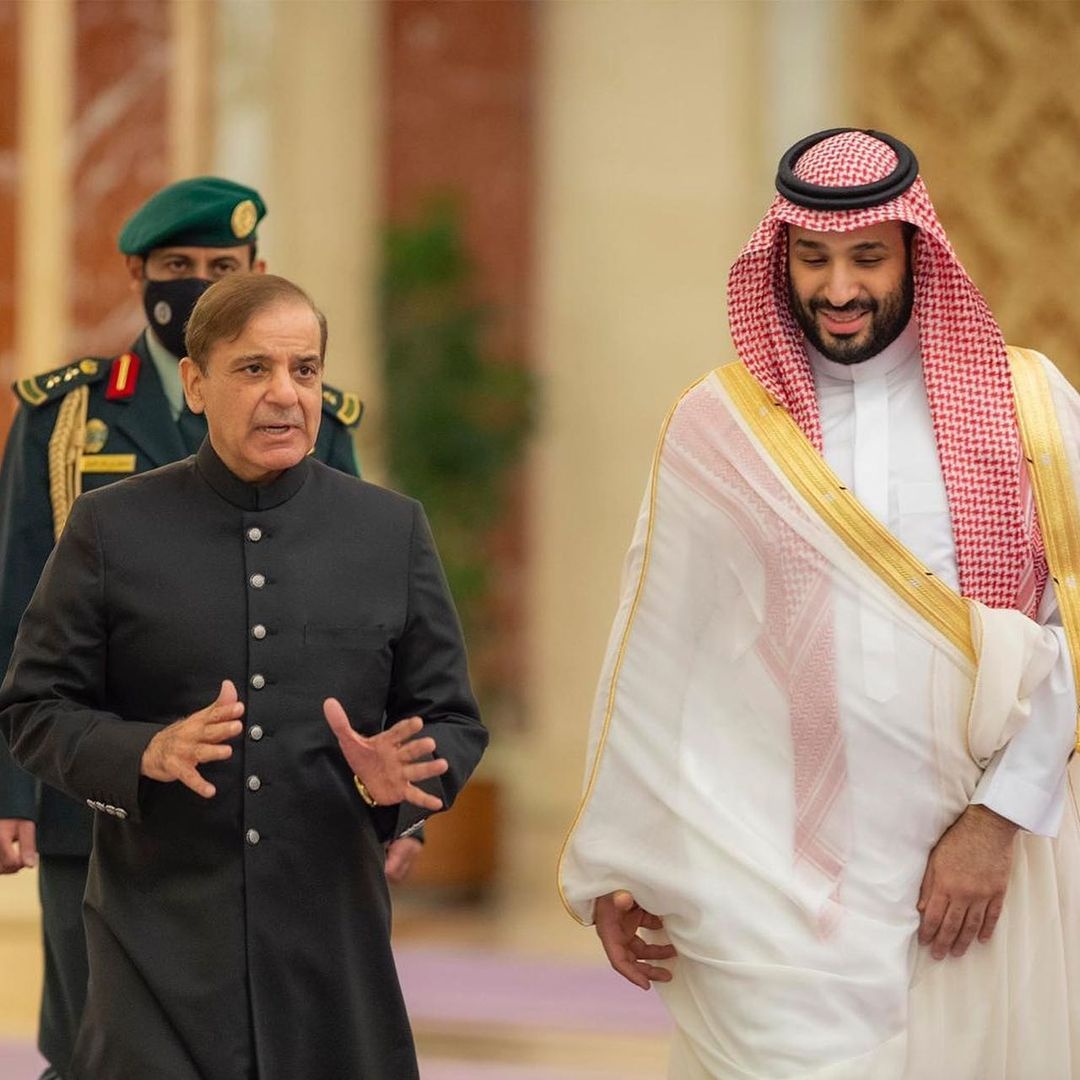
Pakistan’s expanding military role in Saudi Arabia amid the Yemen conflict could strain its defence resources and fragile finances…reports Asian Lite News Desk Pakistan’s military involvement in the war in Yemen may prove unsustainable because of mounting financial pressures and competing security demands, according to a new report. Islamabad’s growing military presence in Saudi Arabia risks stretching its defence resources while exposing the country to greater strategic and economic challenges. An article by Andrew Wilson in One World Outlook describes Pakistan’s involvement as a case of “fiscal and strategic overreach”, arguing that the country lacks the financial flexibility to sustain an expanded military commitment. Pakistan’s external finances depend heavily on an International Monetary Fund (IMF) programme, financial support from Gulf countries and remittances from Pakistani workers in the region. The report argues that deeper military involvement in the conflict could place additional pressure on these sources of financial stability. It also warns that deploying troops and military equipment abroad could weaken Pakistan’s capacity to address security challenges along its eastern border and deal with two domestic insurgencies. The move could also draw Islamabad into a conflict it has sought to approach cautiously. A Reuters report in May, citing Pakistani security and government sources, said Islamabad had deployed around 8,000 troops, a squadron of approximately 16 aircraft, mostly JF-17 fighter jets, two drone squadrons and a Chinese HQ-9 air-defence battery to Saudi Arabia. According to those sources, Riyadh was financing the deployment, with Pakistani personnel operating the equipment. The sources also said a confidential agreement contemplated the possibility of deploying up to 80,000 troops. Islamabad has not confirmed those figures, although it has acknowledged its military presence in Saudi Arabia, including the deployment of fighter jets at King Abdulaziz Air Base from April. The One World Outlook article argues that Saudi financial support can cover allowances and operating expenses but cannot easily replace military equipment needed elsewhere or resolve the political and strategic challenges of participating in the Yemen conflict. Pakistan’s defence budget is another concern. For the 2026-27 financial year, the federal government allocated PKR 3 trillion, or approximately $10.8 billion, to defence services. The allocation represents an 18 per cent increase from the original PKR 2.55 trillion provision and amounts to around 2.1 per cent of projected gross domestic product (GDP). Defence spending accounts for approximately 16 per cent of the federal government’s PKR 18.8 trillion expenditure. Military pensions are budgeted separately at PKR 822 billion, while debt servicing costs stand at approximately PKR 8 trillion, more than two-and-a-half times the defence allocation. The report argues that these competing financial obligations leave little room for additional military expenditure without placing further pressure on public finances. Pakistan’s reliance on IMF assistance also limits its fiscal flexibility. The country must meet the conditions attached to the programme, including a primary budget surplus target of 2 per cent of GDP and continued restraint on development spending. According to the article, these requirements make it difficult for Islamabad to finance an additional military commitment without compromising other budgetary priorities. Pakistan’s economic indicators offer limited reassurance. Economic growth for the 2025-26 financial year is estimated at between 3.6 and 3.7 per cent, while inflation reached approximately 10.3 per cent in September following an energy price shock. Foreign exchange reserves stood at around $21.5 billion at the end of September. Although this marks an improvement from the low levels recorded in 2023, the report notes that the reserves cover only a few months of imports. Financial assistance from Gulf partners remains central to Pakistan’s external stability. The article says Islamabad holds approximately $8 billion in Saudi deposits at its central bank. In July, the State Bank of Pakistan said Riyadh had extended the maturity of $5 billion in deposits to December 2028, easing the country’s immediate external financing requirements. A further $3 billion deposit was also extended in the spring. However, the article argues that these arrangements provide temporary relief rather than long-term financial independence, particularly as regional conflict threatens the stability of the Gulf economies on which Pakistan relies. The report concludes that Pakistan faces a difficult balance between supporting Saudi Arabia militarily and preserving the financial and military resources needed to address its domestic and regional challenges.

UK and Germany Ratify Kensington Treaty

Britain and Germany ratify the Kensington Treaty, agreeing new cooperation on AI, quantum research, defence and security while targeting investment, jobs and Russian hybrid threats…reports Asian Lite News Desk Britain and Germany

Economic tide is turning in Bangladesh

If there is one thing that can bring some comfort to the struggling Bangladeshi economy, it is good relations with India. Bangladesh should remember that Delhi’s backing, through easy supplies of essentials
Go toTop

Don't Miss

Pakistan’s NSA in Kabul amid Durand dispute

Pakistan wishes to fence the border to control the movements

Imran meets US Senators in Islamabad

It comes as a few days after Pakistan refused to