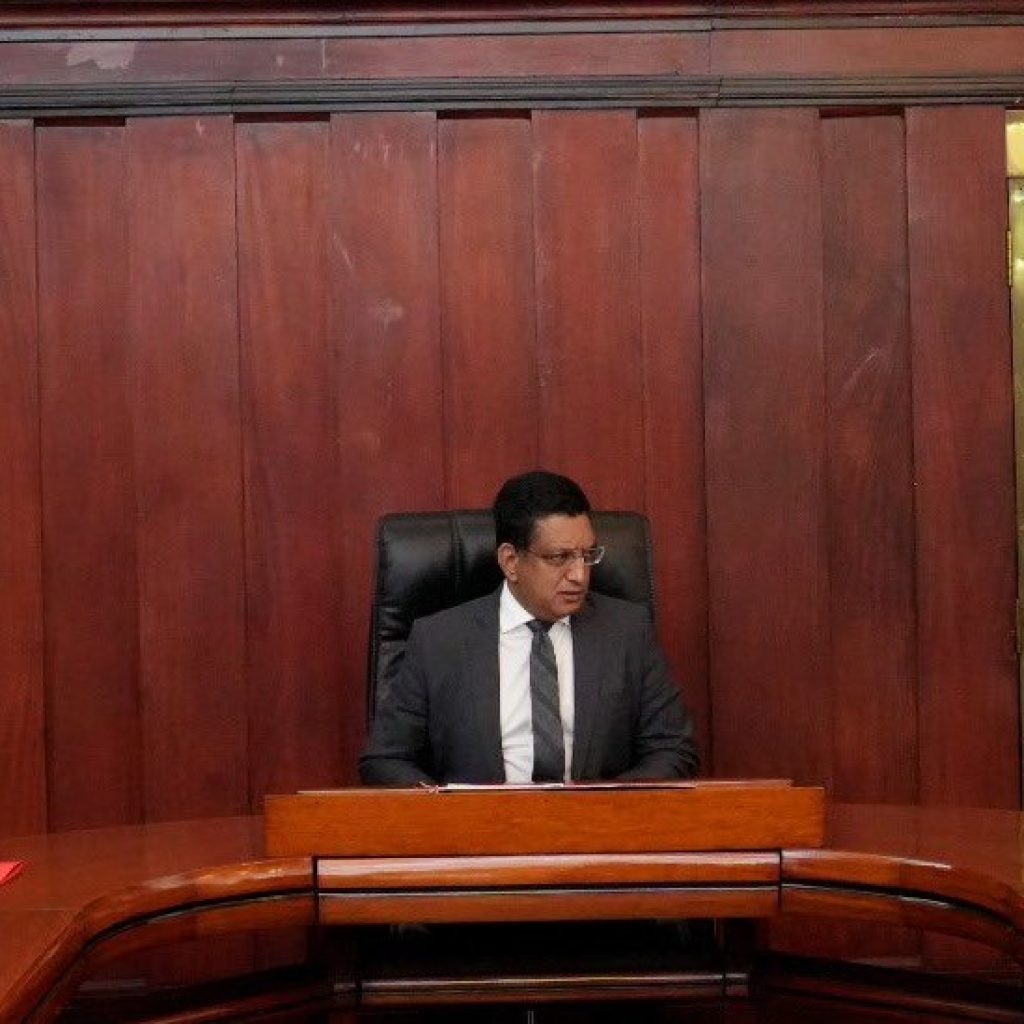
Sri Lankan foreign minister emphasised that Colombo would reach out first to New Delhi whenever it formally applies to join the BRICS grouping….reports Asian Lite News
.
Sri Lankan Foreign Minister Ali Sabry expressed his country’s keenness to join the BRICS grouping on Monday and conveyed that the group has become a ‘good body’ after India became part of it. He emphasized that Sri Lanka would reach out first to India whenever it formally applies to join the BRICS grouping.
“We will look forward for BRICS. Also, I think the cabinet had appointed a sub-committee to look into that and recommend to us. We would like to see that because we would like to have multiple options. Who doesn’t want to? So therefore BRICS is a good body, particularly since India is a part of it,” Sabry said in an interview with ANI.
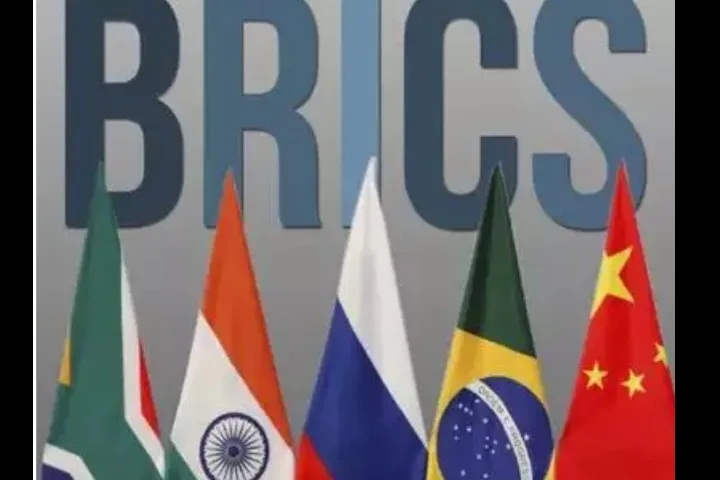
“The first country we would be talking to is India and seek India’s support for us to reach to the BRICS. And then of course I have been invited to take part on the BRICS foreign ministers meeting in Russia. So I hope that I will be there and then we will assess that. And yes, I think that right now personally if you ask me, I think that we should look at BRICS seriously,” he added.
On January 1, 2024, Russia took over the chairmanship of BRICS, an intergovernmental organization that includes Brazil, Russia, India, China, and South Africa, plus four new members: Egypt, Ethiopia, Iran, and the United Arab Emirates.
Egypt, Ethiopia, Iran, Saudi Arabia, and the United Arab Emirates joined BRICS as new full members, which is a strong indication of the growing authority of the association and its role in international affairs.
When asked if Sri Lanka is looking to host any high-level visit from India, the Sri Lankan Minister said that his president visited India recently and now they are looking to host the Indian Prime Minister and a high-level delegation in the country.
“We are looking forward to the visit to the Indian prime Minister as soon as possible when the circumstances conduce you for such a visit because my president already visited last year. So this is the turn for the Indian prime minister to visit Sri Lanka,” he said.
“We would hope for a high-level delegation with a very powerful business delegation accompanying the honourable Prime Minister and visiting Sri Lanka in near future, that will further strengthen our relationship, which is at an all-time high,” he added.
At the invitation of Prime Minister Narendra Modi, Sri Lankan President Ranil Wickremesinghe visited India on an official visit on July 21, 2023. This was President Wickremesinghe’s first visit to India since assuming the current responsibilities.
During his visit, President Wickremesinghe met President Droupadi Murmu and held discussions with the Prime Minister and other Indian dignitaries on a range of issues of mutual interest.
Sri Lanka is an important partner in India’s Neighbourhood First Policy and Vision SAGAR. The visit reinforced the longstanding friendship between the two countries and explored avenues for enhanced connectivity and mutually beneficial cooperation across sectors. (ANI)
India marching towards economic glory: Lankan FM
Hailing the ‘excellent’ relationship between Colombo and New Delhi, Sri Lanka Foreign Minister Ali Sabry said that India is marching towards economic glory, which is not only good for the region but also for countries like Sri Lanka.
He said Sri Lanka is also looking at a lot of investment in ports, renewable energy, and other infrastructure, which makes it a win-win situation for both nations.
“We have an excellent relationship, I think almost all-time high. There is a multi-faceted partnership between the two countries. Economically, we are trying to engage with each other for the common benefit of each other… I think that will open up many more avenues for the Indian to visit Colombo and see,” Sabry told ANI.
“And we are looking at a lot of investment in ports and renewable energy, in other infrastructure. So going forward, we see a win-win situation for both countries. As I always maintained, India is marching towards economic glory, and that’s good for the region and good for the countries like Sri Lanka,” he added.
Shedding light on the civilizational ties shared between Sri Lanka and India, Sabry noted that all the communities in the island nation are influenced by Indian civilization.
“I think the entire civilizational contact we have had for a long period of time in multifaceted Buddhism is Sri Lanka’s biggest gift from India. So there is so much in common between the countries,” he said.
“All communities, Buddhists, Sinhalese, Tamils, Muslims, all have been influenced by the Indian civilization. So we see a lot of partnership going forward, and this Ramayan trail may be a very good beginning for us to further spur the already good tourism and people-to-people connection,” he added.
The sacred water, drawn from the revered Saryu River in Ayodhya, India, marked the auspicious beginning of a journey destined for the Seetha Amman Temple in Seetha Eliya last week. The event, which resonated with ancient traditions and divine reverence, symbolized the deep-rooted cultural ties between India and Sri Lanka.
Seetha Amman Temple, nestled in the tranquil village of Seetha Eliya, holds profound mythological significance as the purported location, Goddess Sita was held captive by Ravana, according to ancient lore.
Enhancing the sanctity of the ceremony, five revered Kalash filled with Saryu water from the holy city of Ayodhya have been ceremoniously brought in, infusing the proceedings with spiritual resonance and symbolic purity.
In terms of connectivity, both nations are, at present, looking at the feasibility of it, the Sri Lankan Foreign Minister said, “I think connectivity, we are looking at the feasibility of it right now. After the President’s visit, Chief of Staff Sagal Ratnaikar visited with a host of senior officials to India, and they had a very good discussion. So like right now we are looking at the feasibility of it. I see once the feasibility is there, probably connectivity things will open.”
“And already I think more flight connections have started from Sri Lanka and from India and also vice versa. Similarly, we are very excited about the launch of the ferry services. So connectivity is multifaceted. Some of those things will take time. But the desire to connect both sides of people and then to help each other is there from both sides,” Sabry added.
The ferry service between Nagappatinam in India and Kankesanthurai (KKS) near Jaffna is a high-speed ferry operated by the Shipping Corporation of India and has a capacity of 150 passengers, according to the Ministry of External Affairs (MEA).
The distance of about 60 nm (110 Km) between Nagapattinam and Kankesanthurai will be covered in approximately 3.5 hours depending on sea conditions, according to MEA.
In order to start the ferry service, the Indian government supported the Tamil Nadu Maritime Board in upgrading facilities at the Nagapattinam port. Meanwhile, the Sri Lankan government had created the necessary infrastructure at the port of KKS.
Meanwhile, the Sri Lankan Foreign Minister also expressed condolences on the demise of Iranian President Ebrahim Raisi and Foreign Minister Hossein Amirabdollahian in a helicopter crash on Sunday afternoon in northwestern Iran.
“We are deeply saddened by both the Iranian president and the party ministers this sudden demise on tragic circumstances. They have been good friends of Sri Lanka. I visited Iran. Iranian foreign minister and the president visited Sri Lanka very recently. So naturally, we are very saddened by this tragic death and also condolences to the family and the people of Iran,” Sabry said.
The chopper, which also carried other officials, had disappeared in the mountains of northwestern Iran after making a ‘hard landing’ on Sunday. All those onboard were confirmed killed on Monday morning around 16 hours after the helicopter they were travelling in crashed in poor weather.
Raisi was returning to Iran following a visit to Azerbaijan when his helicopter came down in bad weather conditions. (ANI)
ALSO READ: India set to participate in G7, Ukraine peace summits