December 16, 2024
4 mins read

Trump picks Nunes to head Intelligence Advisory Board 

Nunes was first elected to public office as one of California’s youngest community college trustees in state history at the age of 23….reports Asian Lite News

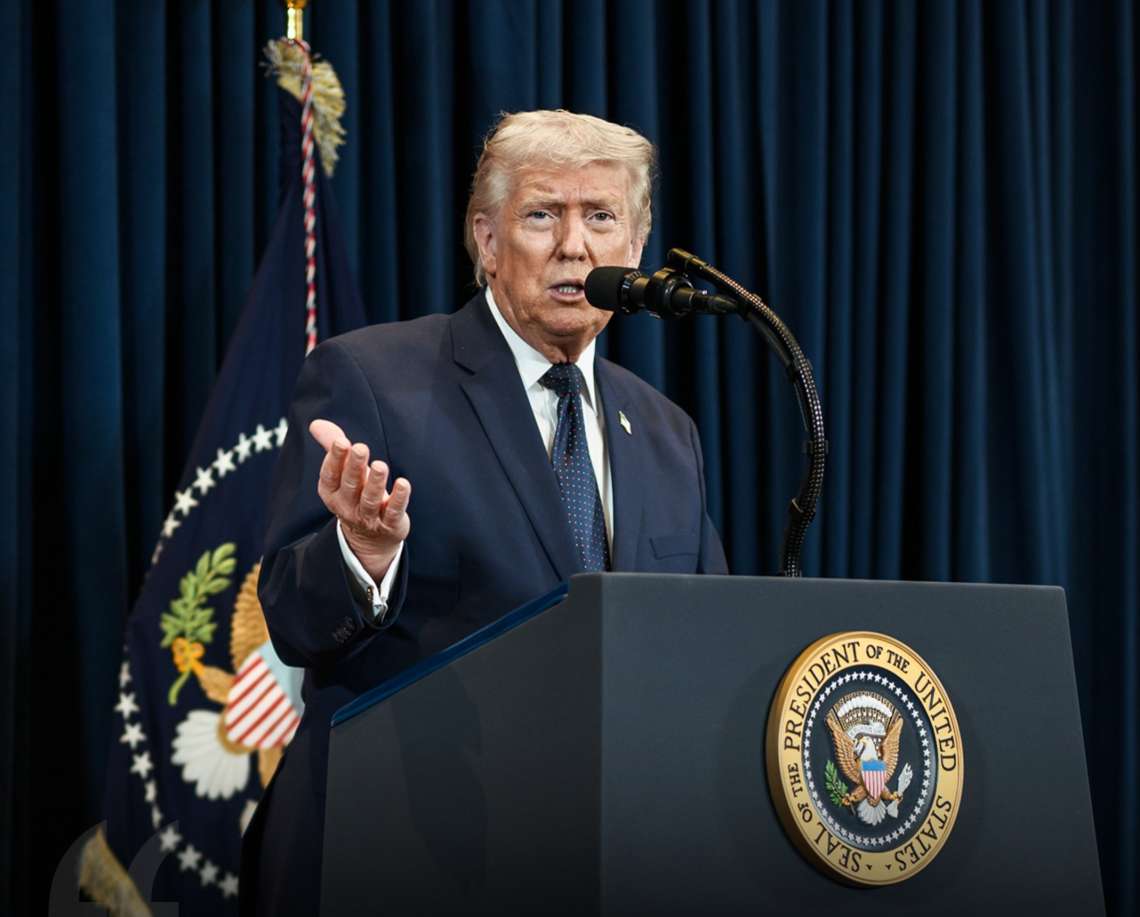
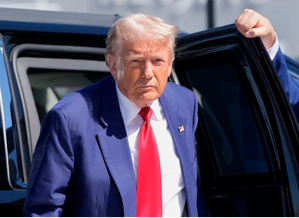
President-elect Donald Trump has appointed Truth Social CEO Devin Nunes as Chairman of the President’s Intelligence Advisory Board. 

Trump emphasised Nunes’ experience as the former Chairman of the House Intelligence Committee and his pivotal role in exposing the Russian interference in the 2016 US elections as key qualifications for the role. 

Sharing a post on the Truth Social platform, Trump wrote, “I am pleased to announce that I will appoint Truth Social CEO Devin Nunes as Chairman of the President’s Intelligence Advisory Board, which consists of distinguished citizens from outside of the Federal Government.” 

“While continuing his leadership of Trump Media & Technology Group, Devin will draw on his experience as former Chairman of the House Intelligence Committee, and his key role in exposing the Russia, Russia, Russia Hoax, to provide me with independent assessments of the effectiveness and propriety of the US Intelligence Community’s activities. Congratulations Devin,” the post added. 

Born on October 1, 1973 in Tulare, California, his family is of Portuguese descent, having emigrated from the Azores to California. Nunes graduated from Tulare Union High School and was the second Member of Congress to attend Tulare Union, following Olympic gold medalist Bob Mathias, who served in the House of Representatives from 1967 to 1975. 

After associate’s work at College of the Sequoias, Nunes graduated from Cal Poly San Luis Obispo, where he received a bachelor’s degree in agricultural business and a master’s degree in agriculture. 

Nunes was first elected to public office as one of California’s youngest community college trustees in state history at the age of 23. As a member of the College of the Sequoias Board from 1996 to 2002, he was an advocate for distance learning and the expansion of programs available to high school students. 

In 2001, he was appointed by President George W. Bush to serve as California State Director for the United States Department of Agriculture’s Rural Development section. He left this post to run for California’s 21st congressional district and now serves in the 22nd district as a result of redistricting in 2010. 

Notably, the President’s Intelligence Advisory Board (PIAB), with its component Intelligence Oversight Board (IOB), is an independent element within the Executive Office of the President. 

The President’s Intelligence Advisory Board assists the President by providing the President with an independent source of advice on the effectiveness with which the Intelligence Community is meeting the nation’s intelligence needs, and the vigor and insight with which the community plans for the future. The Board has access to all information needed to perform its functions and has direct access to the President. 

Grenell named Presidential Envoy for Special Missions 

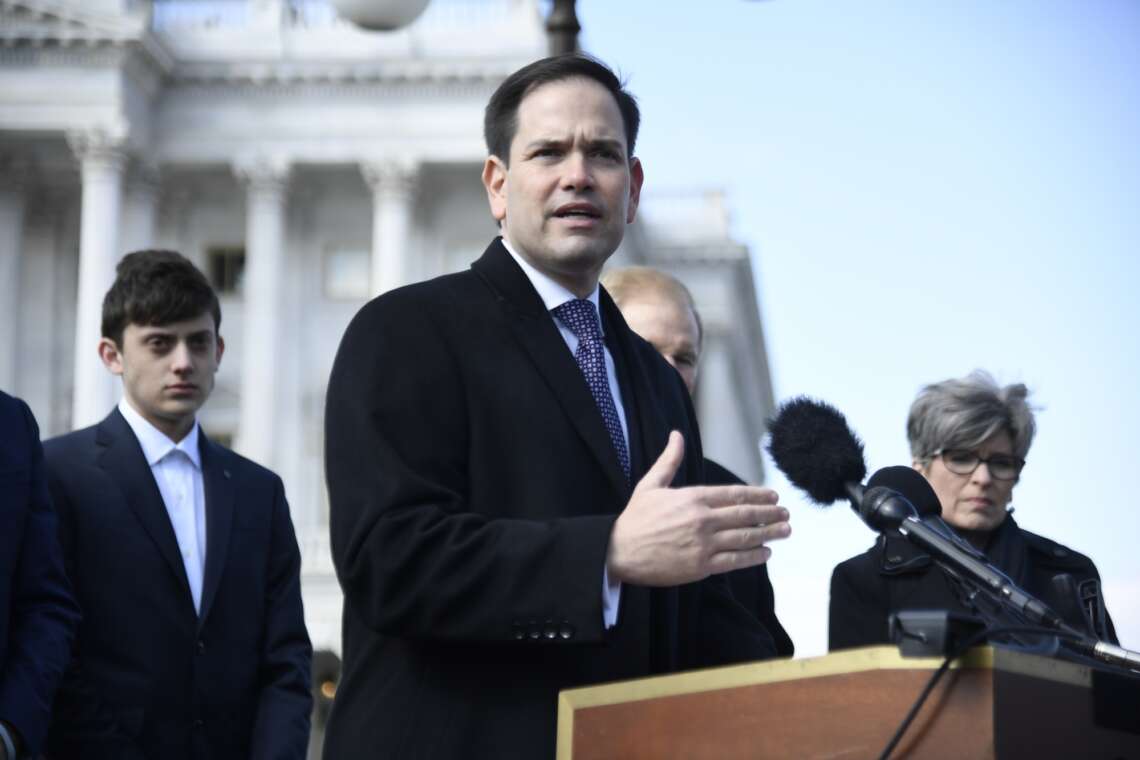
Trump announced the appointment of Richard Grenell as the Presidential Envoy for Special Missions. 

Trump also said that Grenell will work in some of the “hottest spots,” including Venezuela and North Korea. 

In a statement, Trump said, “I am pleased to announce Richard Allen Grenell as our Presidential Envoy for Special Missions. Ric will work in some of the hottest spots around the World, including Venezuela and North Korea.” 

Trump also highlighted Grenell’s extensive work experience, noting his previous roles as the US Ambassador to Germany, Acting Director of National Intelligence, and Presidential Envoy for Kosovo-Serbia negotiations and said that Grenell will continue his fight for “Peace through Strength.” 

“In my first term, Ric was the United States Ambassador to Germany, Acting Director of National Intelligence, and Presidential Envoy for Kosovo-Serbia Negotiations. Previously, he spent eight years in the United Nations Security Council, working with North Korea, and developments in numerous other countries. Ric will continue to fight for Peace through Strength, and always put AMERICA FIRST,” the statement added. 

Notably, Grenell earned a BA from Evangel College and a MPA from Harvard University’s John F. Kennedy School of Government. 

He has served as the primary communications adviser for public officials at the local, state, federal, and international levels, as well as for a Fortune 300-ranked company. Grenell has also worked extensively with clients based in the US as well as around the world and throughout Europe, according to the US Department of State. 

Grenell was also the longest-serving US spokesman in history at the United Nations in New York (2001-2008), where he was part of the negotiation team with the German delegation on a myriad of global issues, including Iran and North Korea sanctions, UN reform and peacekeeping operations. 

Previously, Grenell served as Senior Vice President of Corporate Communications for DaVita, El Segundo, California (2008-2009), Press Secretary, Mayor of San Diego, California (1998-2000), Press Secretary, State of New York Division of Lottery, Albany, New York (1995-1997), Press Secretary, House of Representatives, Washington, DC (1993-1995), Assistant, Campaign Division, National Republican Congressional Committee, Washington, D.C. (1993), Coalitions Coordinator for the Bush-Quayle Re-election campaign, Washington, DC (1992) and Administrator, American Arbitration Association (1989-1991). 

ALSO READ: Xi may skip Trump’s inauguration ceremony

ALSO READ: Trump’s Bold Diplomacy with Xi
Previous Story

1 Billion Summit organises training, mentorship programmes 

Next Story

White House set to finalise H-1B overhaul 

Previous Story

1 Billion Summit organises training, mentorship programmes 

Next Story

White House set to finalise H-1B overhaul 

Latest from -Top News

Pakistan Risks Overstretching Itself in Yemen War

Pakistan’s expanding military role in Saudi Arabia amid the Yemen conflict could strain its defence resources and fragile finances…reports Asian Lite News Desk Pakistan’s military involvement in the war in Yemen may prove unsustainable because of mounting financial pressures and competing security demands, according to a new report. Islamabad’s growing military presence in Saudi Arabia risks stretching its defence resources while exposing the country to greater strategic and economic challenges. An article by Andrew Wilson in One World Outlook describes Pakistan’s involvement as a case of “fiscal and strategic overreach”, arguing that the country lacks the financial flexibility to sustain an expanded military commitment. Pakistan’s external finances depend heavily on an International Monetary Fund (IMF) programme, financial support from Gulf countries and remittances from Pakistani workers in the region. The report argues that deeper military involvement in the conflict could place additional pressure on these sources of financial stability. It also warns that deploying troops and military equipment abroad could weaken Pakistan’s capacity to address security challenges along its eastern border and deal with two domestic insurgencies. The move could also draw Islamabad into a conflict it has sought to approach cautiously. A Reuters report in May, citing Pakistani security and government sources, said Islamabad had deployed around 8,000 troops, a squadron of approximately 16 aircraft, mostly JF-17 fighter jets, two drone squadrons and a Chinese HQ-9 air-defence battery to Saudi Arabia. According to those sources, Riyadh was financing the deployment, with Pakistani personnel operating the equipment. The sources also said a confidential agreement contemplated the possibility of deploying up to 80,000 troops. Islamabad has not confirmed those figures, although it has acknowledged its military presence in Saudi Arabia, including the deployment of fighter jets at King Abdulaziz Air Base from April. The One World Outlook article argues that Saudi financial support can cover allowances and operating expenses but cannot easily replace military equipment needed elsewhere or resolve the political and strategic challenges of participating in the Yemen conflict. Pakistan’s defence budget is another concern. For the 2026-27 financial year, the federal government allocated PKR 3 trillion, or approximately $10.8 billion, to defence services. The allocation represents an 18 per cent increase from the original PKR 2.55 trillion provision and amounts to around 2.1 per cent of projected gross domestic product (GDP). Defence spending accounts for approximately 16 per cent of the federal government’s PKR 18.8 trillion expenditure. Military pensions are budgeted separately at PKR 822 billion, while debt servicing costs stand at approximately PKR 8 trillion, more than two-and-a-half times the defence allocation. The report argues that these competing financial obligations leave little room for additional military expenditure without placing further pressure on public finances. Pakistan’s reliance on IMF assistance also limits its fiscal flexibility. The country must meet the conditions attached to the programme, including a primary budget surplus target of 2 per cent of GDP and continued restraint on development spending. According to the article, these requirements make it difficult for Islamabad to finance an additional military commitment without compromising other budgetary priorities. Pakistan’s economic indicators offer limited reassurance. Economic growth for the 2025-26 financial year is estimated at between 3.6 and 3.7 per cent, while inflation reached approximately 10.3 per cent in September following an energy price shock. Foreign exchange reserves stood at around $21.5 billion at the end of September. Although this marks an improvement from the low levels recorded in 2023, the report notes that the reserves cover only a few months of imports. Financial assistance from Gulf partners remains central to Pakistan’s external stability. The article says Islamabad holds approximately $8 billion in Saudi deposits at its central bank. In July, the State Bank of Pakistan said Riyadh had extended the maturity of $5 billion in deposits to December 2028, easing the country’s immediate external financing requirements. A further $3 billion deposit was also extended in the spring. However, the article argues that these arrangements provide temporary relief rather than long-term financial independence, particularly as regional conflict threatens the stability of the Gulf economies on which Pakistan relies. The report concludes that Pakistan faces a difficult balance between supporting Saudi Arabia militarily and preserving the financial and military resources needed to address its domestic and regional challenges.

UK and Germany Ratify Kensington Treaty

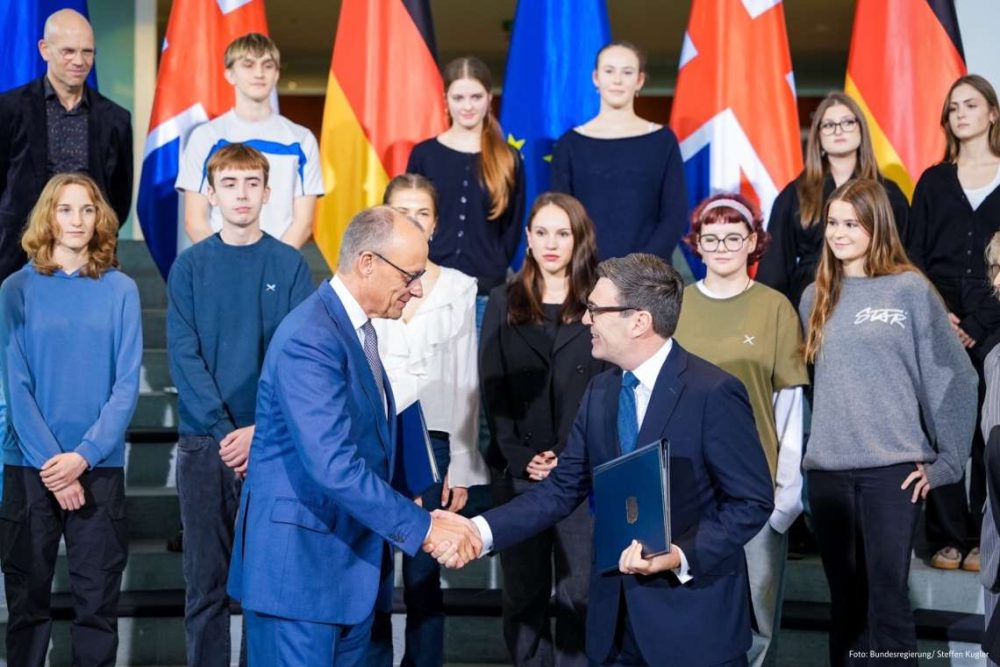
Britain and Germany ratify the Kensington Treaty, agreeing new cooperation on AI, quantum research, defence and security while targeting investment, jobs and Russian hybrid threats…reports Asian Lite News Desk Britain and Germany

Economic tide is turning in Bangladesh

If there is one thing that can bring some comfort to the struggling Bangladeshi economy, it is good relations with India. Bangladesh should remember that Delhi’s backing, through easy supplies of essentials
Go toTop

Don't Miss

India Critical Anchor for Indo-Pacific: Hegseth

Pentagon chief says India’s military modernisation supports shared regional security

Former WWE CEO McMahon named education secretary 

Trump described McMahon as a “fierce advocate for Parents’ Rights”