December 16, 2024
4 mins read

White House set to finalise H-1B overhaul 

The draft rule also removes the mandate for the annual publication of eligible countries for these seasonal visa programs, simplifying program administration…reports Asian Lite News

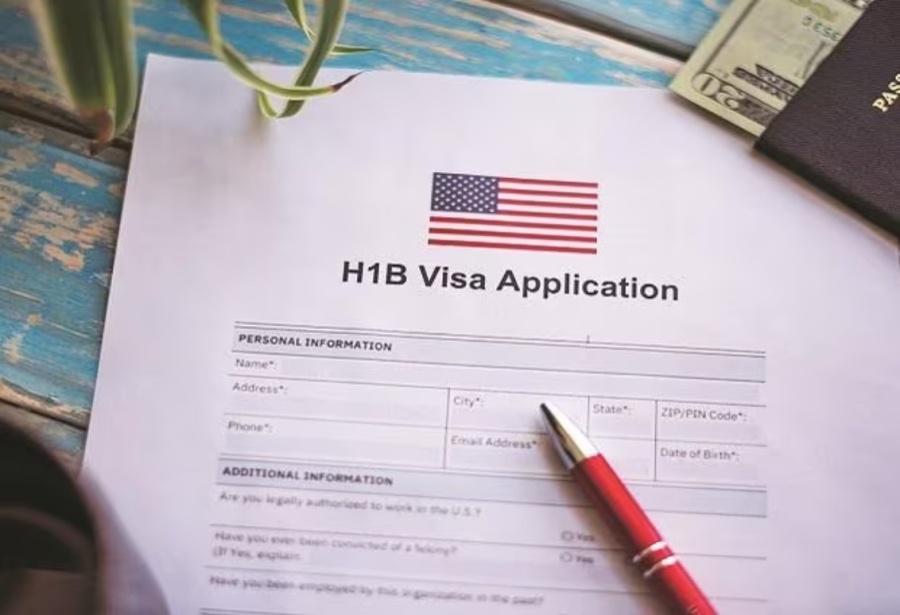
The White House Office of Information and Regulatory Affairs (OIRA) is in the final stages of reviewing a significant overhaul of the H-1B visa program, according to a report by Bloomberg Law. This marks the last step before the new regulations are made public. 

Last year, the US Citizenship and Immigration Services (USCIS) issued draft regulations that included changes to eligibility standards, particularly degree requirements, for the H-1B visa, which tech companies widely use to hire skilled foreign workers. OIRA received the final rule (1615-AC70) on Thursday, the report added. 

The proposed changes also include an update to the annual lottery system for H-1B visas, aiming to give each potential applicant an equal chance in the selection process. This adjustment was finalized in January, ahead of the fiscal 2025 visa lottery. The program has an annual cap of 85,000 new visas, with 20,000 reserved for applicants holding advanced degrees from US institutions. 

In addition to these changes, the draft regulations clarify criteria for cap-exempt visas and introduce a policy that grants deference to prior agency decisions when processing visa extension requests. 

Meanwhile, separate regulations aimed at improving worker protections in the H-2A and H-2B seasonal visa programs also passed White House review on Thursday. According to the report, these visa programs are used for agricultural and non-farm seasonal workers. A draft rule released last year (RIN 1615-AC76) addresses issues such as illegal fees and worker abuses, proposing penalties including up to a four-year ban for employers found in violation of worker safeguards. 

The draft rule also removes the mandate for the annual publication of eligible countries for these seasonal visa programs, simplifying program administration. 

Once the White House review is complete, the finalized regulations for both the H-1B and seasonal visa programs will be published, potentially affecting employers and foreign workers. These updates are part of the Biden administration’s broader efforts to modernize U.S. immigration policies and enhance worker protections. 

Drop in H-1B visa approvals   

In fiscal year 2024, the top seven Indian IT companies collectively saw only 7,299 H-1B visa petitions for new employment approved, marking a dramatic decrease from the 14,792 approvals reported in fiscal year 2015. This analysis, conducted by the National Foundation for American Policy (NFAP), a non-partisan think tank based in the United States, highlights a significant downward trend in approvals for these firms.  

The 7,299 approvals accounted for just 5.2% of the total H-1B visa approvals for FY24, equating to a mere 0.004% of the US civilian workforce. Denial rates for H-1B visa applications remained low, recorded at 2.5%, a slight drop from 3.5% in FY23, according to the NFAP findings.  

The report also cautioned that denial rates could rise if the incoming Trump Administration reinstates the restrictive immigration policies seen during his first term.  

Meanwhile, the US Department of Homeland Security (DHS) announced a significant extension of the automatic work permit renewal period for spouses of H-1B and L-1 visa holders, according to an announcement by USCIS. Starting January 13, 2025, the renewal period will increase from 180 days to up to 540 days for applications submitted on or after May 4, 2022. 

H-1B visa approvals for Indian IT firms drop  

The H-1B visa approvals for Indian IT firms have dropped by more than half since 2015, a new study has found. According to an analysis of US data by the National Foundation for American Policy (NFAP) – a US-based non-partisan think-tank – India’s top seven IT firms had only 7,299 H-1B petitions for new employment approved in fiscal year 2024 as opposed to 14,792 approvals in FY15. 

The H-1B visa is a temporary nonimmigrant visa allotted through a lottery system that offers a route for graduates and skilled workers to work in the US in specialty occupations. 

Nearly half of the approved H-1B petitions in FY24 (49.1%) were in professional, scientific and technical services, followed by educational services (11.9%), manufacturing (9.3%), health care and social assistance (6.5%). 

Amazon, which remains the biggest sponsor of H-1B visas, saw 3,871 approvals in FY24, lower than 4,052 in the previous year. Similarly, Indian IT giants like Cognizant (2,837), Infosys (2,504), TCS (Tata Consultancy Services) (1,452) and others also saw a significant drop in H-1B visa approvals, the report stated. 

Several analysts have linked the decline in approvals to global recession and a shift in workforce needs. Ajay Sharma, founder of Abhinav Immigration Services, said, “The only reason I can think of is that the global recession and AI are impacting the business models of all major players. They do not need to hire for redundant positions or for positions in divisions that are losing business due to the recession.” 

ALSO READ: Solidarity With Syrians 

Previous Story

Trump picks Nunes to head Intelligence Advisory Board 

Next Story

Trump, Netanyahu talk Iran over phone 

Previous Story

Trump picks Nunes to head Intelligence Advisory Board 

Next Story

Trump, Netanyahu talk Iran over phone 

Latest from -Top News

Pakistan Risks Overstretching Itself in Yemen War

Pakistan’s expanding military role in Saudi Arabia amid the Yemen conflict could strain its defence resources and fragile finances…reports Asian Lite News Desk Pakistan’s military involvement in the war in Yemen may prove unsustainable because of mounting financial pressures and competing security demands, according to a new report. Islamabad’s growing military presence in Saudi Arabia risks stretching its defence resources while exposing the country to greater strategic and economic challenges. An article by Andrew Wilson in One World Outlook describes Pakistan’s involvement as a case of “fiscal and strategic overreach”, arguing that the country lacks the financial flexibility to sustain an expanded military commitment. Pakistan’s external finances depend heavily on an International Monetary Fund (IMF) programme, financial support from Gulf countries and remittances from Pakistani workers in the region. The report argues that deeper military involvement in the conflict could place additional pressure on these sources of financial stability. It also warns that deploying troops and military equipment abroad could weaken Pakistan’s capacity to address security challenges along its eastern border and deal with two domestic insurgencies. The move could also draw Islamabad into a conflict it has sought to approach cautiously. A Reuters report in May, citing Pakistani security and government sources, said Islamabad had deployed around 8,000 troops, a squadron of approximately 16 aircraft, mostly JF-17 fighter jets, two drone squadrons and a Chinese HQ-9 air-defence battery to Saudi Arabia. According to those sources, Riyadh was financing the deployment, with Pakistani personnel operating the equipment. The sources also said a confidential agreement contemplated the possibility of deploying up to 80,000 troops. Islamabad has not confirmed those figures, although it has acknowledged its military presence in Saudi Arabia, including the deployment of fighter jets at King Abdulaziz Air Base from April. The One World Outlook article argues that Saudi financial support can cover allowances and operating expenses but cannot easily replace military equipment needed elsewhere or resolve the political and strategic challenges of participating in the Yemen conflict. Pakistan’s defence budget is another concern. For the 2026-27 financial year, the federal government allocated PKR 3 trillion, or approximately $10.8 billion, to defence services. The allocation represents an 18 per cent increase from the original PKR 2.55 trillion provision and amounts to around 2.1 per cent of projected gross domestic product (GDP). Defence spending accounts for approximately 16 per cent of the federal government’s PKR 18.8 trillion expenditure. Military pensions are budgeted separately at PKR 822 billion, while debt servicing costs stand at approximately PKR 8 trillion, more than two-and-a-half times the defence allocation. The report argues that these competing financial obligations leave little room for additional military expenditure without placing further pressure on public finances. Pakistan’s reliance on IMF assistance also limits its fiscal flexibility. The country must meet the conditions attached to the programme, including a primary budget surplus target of 2 per cent of GDP and continued restraint on development spending. According to the article, these requirements make it difficult for Islamabad to finance an additional military commitment without compromising other budgetary priorities. Pakistan’s economic indicators offer limited reassurance. Economic growth for the 2025-26 financial year is estimated at between 3.6 and 3.7 per cent, while inflation reached approximately 10.3 per cent in September following an energy price shock. Foreign exchange reserves stood at around $21.5 billion at the end of September. Although this marks an improvement from the low levels recorded in 2023, the report notes that the reserves cover only a few months of imports. Financial assistance from Gulf partners remains central to Pakistan’s external stability. The article says Islamabad holds approximately $8 billion in Saudi deposits at its central bank. In July, the State Bank of Pakistan said Riyadh had extended the maturity of $5 billion in deposits to December 2028, easing the country’s immediate external financing requirements. A further $3 billion deposit was also extended in the spring. However, the article argues that these arrangements provide temporary relief rather than long-term financial independence, particularly as regional conflict threatens the stability of the Gulf economies on which Pakistan relies. The report concludes that Pakistan faces a difficult balance between supporting Saudi Arabia militarily and preserving the financial and military resources needed to address its domestic and regional challenges.

UK and Germany Ratify Kensington Treaty

Britain and Germany ratify the Kensington Treaty, agreeing new cooperation on AI, quantum research, defence and security while targeting investment, jobs and Russian hybrid threats…reports Asian Lite News Desk Britain and Germany

Economic tide is turning in Bangladesh

If there is one thing that can bring some comfort to the struggling Bangladeshi economy, it is good relations with India. Bangladesh should remember that Delhi’s backing, through easy supplies of essentials

DP World Lands 15-Year Bangladesh Port Deal

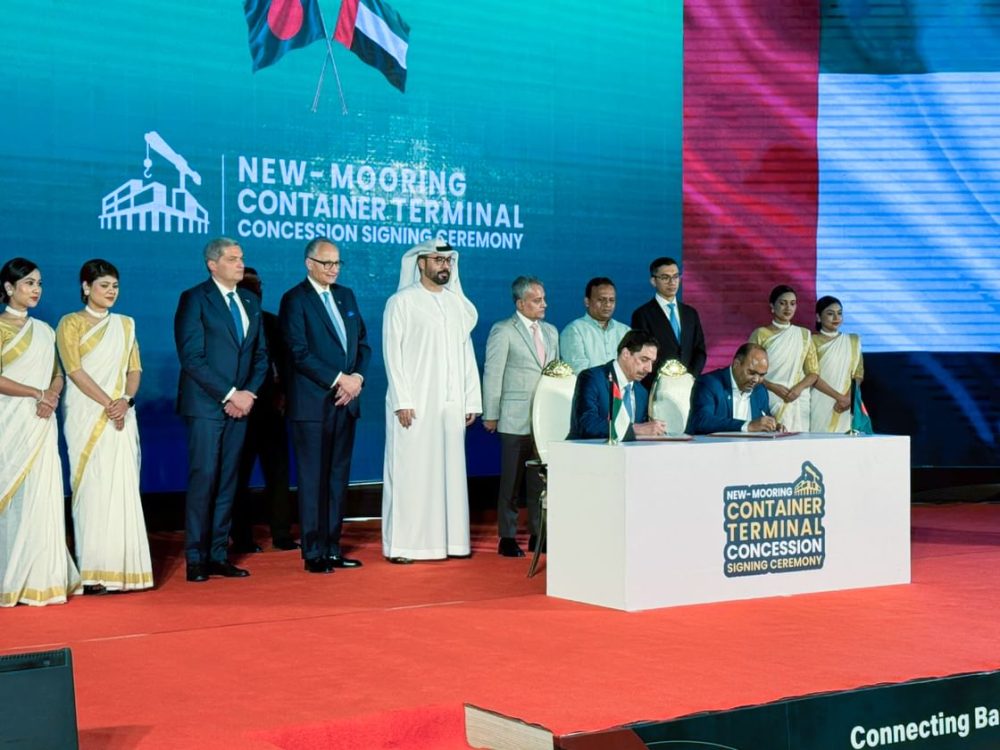
The agreement between the Chittagong Port Authority (CPA) and DP World covers the New Mooring Container Terminal…reports Asian Lite News Desk Bangladesh has signed a 15-year concession agreement with global ports operator
Go toTop

Don't Miss

US lauds Nepal’s commitment to democracy

US further added that it will continue to stand with

Delhi Dismisses Trump’s Oil Claim

India’s foreign ministry says it is “not aware” of a