November 12, 2024
5 mins read

UK PM to unveil new climate goal at COP29 

The UK will pledge to cut emissions by 81% compared with 1990 levels by 2035, a target in line with the recommendations of the Climate Change Committee…reports Asian Lite News

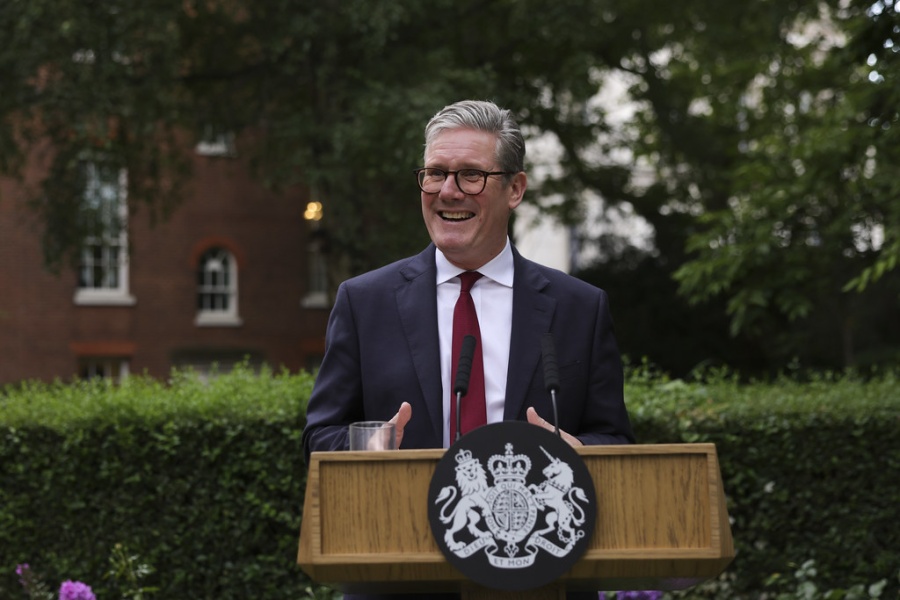
Keir Starmer will announce a stringent new climate goal for the UK on Tuesday, the Guardian can reveal, with a target in line with the advice given to the government by its scientists and independent advisers. 

The UK will pledge to cut emissions by 81% compared with 1990 levels by 2035, a target in line with the recommendations of the Climate Change Committee. 

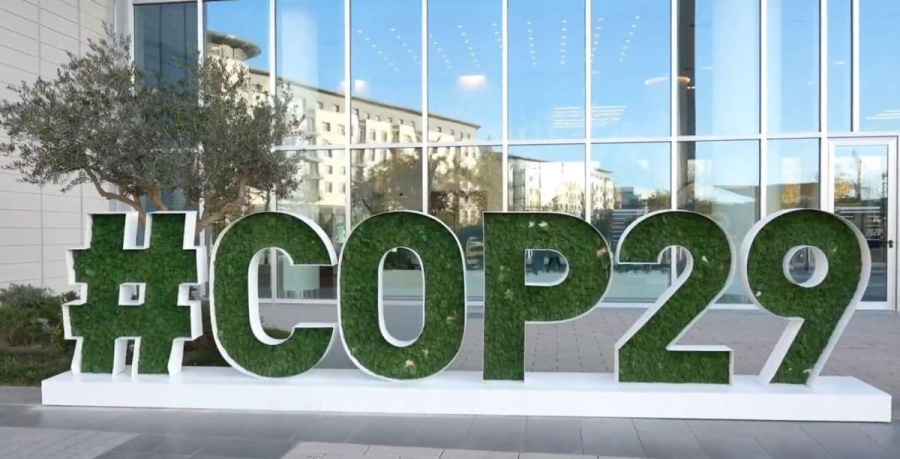
The goal will be one of the first national plans on cutting carbon, known as “nationally determined contributions” or NDCs in UN jargon, to be unveiled at Cop29, the crucial UN climate summit taking place in Azerbaijan this week, and is expected to be one of the most ambitious of any government at the talks. 

The goal would be achieved by decarbonising the power sector and through a massive expansion of offshore wind, as well as through investments in carbon capture and storage and nuclear energy. 

The UK is one of the first countries to announce an NDC, which are not due until February next year. Campaigners have found the NDCs submitted so far “underwhelming”. The NDC submitted by the previous Cop host, the United Arab Emirates, was described as “greenwashing” by 350.org. A submission by the next host, Brazil, was also criticised for being insufficient and called “misaligned” by Climate Observatory. 

Friends of the Earth’s head of campaigns, Rosie Downes, said: “With the warning signals flashing red, a planet battered by increasingly severe floods, storms and heatwaves, and the election of climate denier President Trump, the need for climate leadership by the UK has never been more urgent. Starmer’s 2035 carbon-reduction pledge is a step in the right direction but must be seen as a floor to the level of ambition, not a ceiling. Deeper, faster cuts are needed to help avert the climate collision course we are on. 

“Furthermore, if these targets are to be credible, they must be backed by a clear plan to ensure they are met. The UK’s existing 2030 commitment is currently way off course.” 

On Monday, the World Meteorological Organization followed the EU space programme in saying 2024 was on track to become the hottest year on record. 

Few big countries have yet come up with NDCs. The Cop29 talks opened on Monday, but will ratchet up a gear on Tuesday when scores of heads of state and government fly in from around the world. 

Giorgia Meloni, the prime minister of Italy, Recep Tayyip Erdoğan, the president of Turkey and Mohammed bin Salman, the crown prince of Saudi Arabia, are among the other leaders attending. Joe Biden of the US, Xi Jinping of China, Olaf Scholz of Germany and Emmanuel Macron of France will not be at the talks, with the latter two preoccupied by domestic political crises. 

On Monday, delegates heard stark warnings from the UN climate chief, Simon Stiell, and the Cop president and Azerbaijani environment minister, Mukhtar Babayev, urging countries to step up with strong commitments on the climate before it is too late. 

This summit, at which nearly 200 countries are expected to be represented, will focus on climate finance – ways of getting poor countries access to the money they need to cut their greenhouse gas emissions and adapt to the impacts of extreme weather. 

About $1tn (£780bn) is expected to be needed each year by 2035, but developed countries have agreed to ensure only $100bn a year from public funds. 

The host country claimed an early win in the talks by signing off on a deal intended to make carbon offsets work for the planet, and as a source of cash for poor countries. 

Diplomats have given the green light to rules that govern the trade of “carbon credits”, breaking a deadlock that has lasted years and paving the way for rich countries to pay for cheap climate action abroad while delaying expensive emission cuts at home. But critics warned the rules were rushed through without following proper process. 

Carbon offsets, or carbon credits, are awarded to countries with large forests that absorb carbon dioxide from the atmosphere, or to projects that reduce greenhouse gas emissions, such as wind or solar farms. Selling them should be a source of cash for the developing world, but years of argument over how exactly such a system would work have prevented the widespread uptake of trading systems. 

The beginnings of a potential system for trading were set out in article 6 of the Paris climate agreement in 2015, but countries have struggled to put the idea into practice, owing to disagreements over technical issues, such as how to avoid double counting, and ideological differences, as some countries are wary of using carbon offsets. 

Azerbaijan hopes the progress on article 6 will clear the way for more substantive talks, for the rest of the scheduled fortnight, on a goal of making $1tn a year in climate finance available to poorer countries by 2035. 

However, many civil society groups remain concerned about article 6. Erika Lennon, an attorney at the Center for International Environmental Law, said: “We’ve seen over and over again how carbon markets are not doing what they claim to be doing, as well as market projects that violate people’s rights. If they don’t have strong rules in place to prevent all of the abuses, it can totally undermine the integrity of the Paris agreement.” 

ALSO READ: Bank of England cuts interest rates by 0.25 points to 4.75%

Previous Story

‘Bumrah to Lead India if Rohit Misses Perth Test’  

Next Story

Starmer has no plans to meet the Taliban at Baku 

Previous Story

‘Bumrah to Lead India if Rohit Misses Perth Test’  

Next Story

Starmer has no plans to meet the Taliban at Baku 

Latest from -Top News

Pakistan Risks Overstretching Itself in Yemen War

Pakistan’s expanding military role in Saudi Arabia amid the Yemen conflict could strain its defence resources and fragile finances…reports Asian Lite News Desk Pakistan’s military involvement in the war in Yemen may prove unsustainable because of mounting financial pressures and competing security demands, according to a new report. Islamabad’s growing military presence in Saudi Arabia risks stretching its defence resources while exposing the country to greater strategic and economic challenges. An article by Andrew Wilson in One World Outlook describes Pakistan’s involvement as a case of “fiscal and strategic overreach”, arguing that the country lacks the financial flexibility to sustain an expanded military commitment. Pakistan’s external finances depend heavily on an International Monetary Fund (IMF) programme, financial support from Gulf countries and remittances from Pakistani workers in the region. The report argues that deeper military involvement in the conflict could place additional pressure on these sources of financial stability. It also warns that deploying troops and military equipment abroad could weaken Pakistan’s capacity to address security challenges along its eastern border and deal with two domestic insurgencies. The move could also draw Islamabad into a conflict it has sought to approach cautiously. A Reuters report in May, citing Pakistani security and government sources, said Islamabad had deployed around 8,000 troops, a squadron of approximately 16 aircraft, mostly JF-17 fighter jets, two drone squadrons and a Chinese HQ-9 air-defence battery to Saudi Arabia. According to those sources, Riyadh was financing the deployment, with Pakistani personnel operating the equipment. The sources also said a confidential agreement contemplated the possibility of deploying up to 80,000 troops. Islamabad has not confirmed those figures, although it has acknowledged its military presence in Saudi Arabia, including the deployment of fighter jets at King Abdulaziz Air Base from April. The One World Outlook article argues that Saudi financial support can cover allowances and operating expenses but cannot easily replace military equipment needed elsewhere or resolve the political and strategic challenges of participating in the Yemen conflict. Pakistan’s defence budget is another concern. For the 2026-27 financial year, the federal government allocated PKR 3 trillion, or approximately $10.8 billion, to defence services. The allocation represents an 18 per cent increase from the original PKR 2.55 trillion provision and amounts to around 2.1 per cent of projected gross domestic product (GDP). Defence spending accounts for approximately 16 per cent of the federal government’s PKR 18.8 trillion expenditure. Military pensions are budgeted separately at PKR 822 billion, while debt servicing costs stand at approximately PKR 8 trillion, more than two-and-a-half times the defence allocation. The report argues that these competing financial obligations leave little room for additional military expenditure without placing further pressure on public finances. Pakistan’s reliance on IMF assistance also limits its fiscal flexibility. The country must meet the conditions attached to the programme, including a primary budget surplus target of 2 per cent of GDP and continued restraint on development spending. According to the article, these requirements make it difficult for Islamabad to finance an additional military commitment without compromising other budgetary priorities. Pakistan’s economic indicators offer limited reassurance. Economic growth for the 2025-26 financial year is estimated at between 3.6 and 3.7 per cent, while inflation reached approximately 10.3 per cent in September following an energy price shock. Foreign exchange reserves stood at around $21.5 billion at the end of September. Although this marks an improvement from the low levels recorded in 2023, the report notes that the reserves cover only a few months of imports. Financial assistance from Gulf partners remains central to Pakistan’s external stability. The article says Islamabad holds approximately $8 billion in Saudi deposits at its central bank. In July, the State Bank of Pakistan said Riyadh had extended the maturity of $5 billion in deposits to December 2028, easing the country’s immediate external financing requirements. A further $3 billion deposit was also extended in the spring. However, the article argues that these arrangements provide temporary relief rather than long-term financial independence, particularly as regional conflict threatens the stability of the Gulf economies on which Pakistan relies. The report concludes that Pakistan faces a difficult balance between supporting Saudi Arabia militarily and preserving the financial and military resources needed to address its domestic and regional challenges.

UK and Germany Ratify Kensington Treaty

Britain and Germany ratify the Kensington Treaty, agreeing new cooperation on AI, quantum research, defence and security while targeting investment, jobs and Russian hybrid threats…reports Asian Lite News Desk Britain and Germany

Economic tide is turning in Bangladesh

If there is one thing that can bring some comfort to the struggling Bangladeshi economy, it is good relations with India. Bangladesh should remember that Delhi’s backing, through easy supplies of essentials
Go toTop

Don't Miss

Energy suppliers to spend £500m to cushion pain of rising bills 

The deal was announced by the government alongside an update

Foreign Secretary promises honest investment in Africa

The fund supports 37 of the most vulnerable countries across