Australian Indigenous fashion took the spotlight in New Delhi on Tuesday as the Australian High Commission, in partnership with Kirrikin and the Fashion Design Council of India (FDCI), hosted a special fashion showcase celebrating the art and culture of Australia’s First Nations people.
The landmark event marked the Indian debut of Kirrikin, an Indigenous Australian fashion label founded by Amanda Healy, a Wonnarua woman and social entrepreneur. The brand is renowned for transforming hand-painted artworks by Indigenous artists into luxurious clothing that reflects the deep connection to Australia’s land, culture, and heritage.
Kirrikin’s designs, crafted in Noida, India, are a symbol of the growing creative and trade partnership between the two nations under the Australia-India Economic Cooperation and Trade Agreement (AI-ECTA). This collaboration has become a model of how creativity and commerce can merge to celebrate identity, inclusivity, and innovation.
The name “Kirrikin” originates from the Wonnarua language, meaning “Sunday’s best clothes.” Originally recorded by missionaries in the 1820s, the word has been revived through the brand’s work—serving as a reminder of the importance of preserving Indigenous Australian languages and traditions.
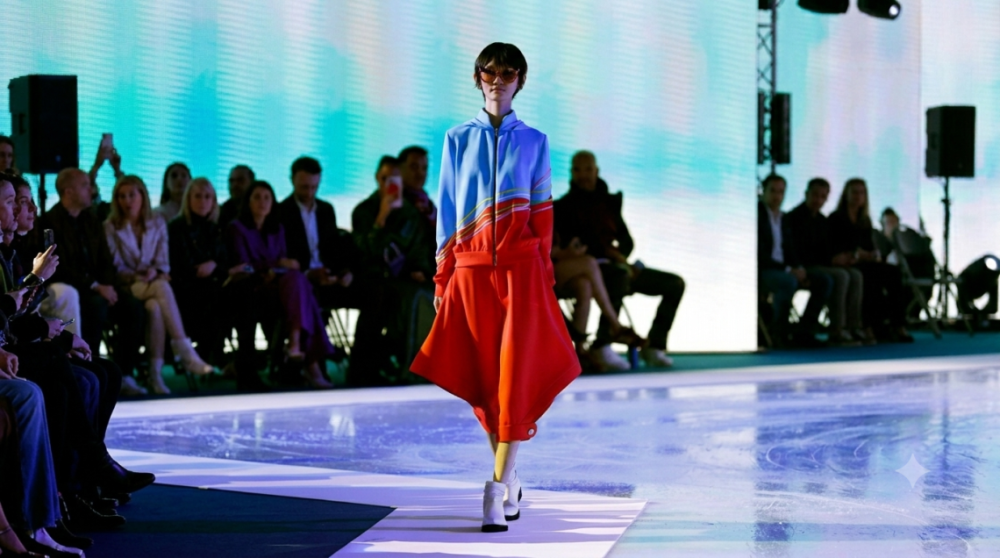
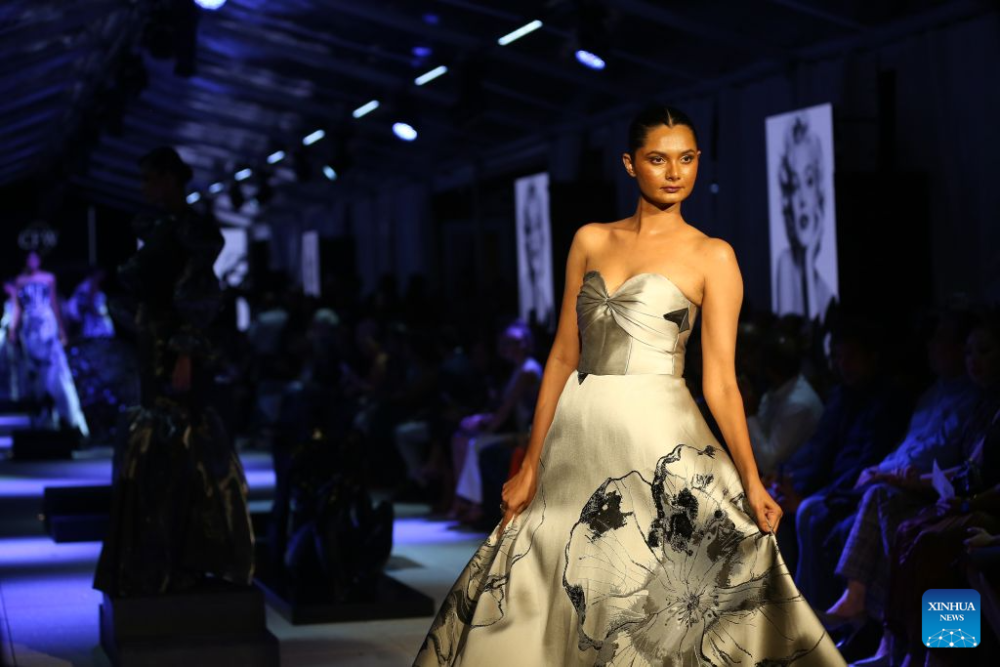
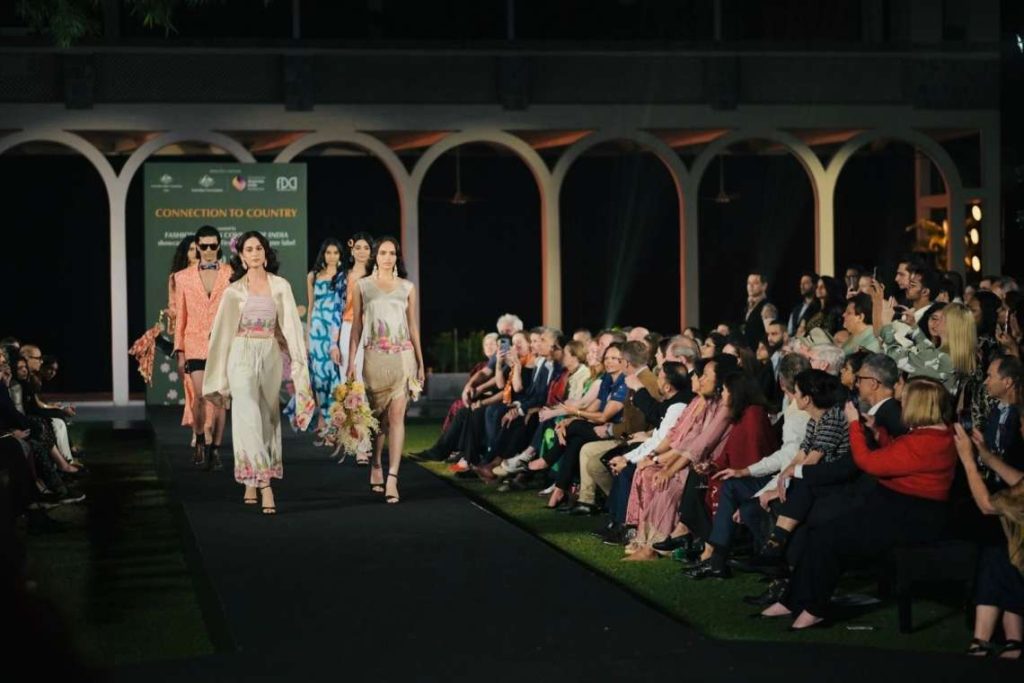
The vibrant showcase, held in the capital’s diplomatic district, featured striking designs that married contemporary silhouettes with traditional Indigenous art, transforming the runway into a moving canvas of colour and storytelling. The event attracted diplomats, artists, designers, and cultural representatives, all witnessing the seamless blend of Australian creativity and Indian craftsmanship.
Australian High Commissioner to India Philip Green OAM described the evening as a celebration of resilience, identity, and global collaboration. “This event is a powerful celebration of the creativity, resilience, and cultural richness of Australia’s First Nations peoples. Kirrikin’s journey exemplifies the strength of trade and cultural exchange under the Australia-India partnership. We are proud to bring their designs to the runway in Delhi in collaboration with the Fashion Design Council of India,” Green said.
Kirrikin’s founder Amanda Healy said she was deeply honoured to bring Indigenous fashion to Indian audiences. “Celebrating this collaboration with the Australian High Commission and the Fashion Design Council of India is a proud moment for Kirrikin. Bringing First Nations fashion, art, and storytelling to India is an honour, and this showcase highlights the creativity and powerful voices of Indigenous Australian designers,” she said.
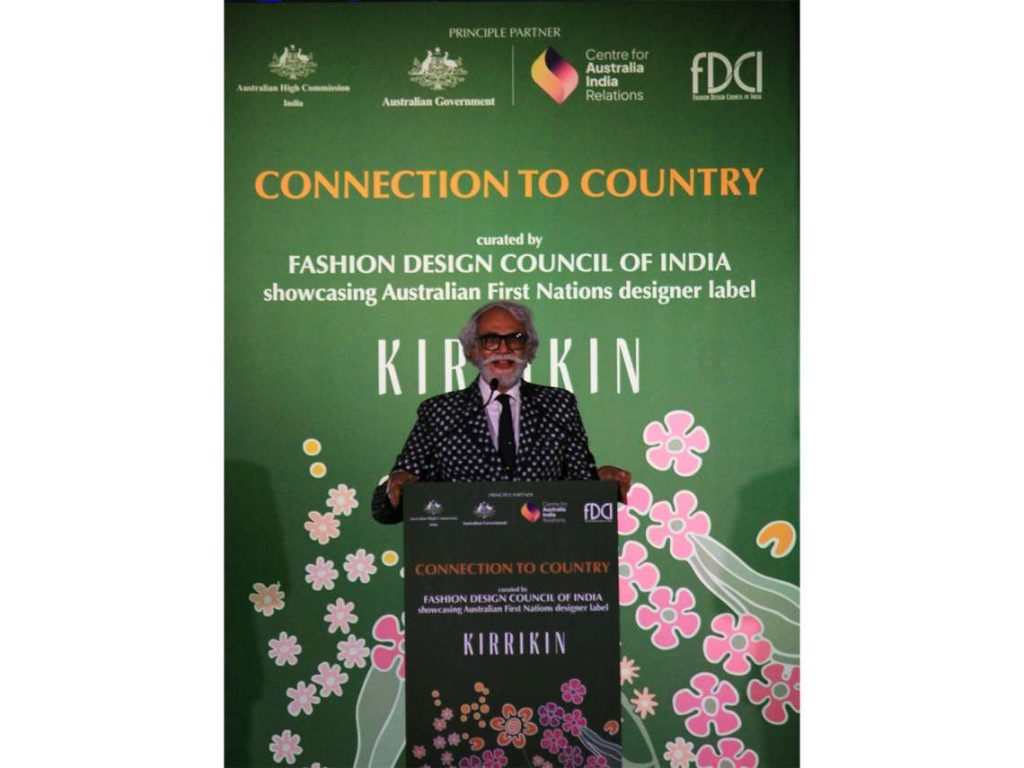
FDCI Chairman Sunil Sethi lauded the collaboration as an inspiring example of fashion bridging borders. “Fashion has always been a bridge, and this showcase is a beautiful meeting of cultures,” he said.
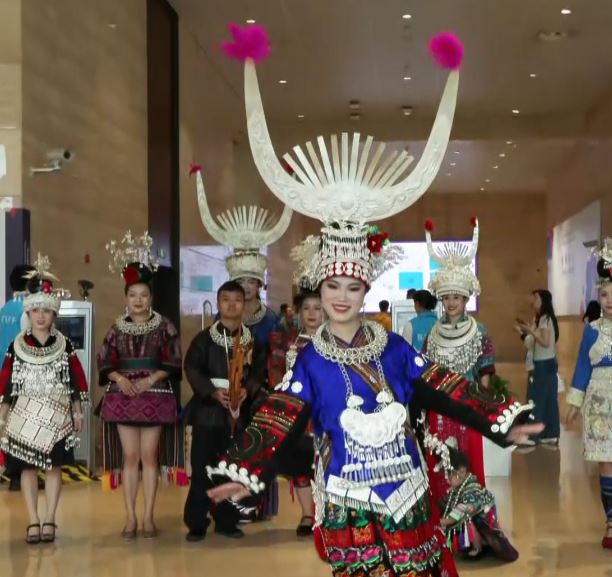
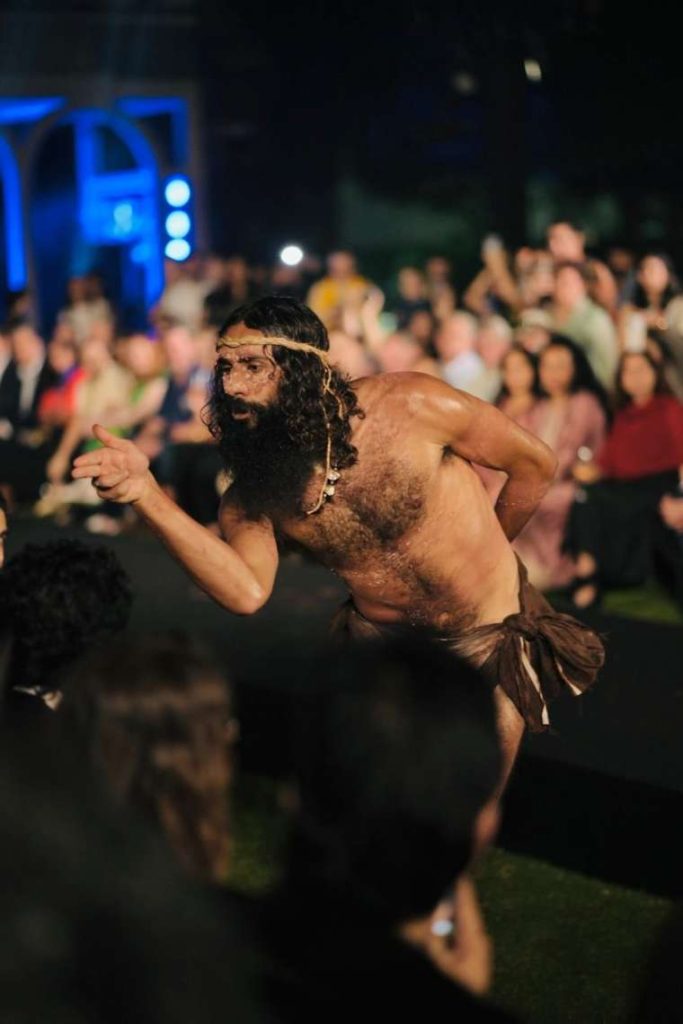
Adding to the cultural richness of the evening, First Nations artists performed traditional music and dance, including a soulful Didgeridoo performance that resonated through the hall, grounding the audience in the spiritual depth of Indigenous heritage.
The immersive event went beyond fashion—it became a narrative of shared respect between two nations, blending craftsmanship, cultural preservation, and sustainability.
Australia’s Deputy High Commissioner to India, Nick McCaffrey, captured the spirit of the event in a post on X (formerly Twitter), writing, “A powerful evening where culture meets couture, Australian First Nations label Kirrikin weaved stories of connection to country with India’s creative community.”
Swati Dave, Chair of the Advisory Board at the Centre for Australia-India Relations, praised the initiative as an essential step toward expanding First Nations entrepreneurship globally. “The Centre for Australia India Relations is committed to supporting First Nations businesses like Kirrikin to increase trade and investment with India, and we are proud to support this fashion showcase, celebrating First Nations creativity and entrepreneurship. It is also a powerful way to share First Nations stories with Indian audiences through art and design,” she said.
The evening symbolised a new chapter in Australia-India cultural diplomacy, highlighting the power of art and trade to nurture mutual understanding. Beyond the garments, each piece carried a story — one of land, ancestry, and a vision for a more inclusive global fashion landscape.
As the models walked the runway adorned in prints inspired by sacred symbols and dreamtime stories, the message was clear: fashion can transcend borders, preserve traditions, and spark global unity.
For both India and Australia, the event marked not just an artistic collaboration but a step forward in strengthening bilateral ties through creative exchange. Kirrikin’s debut in India stands as a testament to how Indigenous heritage can find universal resonance, weaving together communities and cultures through beauty, craftsmanship, and storytelling.