June 29, 2025
2 mins read

Alps Turn to ‘Swiss Cheese’

Switzerland’s reliance on glacial runoff for hydroelectric power faces growing risk — as glaciers shrink, short-term water flow may rise, but long-term shortages could threaten energy and water supplies.

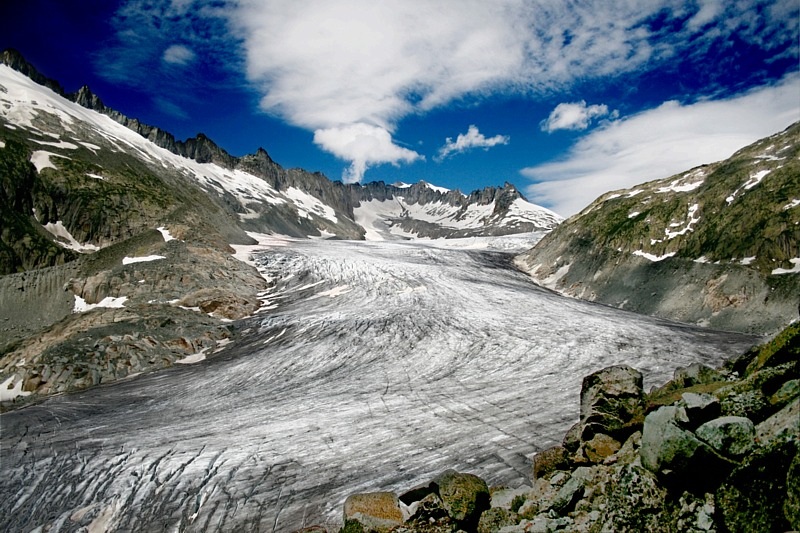
Switzerland’s glaciers — long considered icons of Alpine majesty — are deteriorating at an alarming rate, with scientists now observing structural changes that resemble “Swiss cheese” as climate change accelerates their collapse.

Once dynamic systems capable of regenerating through seasonal snowfall at high altitudes, many of Switzerland’s glaciers are now stagnant and riddled with holes, making them more vulnerable to rapid melting. Glaciologists say warming temperatures and diminishing snowpack have pushed glacial activity into a critical phase — a shift that poses mounting risks for both the environment and human infrastructure.

According to the Euro News reports, Switzerland, home to more glaciers than any other European country, has seen these ice masses retreat for over 170 years. But since the 1980s, scientists have noted a steady decline, with 2022 and 2023 ranking among the worst years on record. Early signs in 2024 suggest this trend is accelerating.

A recent incident that underscored the growing instability occurred in May, when a mudslide triggered by the collapse of the Birch Glacier inundated the southwestern village of Blatten. The glacier had been holding back a mass of rock, which broke loose and cascaded into the valley. While most of the village had been evacuated, at least one fatality was reported, and human remains were recovered days later.

The danger goes beyond natural disasters. Melting glaciers threaten water resources, agriculture, and even energy production. Switzerland relies heavily on hydroelectric power, much of it fed by glacial runoff. As glaciers lose mass, water flows initially increase, but once the ice is gone, rivers could run dangerously low during dry seasons — affecting electricity output and water supply.

Across Europe, the pattern is repeating. A report by the EU’s Copernicus Climate Change Service noted that May was the second-warmest globally on record. And according to the World Meteorological Organisation, glaciers in the Himalayas and Tian Shan range in Asia also suffered widespread mass loss in 2024 due to reduced snowfall and extreme heat.

In Switzerland, monitoring teams have begun summer missions to track glacial health using traditional stake methods, revealing annual ice losses of several metres in some regions. In extreme years, up to 10 metres of vertical ice have vanished in a single season.

As Euronews reports, the broader picture is grim: many of Switzerland’s glaciers are unlikely to survive the century, even if the world limits warming to 1.5°C — the target set by the 2015 Paris Agreement.

While geopolitics often dominates global headlines, the silent retreat of the Alps offers a stark reminder: the climate crisis is unfolding with or without attention — and its effects are etched into the melting ice.

Previous Story

Burn Notice for Europe

Next Story

Driven to starvation, Sudanese people eat weeds

Previous Story

Burn Notice for Europe

Next Story

Driven to starvation, Sudanese people eat weeds

Latest from -Top News

Pakistan Risks Overstretching Itself in Yemen War

Pakistan’s expanding military role in Saudi Arabia amid the Yemen conflict could strain its defence resources and fragile finances…reports Asian Lite News Desk Pakistan’s military involvement in the war in Yemen may prove unsustainable because of mounting financial pressures and competing security demands, according to a new report. Islamabad’s growing military presence in Saudi Arabia risks stretching its defence resources while exposing the country to greater strategic and economic challenges. An article by Andrew Wilson in One World Outlook describes Pakistan’s involvement as a case of “fiscal and strategic overreach”, arguing that the country lacks the financial flexibility to sustain an expanded military commitment. Pakistan’s external finances depend heavily on an International Monetary Fund (IMF) programme, financial support from Gulf countries and remittances from Pakistani workers in the region. The report argues that deeper military involvement in the conflict could place additional pressure on these sources of financial stability. It also warns that deploying troops and military equipment abroad could weaken Pakistan’s capacity to address security challenges along its eastern border and deal with two domestic insurgencies. The move could also draw Islamabad into a conflict it has sought to approach cautiously. A Reuters report in May, citing Pakistani security and government sources, said Islamabad had deployed around 8,000 troops, a squadron of approximately 16 aircraft, mostly JF-17 fighter jets, two drone squadrons and a Chinese HQ-9 air-defence battery to Saudi Arabia. According to those sources, Riyadh was financing the deployment, with Pakistani personnel operating the equipment. The sources also said a confidential agreement contemplated the possibility of deploying up to 80,000 troops. Islamabad has not confirmed those figures, although it has acknowledged its military presence in Saudi Arabia, including the deployment of fighter jets at King Abdulaziz Air Base from April. The One World Outlook article argues that Saudi financial support can cover allowances and operating expenses but cannot easily replace military equipment needed elsewhere or resolve the political and strategic challenges of participating in the Yemen conflict. Pakistan’s defence budget is another concern. For the 2026-27 financial year, the federal government allocated PKR 3 trillion, or approximately $10.8 billion, to defence services. The allocation represents an 18 per cent increase from the original PKR 2.55 trillion provision and amounts to around 2.1 per cent of projected gross domestic product (GDP). Defence spending accounts for approximately 16 per cent of the federal government’s PKR 18.8 trillion expenditure. Military pensions are budgeted separately at PKR 822 billion, while debt servicing costs stand at approximately PKR 8 trillion, more than two-and-a-half times the defence allocation. The report argues that these competing financial obligations leave little room for additional military expenditure without placing further pressure on public finances. Pakistan’s reliance on IMF assistance also limits its fiscal flexibility. The country must meet the conditions attached to the programme, including a primary budget surplus target of 2 per cent of GDP and continued restraint on development spending. According to the article, these requirements make it difficult for Islamabad to finance an additional military commitment without compromising other budgetary priorities. Pakistan’s economic indicators offer limited reassurance. Economic growth for the 2025-26 financial year is estimated at between 3.6 and 3.7 per cent, while inflation reached approximately 10.3 per cent in September following an energy price shock. Foreign exchange reserves stood at around $21.5 billion at the end of September. Although this marks an improvement from the low levels recorded in 2023, the report notes that the reserves cover only a few months of imports. Financial assistance from Gulf partners remains central to Pakistan’s external stability. The article says Islamabad holds approximately $8 billion in Saudi deposits at its central bank. In July, the State Bank of Pakistan said Riyadh had extended the maturity of $5 billion in deposits to December 2028, easing the country’s immediate external financing requirements. A further $3 billion deposit was also extended in the spring. However, the article argues that these arrangements provide temporary relief rather than long-term financial independence, particularly as regional conflict threatens the stability of the Gulf economies on which Pakistan relies. The report concludes that Pakistan faces a difficult balance between supporting Saudi Arabia militarily and preserving the financial and military resources needed to address its domestic and regional challenges.

UK and Germany Ratify Kensington Treaty

Britain and Germany ratify the Kensington Treaty, agreeing new cooperation on AI, quantum research, defence and security while targeting investment, jobs and Russian hybrid threats…reports Asian Lite News Desk Britain and Germany

Economic tide is turning in Bangladesh

If there is one thing that can bring some comfort to the struggling Bangladeshi economy, it is good relations with India. Bangladesh should remember that Delhi’s backing, through easy supplies of essentials
Go toTop

Don't Miss

UAE’s non-oil trade surges to Dh1.403 trillion

The value of the UAE’s non-oil foreign trade surged to

Australia Follows India, Pauses Postal Deliveries to US

The move comes ahead of new levies set to take