Geoeconomic risk is now firmly on the agenda in boardrooms and policy debates. But for India to continue its growth trend and export-oriented trade negotiations, geoeconomic thinking must extend to the MSME shop floor as well, writes Ishan Jasuja
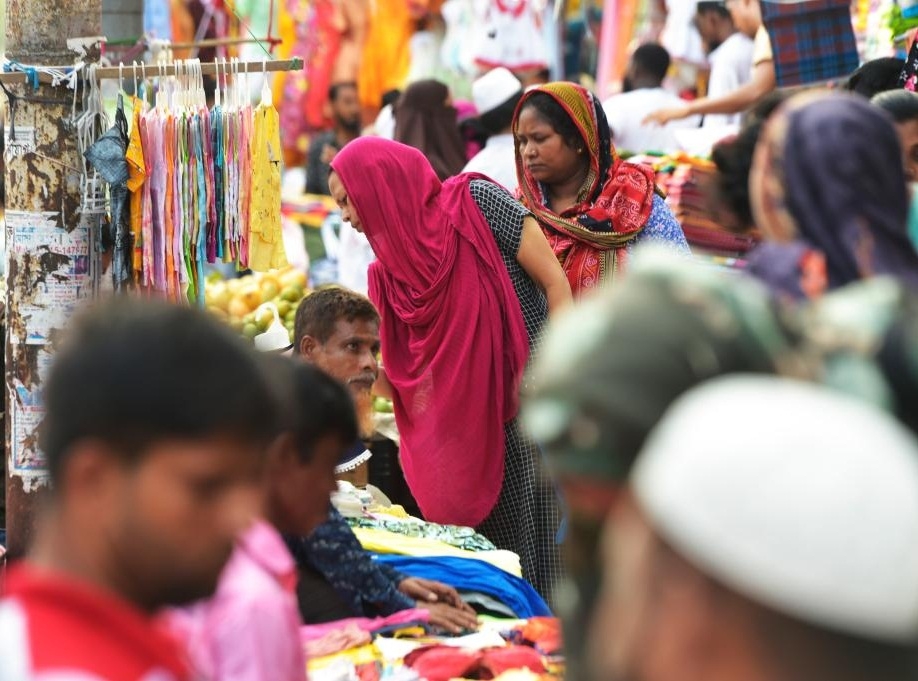
India’s MSME sector now accounts for approximately 30% of GDP, over 35% of manufacturing output, and nearly 46% of the country’s exports. Any external shocks, including tariffs, sanctions, or regulatory shifts, are therefore felt first, and most sharply along this segment of the economy
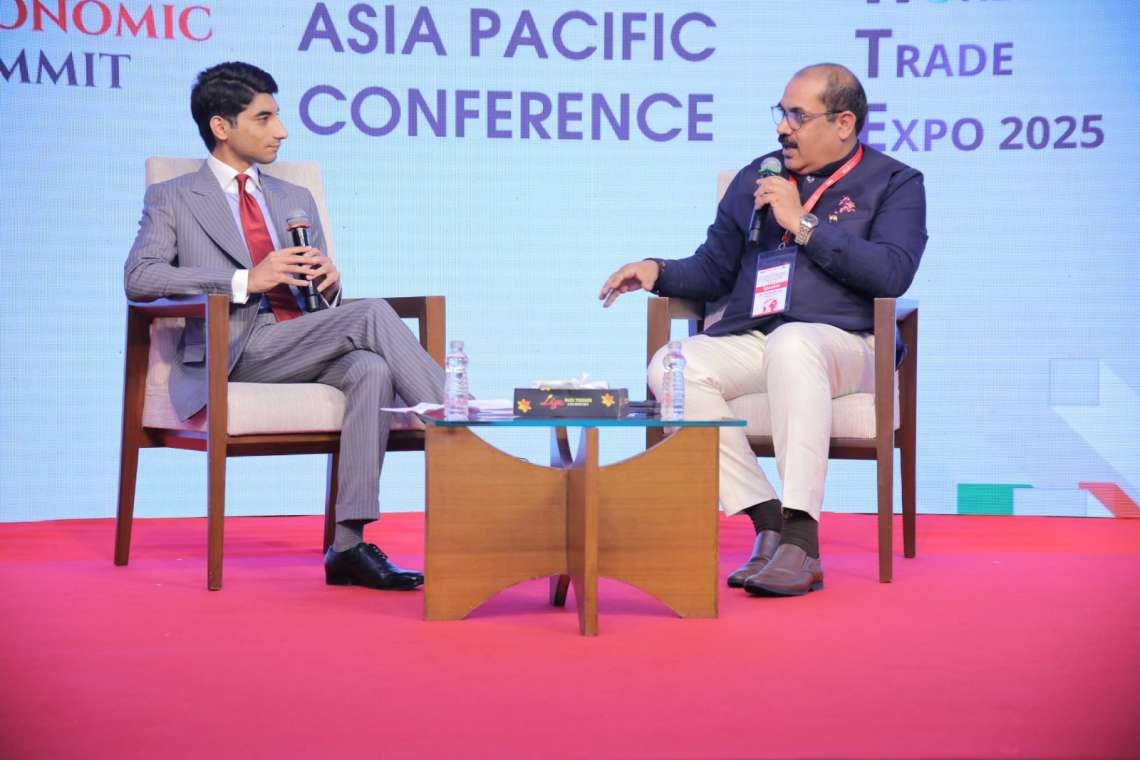
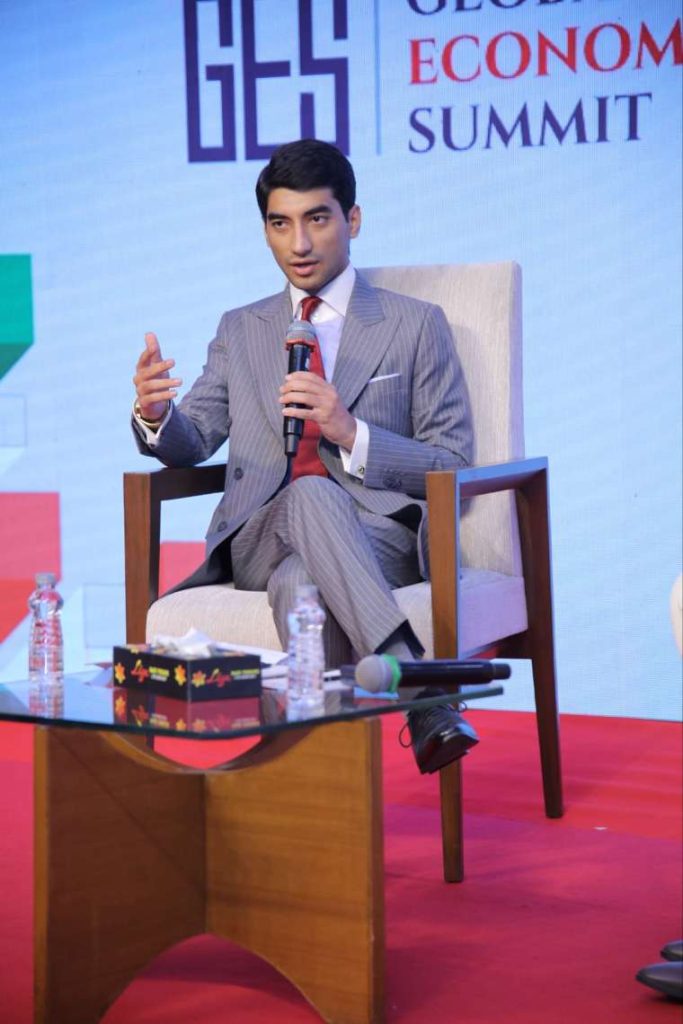
The Global Economic Summit, organised by the World Trade Center, Mumbai, has emerged as a premier platform for dialogue on trade, investment, and India’s place in the global economy. This year’s edition, held against a backdrop of unprecedented market uncertainty, brought together policymakers, industry leaders, and analysts to address hard questions facing Indian businesses. Ishan Jasuja, representing the Global Chamber on African Trade, Rights, and Economic Development, led a fireside chat with Mr. Ravi Nandan Sinha, Director of Development and Board Member at MSME Business Forum India, on derisking India’s MSME sector.
Within the broader conversation, one theme stood out with particular urgency: the vulnerability and strategic importance of India’s micro, small, and medium enterprises (MSMEs) in an era where geopolitics increasingly dictates economic outcomes.
India’s MSME sector now accounts for approximately 30% of GDP, over 35% of manufacturing output, and nearly 46% of the country’s exports. Any external shocks, including tariffs, sanctions, or regulatory shifts, are therefore felt first, and most sharply along this segment of the economy. Hence, MSMEs are not operating at the margins of globalisation; they sit at its frontline.
Tariffs as a stress test of India’s export model
The recent escalation of US tariffs on Indian goods has crystallised this exposure. Duties of up to 50% on a wide range of exports, such as garments, leather, gems and jewelry, as well as some chemical products, have put pressure on MSMEs deeply embedded in global supply chains. India’s Chief Economic Adviser, V. Anantha Nageswaran, suggests the shock could shave around 0.5–0.6 percentage points off GDP growth in the current fiscal year.
In response, New Delhi has issued a US$5.1 billion support package for exporters, combining credit guarantees, interest subvention, and trade-facilitation measures. While this is a necessary stabiliser, tariffs of this scale should be viewed as a stress test of India’s export model. Further, they serve as a warning against over-dependence on a single market and persistent vulnerabilities in MSME value chains.
This is particularly important due to the currently widespread “weaponisation of interdependence”. Leveraging trade and financial linkages as tools of statecraft has become a frequently employed foreign policy tactic to preserve national economic interests in today’s multipolar international system. Now, the very openness that facilitated MSME-led export growth has become a channel transmitting geopolitical and commercial risks between regions.
The Necessity of Strategic Diversification
As proposed in the discussion at GES, a comprehensive response must start with diversification. India’s own trade statistics already point to credible alternatives. For instance, ASEAN now accounts for around 10-11% of India’s total global trade, with bilateral flows exceeding US$122 billion in 2023-24. The Gulf Cooperation Council (GCC) has emerged as an even more significant partner, with India-GCC trade crossing US$178 billion and representing more than 15% of India’s global trade in 2024-25. Inflows from the region are also significant, with Gulf FDIs into India exceeding US$28 billion as of December 2024.
These figures underscore an underused advantage, as India does not need to build new corridors from scratch; it needs to deepen existing ones. Newly signed Free Trade Agreements, such as the India-UK CETA, growing energy and investment ties with the GCC, and expanding trade with Southeast Asian economies provide a platform to Indian MSMEs to move away from excessive reliance on any single market.
Three fundamental shifts will be key going forward at the firm level:
- Re-mapping market exposure by setting limits on dependence on any one geography.
- Embedding geopolitical criteria into commercial decisions to price in tariff volatility, sanctions exposure, regulatory predictability, and logistics resilience.
- Leveraging India’s economic diplomacy, including export-promotion schemes, trade missions, and digital trade platforms, to secure intelligence, contacts, and concessional finance in these partner regions.
MSMEs and Weaponised Supply Chains
The fireside chat at the Summit highlighted three interlocking risks for MSMEs in this environment:
- Market concentration risk: reliance on a narrow set of buyers in a single jurisdiction amplifies the impact of any unilateral tariff or regulatory decision.
- Standards and compliance risk: tightening environmental and due diligence norms in major markets, such as the EU’s Carbon Border Adjustment Mechanism (CBAM), function as non-tariff barriers for smaller firms that lack the resources to upgrade processes or secure certifications.
- Financial risk: as lenders become more cautious under conditions of elevated geopolitical and economic uncertainty, MSMEs often face higher costs and stricter conditions for working capital and trade finance.
If left unmanaged, these forces could erode the industrial base underpinning India’s status as the world’s fastest-growing major economy. The country’s share in global exports has climbed from 2% in 2018 to 2.5% in 2024, despite global headwinds. Preserving and expanding that share requires treating MSME resilience as a strategic priority, not an afterthought.
Building Resilience
MSMEs tend to have an ad hoc approach to addressing value chain shocks due to budget constraints or a lack of awareness. However, the way forward must be to pursue built-in strategic resilience, enabling the sector to move from mere crisis management to comprehensive risk mitigation. This transition will be based on three pillars:
- Strategic scanning: MSMEs and their larger partners require systematic monitoring of where tariffs, sanctions, ESG standards, and investment controls are tightening. This intelligence must be integrated into product, capacity, and market decision-making processes.
- Supply-chain maneuverability: Investments in logistics partnerships and modular production enable firms to reroute shipments, adjust sourcing, and recalibrate operations swiftly when geopolitical conditions change.
- Investment de-risking: Major capital expenditures should be evaluated as geopolitical bets as much as financial ones. Tools such as export-credit guarantees and political-risk insurance can help MSMEs diversify and expand while insulating them from external shocks.
The Way Forward
Geoeconomic risk is now firmly on the agenda in boardrooms and policy debates. But for India to continue its growth trend and export-oriented trade negotiations, geoeconomic thinking must extend to the MSME shop floor as well.
The need for individuals who can make geopolitical and geoeconomic analysis relevant to real-world decision-making in Indian firms has never been higher. We must proactively scan for political and regulatory risk, stress-test supply chains under different tariff and sanctions scenarios, and identify where diversification can deliver the greatest strategic dividends. Ultimately, winners will find an optimal balance between industrial policy, trade strategy, and risk mitigation.