Africa’s critical minerals boom is drawing Chinese investment and growing scrutiny as communities raise concerns over alleged rights abuses, pollution and weak safeguards…reports Africa Daily News Desk
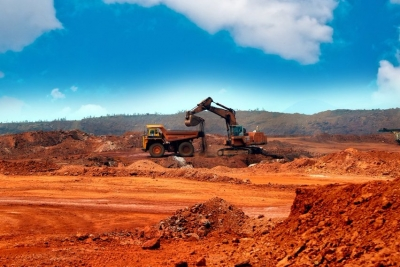
Chinese-linked mining projects across Africa are facing growing scrutiny over alleged human rights abuses, environmental damage and weak community protections as global competition intensifies for the minerals needed for electric vehicles, batteries and clean-energy technologies.
A new analysis by the Business and Human Rights Resource Centre (BHRRC) recorded 326 allegations of human rights and environmental abuse linked to Chinese companies involved in transition-mineral projects worldwide between 2023 and 2025. Africa accounted for 119 cases, or almost 37 per cent of the total.
The research also found a sharp increase in allegations recorded in Africa, rising from 45 in 2024 to 100 in 2025. The BHRRC said the figures reflected a broader year-on-year increase in reported harms associated with Chinese overseas investment in transition minerals.
The Democratic Republic of Congo recorded the highest number of allegations in Africa, with 52, followed by Zimbabwe with 20, Guinea with 18, Zambia with 15 and Namibia with eight. The allegations concern issues including land rights, workers’ rights, environmental degradation, impacts on local communities and attacks against people raising concerns about mining activities.
The findings come as Africa becomes increasingly important to the global race for critical minerals.
A new analysis by the Business and Human Rights Resource Centre (BHRRC) recorded 326 allegations of human rights and environmental abuse linked to Chinese companies involved in transition-mineral projects worldwide between 2023 and 2025.
The continent holds about 30 per cent of the world’s critical mineral reserves, according to the UN Economic Commission for Africa. The resources include cobalt, copper, lithium, graphite, manganese, nickel, platinum-group metals and rare earth elements.
The Democratic Republic of Congo is particularly important to the global cobalt supply chain. It accounts for more than 70 per cent of global cobalt production, while Zimbabwe has emerged as a significant lithium producer and Zambia is a major copper producer.
These resources are increasingly valuable as countries expand electric vehicle production, renewable energy systems, battery storage and other technologies linked to the energy transition.
China has established a major position across these supply chains, through mining, investment, processing and infrastructure. The country’s companies include major operators such as CMOC, China Minmetals, Zijin Mining and Zhejiang Huayou Cobalt, several of which have significant interests in African mineral projects.
The BHRRC report, however, cautioned that the rapid expansion of mining is creating increasing risks for workers and communities living near extraction sites.
It recorded 179 allegations affecting local communities between 2021 and 2025, particularly involving livelihoods, health and land rights. It also documented attacks against 18 human rights defenders between 2023 and 2025. Only 27 per cent of Chinese companies contacted by the organisation responded to allegations, although that was an improvement from an earlier response rate of 18 per cent.
One recent example of the environmental risks emerged in Zambia.
In February 2025, a tailings-storage facility at Sino Metals Leach Zambia failed, releasing mining waste into waterways connected to the Kafue River. Zambia’s Ministry of Mines later said the spill had severely affected aquatic life, water supplies and agricultural activities along the river basin. The company suspended operations following the failure.
The incident became a major test of environmental oversight as the government sought to assess the damage and restore affected areas. Reuters reported at the time that the company had cooperated with authorities and was paying for mitigation measures, while the government said later that water acidity and heavy-metal concentrations were declining.
Zimbabwe’s rapidly expanding lithium industry has also attracted scrutiny. Chinese companies have invested heavily in projects including the Arcadia and Bikita mines, making Chinese capital an important force in the country’s emerging lithium sector. Reports have raised concerns about labour conditions, environmental impacts and the distribution of economic benefits, while companies have disputed or responded to some of the allegations.
The debate is increasingly extending beyond individual mining operations to the way mineral agreements are negotiated.
African governments are seeking investment to develop resources, infrastructure and processing capacity, while foreign powers are competing to secure long-term supplies. Critics argue that some agreements have been negotiated without adequate consultation with affected communities or sufficiently strong environmental and human-rights safeguards.
At the same time, African governments and regional institutions are increasingly calling for more processing and manufacturing to take place on the continent rather than simply exporting raw minerals.
The IEA says Africa currently captures less than one per cent of the value generated by manufacturing clean-energy technologies and their components, despite supplying large shares of global demand for several key minerals. Moving into processing, refining and manufacturing could therefore increase the economic benefits of the resource boom.
The BHRRC said stronger human-rights due diligence, meaningful engagement with communities and greater transparency would be essential as mining expands.
Its analysis also noted that some Chinese companies have strengthened their policies and engagement on human rights. But the organisation said the continued rise in allegations showed that commitments on paper were not always translating into protections for workers and communities on the ground.