IMF slams Pakistan for fiscal chaos as Sindh farmers face sugarcane price paralysis, exposing deepening cracks in governance, transparency and economic management across federal and provincial levels
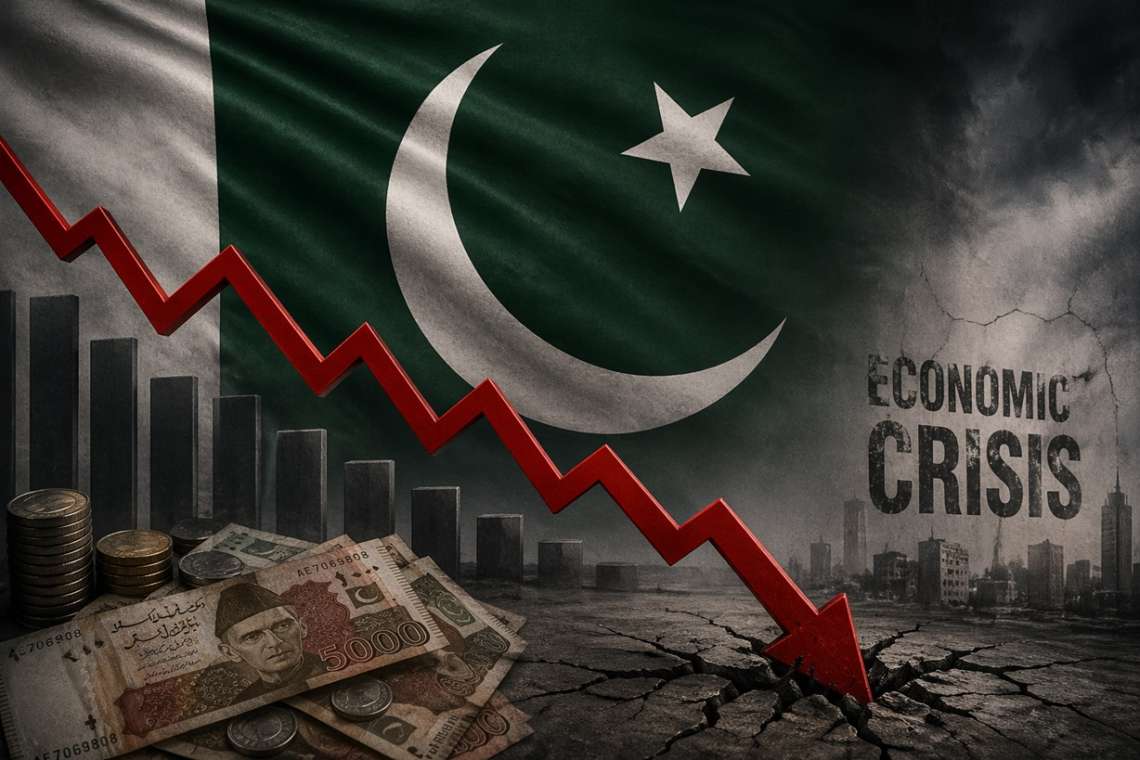
Pakistan’s economic management has come under sharp, unprecedented criticism from the International Monetary Fund (IMF), which has accused Islamabad of failing to control public spending, safeguard taxpayer money, and maintain basic fiscal transparency. In a hard-hitting assessment released under its Governance and Corruption Diagnosis Assessment (GCDA), the Fund said Pakistan continued to display “chronic weaknesses” in budget discipline, financial oversight and institutional coordination — despite being under its 24th IMF programme.
The critique, reported by Dawn, forms one of the sternest public admonitions Pakistan has faced from the Fund, underscoring deepening anxieties about its governance capacity at a time when the economy remains vulnerable to global shocks, domestic inflationary pressures and persistent political turbulence.
According to the IMF, Pakistan suffers from “weak budget credibility”, reflected in vast discrepancies between planned and actual expenditure. Parliamentary-approved spending overruns reached an alarming Rs9.4 trillion in the 2024–25 fiscal year — five times higher than the previous year — raising serious questions about the credibility of oversight mechanisms and the effectiveness of the Ministry of Finance (MoF).
The IMF also identified poor coordination between debt managers, cash flow units and institutions running the public purse. This fragmentation, it warned, fuels delays, inflates project costs and widens room for political interference. The Fund said Islamabad must overhaul its Single Treasury Account (TSA) framework within six months to prevent political misuse of funds and to stop cash reserves sitting idle in commercial banks without accountability or clarity over interest earnings.
Political influence and institutional gaps
One major concern flagged by the IMF is the controversial constituency development funds (CDFs) controlled by lawmakers — a system critics argue encourages patronage, distorts capital spending priorities and allows political actors to funnel public money into projects that suit electoral agendas rather than national needs. The Fund said such practices undermine transparency and weaken public trust.
The GCDA also criticised Pakistan’s oversight of state-owned enterprises (SOEs) and public investment management, warning that weak monitoring mechanisms make the system vulnerable to corruption, misreporting and rent-seeking behaviour. The Fund’s message was unequivocal: unless Islamabad activates its dormant Cash Coordination Committee (CCC) and Cash Forecasting Unit (CFU), fiscal instability will deepen.
While acknowledging certain improvements in recent years, the report found that Pakistan’s institutional architecture remains riddled with duplication and inefficiency. It stressed that reforms to the TSA, cash management and transparency frameworks cannot be delayed without risking further deterioration of governance.
Farmers in Sindh bear the brunt
The IMF’s wider reform push has also rippled into the agricultural sector, where Sindh farmers are now caught in a policy vacuum triggered by the provincial government’s indecision over setting sugarcane prices for the 2025–26 season. While Sindh has begun its wheat procurement cycle, uncertainty over sugarcane pricing has left growers anxious and angry, fearing major delays in harvesting and sowing.
The controversy stems from IMF recommendations urging Pakistan to remove market distortions, limit politically driven subsidies and allow competition to determine prices. Growers, however, argue that the absence of a fixed rate leaves them vulnerable to millers who have historically delayed crushing or underpaid farmers when prices were not guaranteed.
According to Dawn, several sugar mills remained inactive despite the Sindh Agriculture Department declaring 15 November as the official start of the crushing season. Many mills did not restart operations until 21 November, leaving farmers in limbo over the price they would receive and the timetable they could rely on.
Sindh Abadgar Ittehad (SAI) President Zubair Talpur said the current chaos reflects a “complete policy paralysis” caused by a provincial administration torn between IMF conditions and farmers’ expectations. He noted that sugarcane pricing was skipped altogether last year, deepening mistrust between growers and the government.
Mounting pressure on authorities
Growers insist that sugarcane prices must be announced alongside the wheat support price, citing rising input costs and a spike in retail sugar prices — currently around Rs225–230 per kg. Farmers demand Rs600 per 40kg, while the Sindh Agriculture Research Department — which has calculated input costs at Rs321,000 per acre — recommends Rs545 per 40kg to the Sugarcane Control Board.
But the Board’s meeting earlier this month ended in deadlock, with no representative from the Pakistan Sugar Mills Association (PSMA) attending. The provincial cabinet meeting on 19 November eventually approved the crushing date, but the key issue — price fixation — remains unresolved.
Sindh Chamber of Agriculture (SCA) Vice President Nabi Bux Sathio has even written to the IMF’s Islamabad office, questioning whether the Fund had explicitly barred governments from fixing sugarcane rates. Farmers believe millers are leveraging ambiguous rules in the Sugar Factories Control Act to delay crushing until mid-December, hurting both the sugarcane harvest and the wheat sowing cycle.
Sindh, home to 38 operational sugar mills, stands at a critical juncture. Any prolonged standoff risks disrupting the delicate seasonal balance between cane harvesting and wheat cultivation — a disruption that could hit both rural incomes and the province’s wider food security.
Governance failures
The dual crises — fiscal mismanagement at the federal level and agricultural paralysis in the provinces — reflect a broader governance challenge facing Pakistan. While the IMF’s sharp critique focuses on institutional failures, Pakistan’s farmers see those same structural weaknesses and policy ambiguities playing out directly in their fields.
Unless the government resolves the pricing deadlock and acts swiftly on the IMF’s fiscal demands, Pakistan risks entering a new cycle of economic instability, political discontent and declining public confidence in state institutions.