What Moody’s rating calls stabilisation is, in reality, a technical reprieve, an economy frozen in place, unable to generate the momentum required for real growth, writes Dr Sakariya Kareem
Moody’s Global Ratings has upgraded Pakistan’s sovereign credit rating to “B3” from “Caa1,” citing improved debt affordability and a reduced likelihood of default. But does this really mean the country’s economy is on a path to genuine recovery? By now, it has become almost tedious to read the same assessment from every global credit rating agency and lender: Pakistan’s economy has “stabilised, but risks remain.” The repetition itself is telling. An economy that produces the same verdict year after year is not truly holding steady; it is stalled. Macroeconomic indicators may not be collapsing, but neither are they advancing. What Moody’s rating calls stabilisation is, in reality, a technical reprieve, an economy frozen in place, unable to generate the momentum required for real growth.
Economic history demonstrates that long-term prosperity is shaped less by natural endowments than by the consistency of policies, the quality of institutions, and the ability of a state to transform potential into productivity. Pakistan illustrates this reality with unusual clarity. Despite its strategic location, fertile agricultural base, large domestic market, and one of the world’s youngest populations, the country continues to grapple with persistent macroeconomic instability, weak export performance, rising debt burdens, and repeated reliance on external financial assistance. The result is a cycle of temporary reprieves rather than durable progress.
The recurring circular debt crisis exemplifies this dynamic. Each refinancing package temporarily addresses liquidity but leaves incentive structures intact. Each bailout postpones rather than resolves the underlying conflict between commercial viability and political discretion. The recent analysis by the Policy Research Institute of Market Economy (PRIME) underscores the growing liquidity stress confronting Pakistan State Oil (PSO). PSO purchases petroleum products on commercial terms, but downstream entities delay payments or depend on government decisions regarding tariffs and subsidies. Cash-flow disruptions ripple through the energy chain, constraining investment precisely when Pakistan requires greater energy security and environmental transition. Conventional explanations for delayed recoveries, electricity theft, transmission losses, and untargeted subsidies are valid but incomplete. The deeper problem is structural: governance failures and policy distortions that perpetuate the debt cycle.
Political instability compounds these economic challenges. Development requires not only sound policies but confidence that those policies will endure. Repeated governance disruptions, institutional uncertainty, and policy discontinuities impose significant costs. Investors hesitate to commit capital where predictability is absent, and economies seldom prosper when uncertainty becomes a permanent feature. Pakistan’s export trajectory illustrates this weakness. Exports have risen from roughly $9 billion to $32 billion over the past quarter century, but this growth is modest compared to peer economies. At the heart of the underperformance lies the failure to develop a broad and diversified industrial base. Small and medium enterprises face obstacles ranging from limited access to finance and cumbersome regulations to inadequate infrastructure and weak institutional support. Their potential contribution to exports and industrial diversification remains far greater than current outcomes suggest.
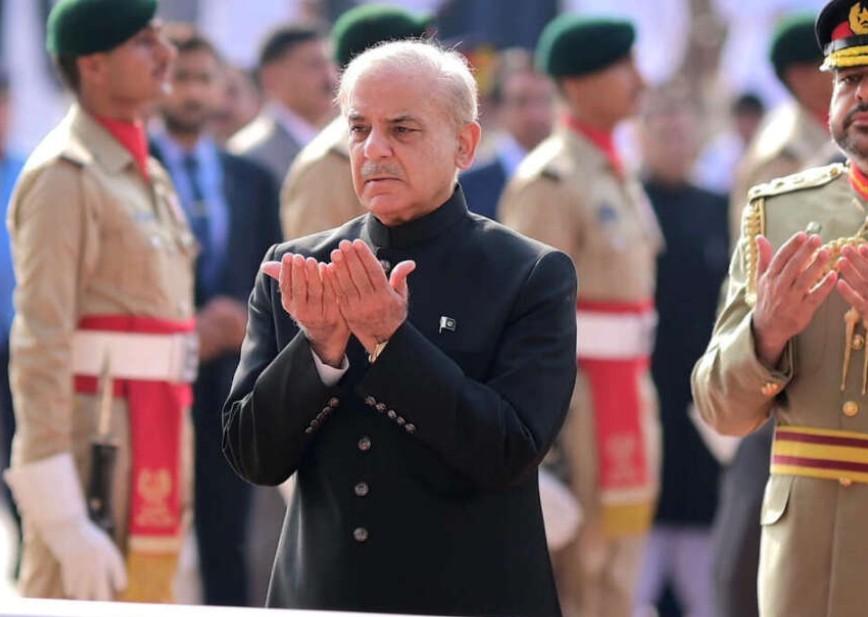
Moody’s upgrade rating is highly speculative, seven notches below investment grade. Yet Prime Minister Muhammad Shehbaz Sharif congratulated the nation as though the country had turned the corner. This is the peculiar place Pakistani policymaking has settled into, where minor technical adjustments are treated as milestones. The picture Moody’s paints is unflattering: a narrow export base, negligible foreign direct investment, heavy reliance on remittances, and a government dependent on official and commercial borrowing to meet external obligations. None of this describes an economy capable of standing on its own feet. It is being propped up by the IMF and rolled-over bilateral deposits. Governance language deserves attention. Moody’s is blunt: weak rule of law, poor control of corruption, limited government effectiveness. These are not casual observations. They are the reasons investors continue to look elsewhere.
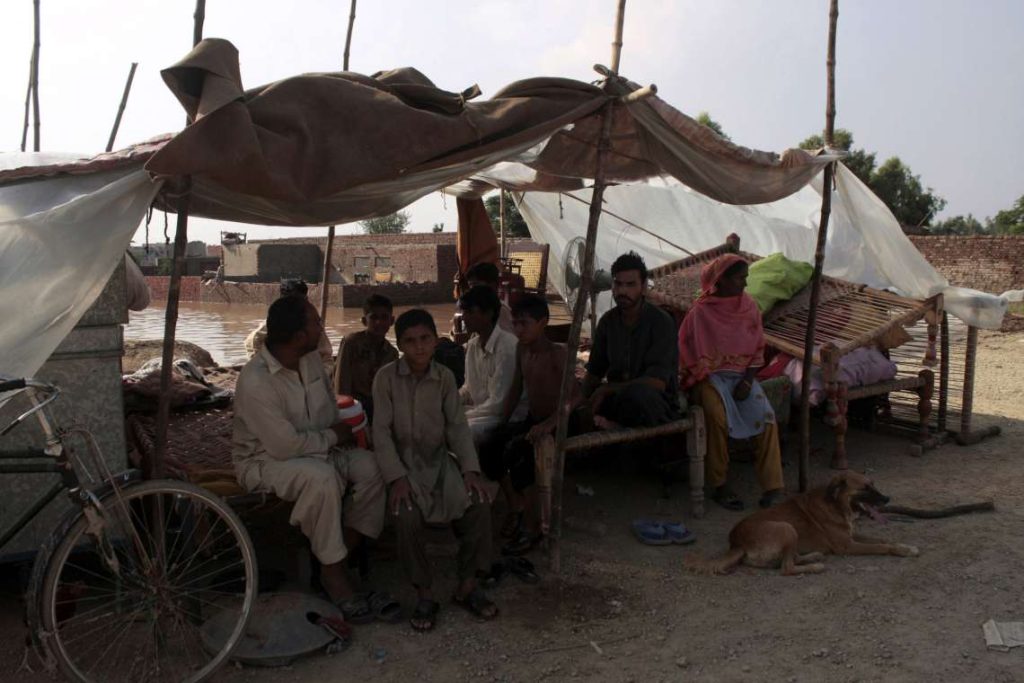
Even the improvement in debt affordability highlighted by Moody’s comes with caveats. Interest payments have declined, but the figure remains so high that little is left for social and infrastructure investment. This improvement reflects falling inflation and rate cuts, not structural reform. Inflation itself, though reduced from its peak, continues to weigh heavily on households. Declining inflation does not mean prices have fallen; it only means they are rising more slowly. The cumulative increase in food, energy, transport, housing, and other necessities has eroded purchasing power. Pakistan’s labour force of nearly 72 million grows by about 2 million annually, with hundreds of thousands of university graduates entering a labour market that cannot provide secure, productive employment. Millions remain trapped in informal, insecure, poorly paid work without contracts or social protection. Students are increasingly anxious and pessimistic, no longer seeing opportunities that seemed possible only a few years ago. Pakistan’s youth are worried about both the country’s economic future and their own prospects, yet the ruling elite appears not to grasp the seriousness of this crisis.
The latest budget reinforced this impression. After achieving a degree of technical stability, expectations were that the government would pivot towards growth. Instead, the budget was designed primarily to reassure the IMF and lenders rather than stimulate investment, revive activity, or create jobs. It was a consolidation budget, not a growth-oriented one. The stabilisation being touted has come at considerable cost: high interest rates, fiscal austerity, and suppressed domestic demand have weakened activity and limited job creation. An economy may appear more stable on paper while failing to provide opportunities to its people. Pakistan is not stable. It is stalled and mistaking one for the other is the central error in its economic policy debate.
Headline reserves near $22 billion may look reassuring, but a substantial share commonly estimated at $12 billion or more is not earned foreign exchange. It consists of rolled-over deposits from China, Saudi Arabia, the UAE, and Qatar, plus IMF disbursements. These are liabilities dressed as assets, renewed at the pleasure of foreign governments. When the UAE grew unhappy with Islamabad’s Iran policy earlier this year, it demanded repayment of $3.5 billion instead of the customary rollover, forcing an emergency scramble that Saudi Arabia and Qatar filled. This episode illustrates the fragility of Pakistan’s external position. What appears as stability is in fact dependence, contingent on the goodwill of foreign capitals.
Moody’s upgrade to “B3” is not really a marker of genuine progress, rather a mere acknowledgment that Pakistan is marginally less likely to default than before. Pakistan’s economy remains stalled, not stable. The distinction matters. Stability implies a foundation upon which growth can be built. Stasis implies paralysis, where the economy neither collapses nor advances, but drifts in place while opportunities slip away. Until Pakistan confronts its structural weaknesses in its institutions, policy inconsistency, narrow industrial base, and governance failures no rating upgrade will signify real recovery. The danger lies in mistaking technical stabilisation for substantive progress. That error has defined Pakistan’s economic debate for too long, and it continues to exact a heavy price on its people.