Over 1.89 lakh people affected and more than 1,000 deaths reported as vaccination gaps fuel a major public health crisis…reports Asian Lite News Desk
Bangladesh is grappling with a major measles outbreak that has affected more than 1.89 lakh people and claimed over 1,000 lives, exposing significant gaps in the country’s immunisation and healthcare systems, according to a report.
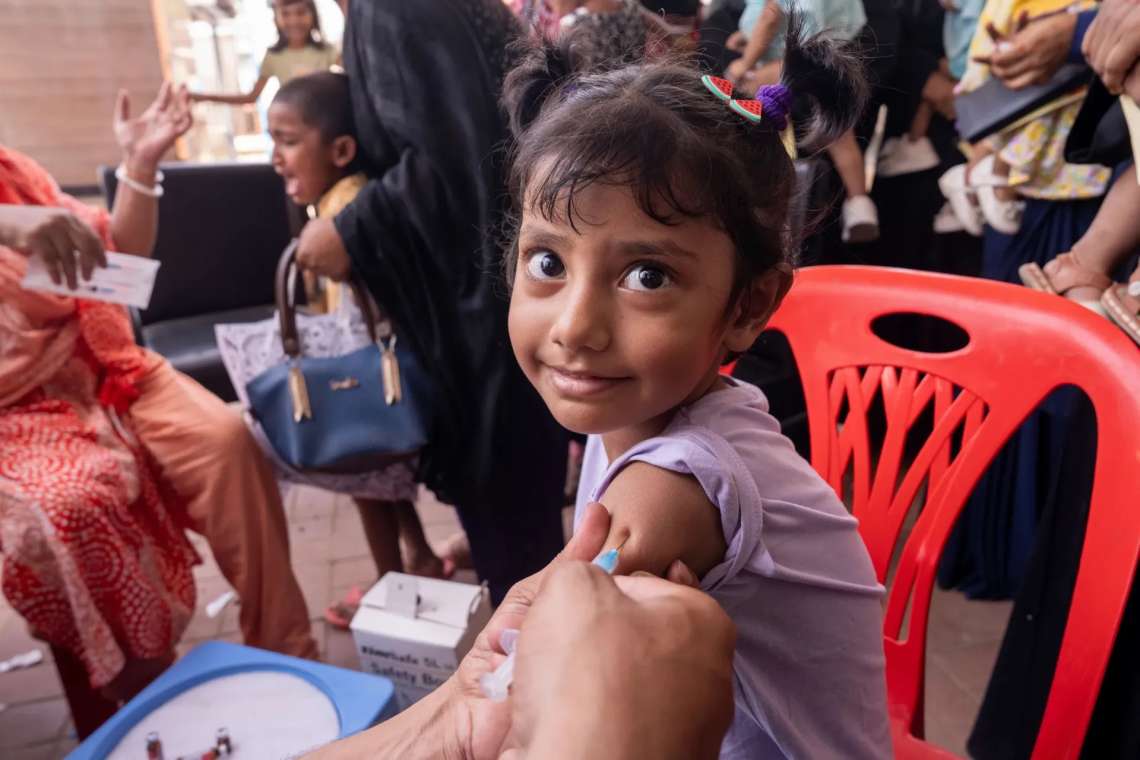
More than 1.89 lakh people, mostly children, have been affected by measles or measles-like illnesses since March 15, 2026, data from Bangladesh’s Directorate General of Health Services (DGHS) showed.
At least 1.49 lakh patients have required hospitalisation, while the reported number of deaths from confirmed and suspected measles cases has reached 1,012, the report said.
The figures include both confirmed and suspected infections and fatalities, with health experts cautioning that the distinction is important when assessing the scale of the outbreak. Nevertheless, the high number of children falling seriously ill and dying has raised alarm over a disease that is largely preventable through vaccination.
The crisis has also renewed scrutiny of Bangladesh’s immunisation programme, which was previously regarded as a major public health success among developing countries.
The country had achieved high vaccination coverage through sustained government efforts, support from non-governmental organisations and extensive community mobilisation. Those efforts helped protect millions of children from several vaccine-preventable diseases.
However, several weaknesses have emerged in recent years, particularly following the disruption caused by the Covid-19 pandemic.
The Daily Star, citing health authorities, reported that the pandemic disrupted routine immunisation services and left some children outside the vaccination system. Hard-to-reach populations, children living in urban slums, migrants and other marginalised communities were particularly vulnerable.
The report also highlighted inadequate follow-up of children who missed routine vaccinations and shortcomings in identifying children who had received no vaccine doses.
These gaps, compounded over time, created pockets of vulnerable children and contributed to the resurgence of measles.
Bangladesh launched a large-scale emergency vaccination campaign in response to the outbreak and reported vaccinating nearly 1.97 crore children.
However, questions were subsequently raised about whether authorities had accurately estimated the size of the target population. A later Vitamin A supplementation campaign reportedly reached around 2.23 crore children in the same age group.
The discrepancy prompted authorities to acknowledge that the original estimate of the population targeted for the measles vaccination campaign had been too low.
Although the outbreak appeared to ease temporarily during June and July, infections began rising again in August, raising further concerns about gaps in immunity and the effectiveness of the emergency response.
The renewed spread has intensified calls for Bangladesh to strengthen routine immunisation, improve disease surveillance and ensure that children who miss scheduled vaccinations are identified and brought back into the system.
The Daily Star described the outbreak as a preventable public health failure with broader implications for governance, calling for a comprehensive investigation into how the crisis developed and why vulnerable children were left unprotected.
Health experts have stressed the need for stronger coordination between government agencies, healthcare providers and community organisations to prevent similar outbreaks in the future.
The crisis has underscored the risks created when routine vaccination programmes are disrupted, particularly for children in marginalised and hard-to-reach communities.
With measles continuing to resurface despite emergency vaccination efforts, authorities face the challenge of restoring public confidence, closing immunity gaps and ensuring sustained vaccination coverage across the country.