As 2025 draws to a close, cooperation between China and Middle Eastern countries has continued to expand in scale and sophistication, even as parts of the region remain affected by conflict and uncertainty. From energy and infrastructure to high-tech and green industries, Chinese engagement across the Middle East is increasingly shaping the region’s development trajectory.
Over the past year, Chinese companies and investors have launched or expanded projects stretching from the Gulf states to North Africa. These ventures have supported job creation, accelerated economic diversification and helped governments reduce long-standing dependence on hydrocarbons. While oil, gas and large infrastructure projects remain central pillars, cooperation has steadily moved into sectors seen as critical for the future, including renewable energy, electric vehicles, artificial intelligence, aerospace and advanced manufacturing.
“Opportunities are everywhere here,” said Li Shuijin, head of a drilling equipment company from China’s Guizhou Province, speaking after a business tour of Saudi Arabia. He noted that rapid development across the Middle East, combined with strong political and economic ties with China, had created a market that was “only getting bigger”.
Trade figures underline that momentum. According to China’s General Administration of Customs, trade between China and Arab League countries reached 240 billion US dollars in the first seven months of 2025, a 3.2 per cent year-on-year increase and the highest level ever recorded for that period. A report by the British think tank Asia House in November found that China had become the Gulf’s largest trading partner, with trade volumes exceeding the Gulf’s combined trade with the United States, Britain and the eurozone.
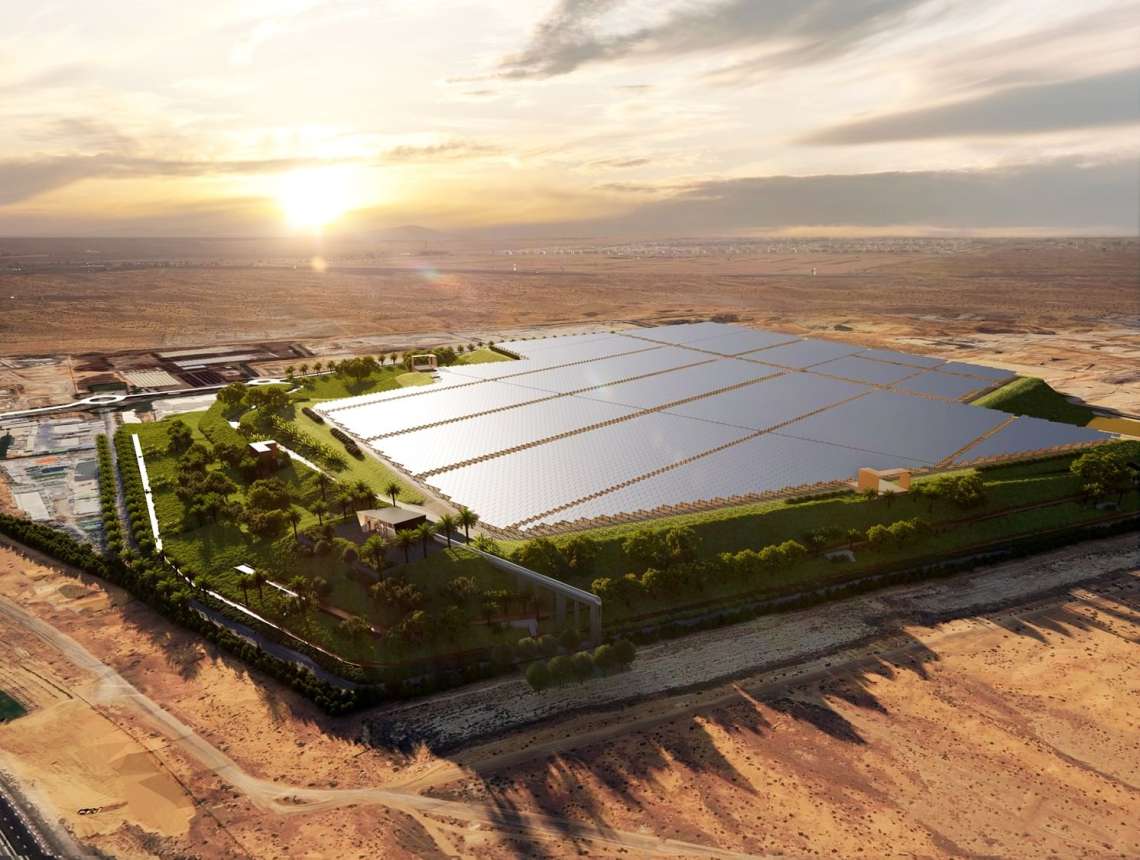
Beyond trade, cooperation in cutting-edge industries has gathered pace. Chinese technology companies such as Baidu and WeRide have launched autonomous driving projects in Saudi Arabia and the United Arab Emirates. In December, Chinese commercial rocket firm CAS Space successfully launched satellites for the UAE and Egypt, while Chinese-made robots powered by artificial intelligence are now being used to maintain large solar farms in Saudi Arabia.
“There has been a qualitative leap toward high-tech and future-oriented industries in China–Middle East cooperation,” said Abu Bakr al-Deeb, an economic researcher at the Arab Center for Research and Studies in Cairo. For many in the region, the impact is tangible. Mecheri Adel, an engineer working on a Chinese-backed solar project in Algeria, said the benefits were visible in everyday life, from improved infrastructure to employment opportunities.
Analysts say the partnership is driven by strong complementarities. As Middle Eastern economies push to build digital infrastructure and renewable energy capacity, China offers mature, cost-effective technologies and large-scale delivery experience. Mohammed al-Jubouri, a professor at al-Iraqia University in Baghdad, said cooperation in emerging industries had become a key engine of engagement.
The spread of Chinese electric vehicles across the region illustrates this trend. Leveraging technological leadership and competitive pricing, Chinese automakers have established a strong foothold, supporting regional efforts to reduce emissions and modernise transport. At the same time, investment flows are increasingly two-way. In the first ten months of this year, Middle Eastern investors participated in more than 10 investment deals in China, worth over four billion dollars, across sectors including finance, healthcare and renewable energy.
Looking ahead, analysts believe China’s role will grow as Middle Eastern countries shift their focus from security challenges to economic development. Ahmed Kandil of Egypt’s Al-Ahram Center for Political and Strategic Studies said the region was entering a phase where economic influence outweighed military power, creating space for deeper trade, technology and investment ties with China.
Others point to China’s emphasis on non-interference and mutual benefit as a key reason its partnerships resonate in the region. “When China’s capacity for delivery converges with the Middle East’s determination for development, exceptional results emerge,” said Hebah Abbas of the World Utilities Congress.
With trust and practical cooperation continuing to deepen, analysts say the foundation is being laid for a long-term partnership that could reshape economic links between China and the Middle East for decades to come.