At the heart of the controversy lies a fundamental question: Does the Act empower Balochistan to harness its mineral wealth for the benefit of its people, or does it centralize control in a way that undermines provincial will and perpetuates historical patterns of exploitation? … explores Dr Sakariya Kareem
Earlier this year, while the Pakistani media was consumed by the dramatic train hijacking in Balochistan, a far more consequential event unfolded quietly in the shadows of the provincial legislature. On March 14, 2025, the Balochistan Mines and Minerals Act was passed with astonishing speed and minimal scrutiny. The timing and secrecy surrounding its passage raised immediate concerns about transparency, constitutional integrity, and the future of provincial autonomy. It wasn’t until a similar bill in Khyber Pakhtunkhwa sparked controversy that the Balochistan legislation began to attract public attention.
At the heart of the controversy lies a fundamental question: Does the Act empower Balochistan to harness its mineral wealth for the benefit of its people, or does it centralize control in a way that undermines provincial will and perpetuates historical patterns of exploitation?
The Balochistan Mines and Minerals Act, 2025, was passed in haste, bypassing meaningful debate and public consultation. Opposition parties in the provincial assembly later declared the Act unconstitutional, citing its encroachment on provincial rights guaranteed under Pakistan’s Constitution. The 18th Amendment of 2010 had fortified provincial autonomy, especially in matters of natural resource management. Article 172(3) explicitly granted provinces ownership over minerals, excluding only nuclear energy and oil and gas fields.
Yet, the new Act appears to roll back these protections. Sections 121 and 122 of the Act assert its supremacy over all other provincial laws concerning mines and minerals. This legal maneuver effectively sidelines Balochistan’s authority, reducing its role to that of a passive observer while vesting decision-making powers in federal entities like the Federal Mineral Wing.
Section 22(2) of the Act introduces the Mineral Investment Facilitation Authority (MIFA), a body composed of both provincial and federal representatives. However, MIFA operates under the Special Investment Facilitation Council (SIFC), a federal institution. This structure ensures that federal decisions override provincial input, particularly in areas designated as “strategic” or “sensitive zones”, terms that remain vaguely defined but encompass much of Balochistan due to its security profile.
This setup raises alarms about the erosion of provincial control. By categorizing certain minerals as “strategic,” the federal government gains sweeping oversight, effectively bypassing local governance structures. Such ambiguities open the door to centralized exploitation, echoing past grievances that have fueled unrest in the region.
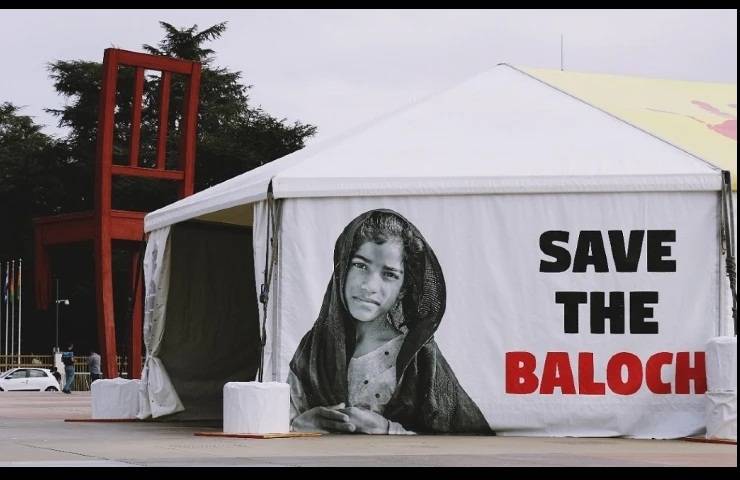
Balochistan is rich in mineral resources, gold, copper, and rare earth elements, but remains Pakistan’s most impoverished province. This paradox has long been a source of frustration and alienation. Despite its natural wealth, the province suffers from underdevelopment, poor infrastructure, and limited access to basic services.
The new Act, rather than addressing these disparities, risks deepening them. It lacks provisions for local employment, revenue-sharing mechanisms, and environmental safeguards. Without legal guarantees to deliver royalties directly to the provincial population or create job quotas for residents, the economic benefits of mineral extraction may bypass the very communities that need them most.
The Reko Diq Case
The history of the Reko Diq copper-gold project offers a stark illustration of what happens when local needs are ignored. In the 1990s, BHP Minerals signed a deal with the Balochistan government for a feasibility study. The project was later taken over by Tethyan Copper Company (TCC), a joint venture between Antofagasta of Chile and Barrick Gold of Canada.
Public outcry over exploitative terms led the Balochistan government to refuse TCC a mining license. The case reached Pakistan’s Supreme Court, which ruled in favor of the provincial government. However, TCC won a subsequent case at the International Center for Settlement of Investment Disputes (ICSID), and Pakistan was held liable for breach of contract.
To avoid paying penalties, the federal and provincial governments signed a new deal with Barrick Gold. Under this agreement, Barrick holds a 50% stake, while the remaining 50% is split between the federal and provincial governments. Mining has yet to begin, but the new Act makes it far more difficult for Balochistan to challenge such deals in the future.
The Reko Diq saga underscores the importance of provincial control. When local voices were empowered, exploitative deals were resisted. But with the new law, bypassing local wishes becomes easier, potentially reigniting the very tensions that have historically led to insurgency.
Federal authorities have often courted foreign investors without addressing local concerns. Projects like Saindak and Reko Diq have been criticized for poor planning and inequitable benefit-sharing. The new Act, by centralizing control, risks repeating these mistakes.
Designating vast areas of Balochistan as “sensitive zones” under federal oversight further marginalizes provincial stakeholders. Without robust mechanisms for community engagement, environmental protection, and equitable resource distribution, the Act may exacerbate existing grievances.
The implementation of the Balochistan Mines and Minerals Act, 2025, represents a pivotal moment in Pakistan’s resource governance. It has the potential to transform Balochistan’s economy, but only if it is guided by principles of transparency, and local empowerment. But passed as it was in secrecy and laden with ambiguities, it threatens to undermine provincial autonomy and perpetuate historical injustices. The Reko Diq case serves as a powerful reminder of the consequences of sidelining local voices. If Pakistan is to harness Balochistan’s mineral wealth for national prosperity, it must first ensure that the province’s people are active participants in the process. Only then can mineral extraction become a force for development rather than discord.