Pakistan’s per capita income has stagnated and even declined in recent years, reflecting deepening economic challenges….reports Asian Lite News
Pakistan stands at a critical crossroads, grappling with poverty, unemployment, demographic pressures, and inequality — a combination that underscores a deep-rooted crisis with far-reaching consequences. According to the Pakistan Observer, 44.7% of the country’s population now lives below the poverty line.
Pakistan’s per capita income has stagnated and even declined in recent years, reflecting deepening economic challenges.
According to the Pakistan Bureau of Statistics, during the fiscal year 2022-2023, the country recorded an 11.38 per cent drop in per capita income, falling from $1,766 in 2022 to $1,568 in 2023. This decline coincided with a sharp contraction in the overall economy, which shrank by $33.4 billion, from $375 billion to $341.6 billion.
The stagnation is largely attributed to persistent structural issues, including political instability, inflation, currency depreciation and weak industrial output, the article in the widely read English daily further states.
Compared to regional peers, Pakistan’s GDP per capita remains significantly lower — estimated at $6,950 in 2025. The economic disparity between urban and rural regions further entrenches inequality, the article points out.
According to the World Bank’s 2025 findings, nearly 44.7 per cent of the population lives below the poverty line, based on the revised threshold of $4.20 per person per day for lower-middle-income countries, a staggering figure that underscores the scale of deprivation.
Even more alarming is that 16.5 per cent of the population, around 39.8 million people, live in extreme poverty, earning less than $3 per day, a sharp rise from previous estimates of 4.9 per cent.
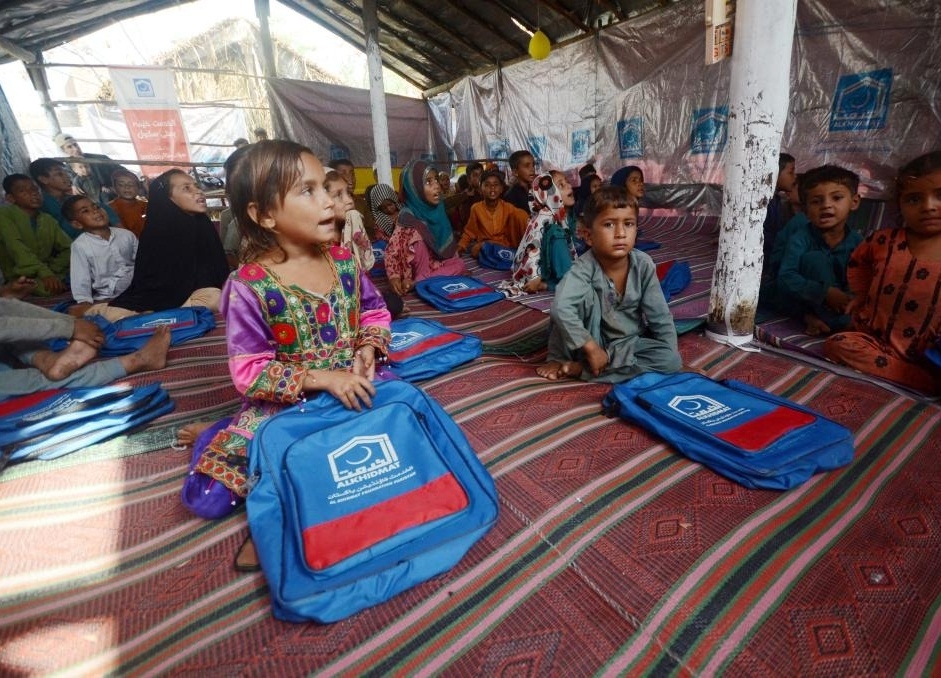
The article, written by Assadullah Channa, points out that urban centres like Karachi, Lahore and Islamabad benefit from better infrastructure, diversified economies and greater access to services. In contrast, rural areas remain underdeveloped, with limited access to clean water, electricity, healthcare and education. Agriculture, the primary livelihood in these regions, suffers from low productivity and outdated practices.
Provincial disparities also persist. Punjab and Sindh attract more investment and development, while Balochistan and parts of Khyber Pakhtunkhwa lag behind due to historical neglect, weak governance. This uneven distribution of resources fuels social discontent and marginalisation.
Inflation, particularly in essential commodities, has become a chronic challenge in Pakistan, driven by currency depreciation, global market volatility and domestic inefficiencies. In July 2025, annual inflation rose to 4.1 per cent, up from 3.2 per cent in June, marking the highest level since December 2024. The impact is most severe on food and energy prices.
The erosion of purchasing power among lower-income groups has led to widespread hardship, with many households forced to cut back on meals, education and healthcare. Public investment in education and health is critically low, with education spending reduced by 44 per cent in the latest budget and health expenditure hovering around 1 per cent of GDP.