August 3, 2025
5 mins read

Hamas Sets Terms For Disarmament

HAMAS: ‘The resistance and its weapons will not be abandoned until our full national rights are restored, foremost among which is the establishment of an independent, fully sovereign Palestinian state’

Hamas affirmed its refusal to disarm until the establishment of the State of Palestine, in response to statements by U.S. Special Envoy to the Middle East Steve Witkoff.

Hamas said in a statement that, “The resistance and its weapons will not be abandoned until our full national rights are restored, foremost among which is the establishment of an independent, fully sovereign Palestinian state.”

During his meeting with the families of Israeli hostages at a demonstration in Tel Aviv on Saturday, Witkoff said, “Hamas has said that they are prepared to be demilitarized.”

“Multiple Arab governments are now demanding that Hamas demilitarize… So we are very, very close to a solution to end this war,” Witkoff added, according to the Israeli newspaper Haaretz.

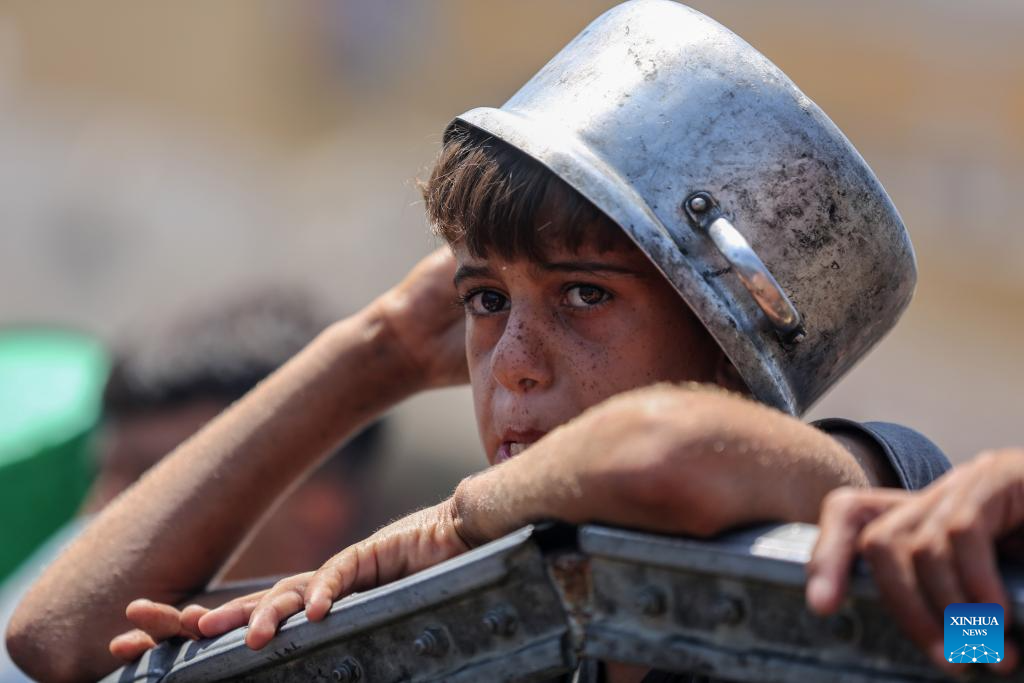
In a separate statement, Hamas accused Witkoff’s visit to aid distribution centers in the Gaza Strip of being “a pre-scripted theatrical performance designed to mislead public opinion, whitewash the occupation’s image, and provide political cover for its starvation policies and systematic killing of innocent children and civilians in Gaza.”

The statement said the U.S. administration is “fully complicit in these starvation crimes.”

Witkoff visited the Gaza Strip on Friday, where he inspected a controversial aid distribution center of the Gaza Humanitarian Foundation in the city of Rafah, in the southern Gaza Strip.
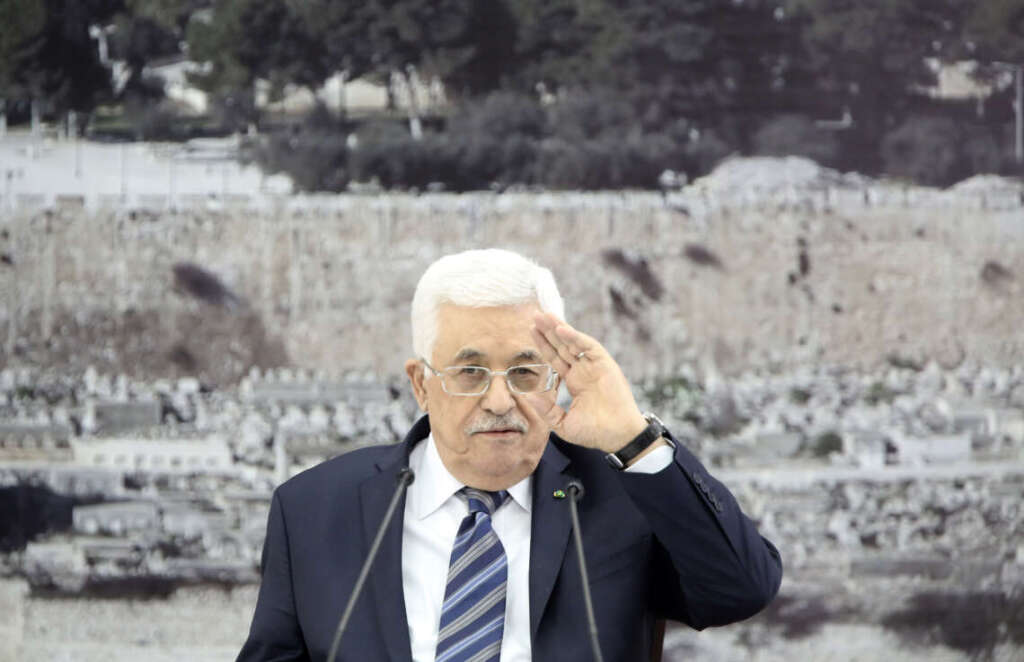
(141108) — RAMALLAH, Nov. 8, 2014 (Xinhua) — Palestinian President Mahmoud Abbas attends a meeting in the West Bank city of Ramallah on Nov. 8, 2014. (Xinhua/Fadi Arouri)(bxq)

Abbas’s Vision

Palestinian President Mahmoud Abbas said that the Palestinian leadership wants a demilitarized Palestinian state, including the Gaza Strip.

His remarks came during a meeting with German Foreign Minister Johann Wadephul at the presidential headquarters in the West Bank city of Ramallah, according to the Palestinian news agency WAFA.

Abbas stressed that the priority now is an immediate and permanent ceasefire in Gaza, the entry of humanitarian aid to stop “the war of starvation,” and the release of hostages and prisoners.

He emphasized the need for the State of Palestine to assume its full responsibilities in the Gaza Strip with Arab and international support, and for a complete Israeli withdrawal.

He also called on Israel to halt settlement activity in the West Bank, halt annexation attempts, and halt “settler terrorism,” as well as release withheld Palestinian funds.

Abbas affirmed his readiness to hold general elections, which will not include political forces and individuals who do not adhere to the program and commitments of the Palestine Liberation Organization, international legitimacy, and the principle of one state, one law, and “one legitimate weapon.”

For his part, the German minister, according to WAFA, emphasized the importance for the State of Palestine to assume administration of the Gaza Strip after the end of the war, as it is the only legitimate entity representing the Palestinians and it is essential for it to contribute to the reconstruction of Gaza.

He emphasized his country’s readiness to provide the necessary support and contributions to the Palestinian Authority in its reconstruction efforts.

He called on Israel to release the Palestinian funds it is withholding, noting that these funds are a right of the Palestinians, and the continued withholding poses a threat to stability.

Border Restrictions

The Palestinian government on Saturday urged the international community to increase pressure on Israel to reopen Gaza’s border crossings fully, as Israel said fresh aid packages continued to be airdropped throughout the strip.

The Israel Defense Forces (IDF) said 90 aid packages containing food supplies were airdropped on Saturday throughout the Gaza Strip, as part of broader efforts to enhance humanitarian aid in the territory.

The airdrops were conducted in coordination with Egypt, Jordan, and the United Arab Emirates (UAE), along with Germany and France, both of which joined the aid operation on Friday.

The IDF stated it will keep working with the international community to improve humanitarian efforts in the Strip, while denying allegations of deliberately causing starvation.

Meanwhile, the Palestinian government on Saturday urged the international community to increase pressure on Israel to fully reopen Gaza’s border crossings, amid the backlog of thousands of aid trucks at the entrances to the Strip, according to an official statement.

“The food insecurity levels in the Gaza Strip have reached 100 percent, according to reports from specialized UN organizations,” the government said, stressing the need to “stop the escalating use of hunger as a weapon to kill the Palestinian people in the Gaza Strip.”

Earlier on Saturday, Palestine’s official news agency WAFA reported that 18 Palestinian aid seekers were killed by Israeli fire in two incidents in the central Gaza Strip.

Hospitals in the Gaza Strip recorded seven new deaths in the past 24 hours due to starvation and malnutrition, including one child, bringing the total number of starvation victims since October 2023 to 169, including 93 children, Gaza-based health authorities said on Saturday.

In a separate statement on Saturday, the IDF said it struck over 130 militant targets across the Gaza Strip over the weekend.

In the northern Gaza Strip, IDF armored troops killed four Hamas militants in an airstrike. In the south, IDF troops killed militants and dismantled militant infrastructure and weapons, according to the statement.

The military also announced the killing of Salah al-Din Za’atra in a July 24 airstrike. Za’atra, identified as the deputy commander of Hamas’ Al-Furqan Battalion, was accused of orchestrating attacks against Israeli civilians and soldiers. ■
Previous Story

Statehood For Palestine

Next Story

US Mulls Terror Tag for Muslim Brotherhood

Previous Story

Statehood For Palestine

Next Story

US Mulls Terror Tag for Muslim Brotherhood

Latest from -Top News

Pakistan Risks Overstretching Itself in Yemen War

Pakistan’s expanding military role in Saudi Arabia amid the Yemen conflict could strain its defence resources and fragile finances…reports Asian Lite News Desk Pakistan’s military involvement in the war in Yemen may prove unsustainable because of mounting financial pressures and competing security demands, according to a new report. Islamabad’s growing military presence in Saudi Arabia risks stretching its defence resources while exposing the country to greater strategic and economic challenges. An article by Andrew Wilson in One World Outlook describes Pakistan’s involvement as a case of “fiscal and strategic overreach”, arguing that the country lacks the financial flexibility to sustain an expanded military commitment. Pakistan’s external finances depend heavily on an International Monetary Fund (IMF) programme, financial support from Gulf countries and remittances from Pakistani workers in the region. The report argues that deeper military involvement in the conflict could place additional pressure on these sources of financial stability. It also warns that deploying troops and military equipment abroad could weaken Pakistan’s capacity to address security challenges along its eastern border and deal with two domestic insurgencies. The move could also draw Islamabad into a conflict it has sought to approach cautiously. A Reuters report in May, citing Pakistani security and government sources, said Islamabad had deployed around 8,000 troops, a squadron of approximately 16 aircraft, mostly JF-17 fighter jets, two drone squadrons and a Chinese HQ-9 air-defence battery to Saudi Arabia. According to those sources, Riyadh was financing the deployment, with Pakistani personnel operating the equipment. The sources also said a confidential agreement contemplated the possibility of deploying up to 80,000 troops. Islamabad has not confirmed those figures, although it has acknowledged its military presence in Saudi Arabia, including the deployment of fighter jets at King Abdulaziz Air Base from April. The One World Outlook article argues that Saudi financial support can cover allowances and operating expenses but cannot easily replace military equipment needed elsewhere or resolve the political and strategic challenges of participating in the Yemen conflict. Pakistan’s defence budget is another concern. For the 2026-27 financial year, the federal government allocated PKR 3 trillion, or approximately $10.8 billion, to defence services. The allocation represents an 18 per cent increase from the original PKR 2.55 trillion provision and amounts to around 2.1 per cent of projected gross domestic product (GDP). Defence spending accounts for approximately 16 per cent of the federal government’s PKR 18.8 trillion expenditure. Military pensions are budgeted separately at PKR 822 billion, while debt servicing costs stand at approximately PKR 8 trillion, more than two-and-a-half times the defence allocation. The report argues that these competing financial obligations leave little room for additional military expenditure without placing further pressure on public finances. Pakistan’s reliance on IMF assistance also limits its fiscal flexibility. The country must meet the conditions attached to the programme, including a primary budget surplus target of 2 per cent of GDP and continued restraint on development spending. According to the article, these requirements make it difficult for Islamabad to finance an additional military commitment without compromising other budgetary priorities. Pakistan’s economic indicators offer limited reassurance. Economic growth for the 2025-26 financial year is estimated at between 3.6 and 3.7 per cent, while inflation reached approximately 10.3 per cent in September following an energy price shock. Foreign exchange reserves stood at around $21.5 billion at the end of September. Although this marks an improvement from the low levels recorded in 2023, the report notes that the reserves cover only a few months of imports. Financial assistance from Gulf partners remains central to Pakistan’s external stability. The article says Islamabad holds approximately $8 billion in Saudi deposits at its central bank. In July, the State Bank of Pakistan said Riyadh had extended the maturity of $5 billion in deposits to December 2028, easing the country’s immediate external financing requirements. A further $3 billion deposit was also extended in the spring. However, the article argues that these arrangements provide temporary relief rather than long-term financial independence, particularly as regional conflict threatens the stability of the Gulf economies on which Pakistan relies. The report concludes that Pakistan faces a difficult balance between supporting Saudi Arabia militarily and preserving the financial and military resources needed to address its domestic and regional challenges.

UK and Germany Ratify Kensington Treaty

Britain and Germany ratify the Kensington Treaty, agreeing new cooperation on AI, quantum research, defence and security while targeting investment, jobs and Russian hybrid threats…reports Asian Lite News Desk Britain and Germany

Economic tide is turning in Bangladesh

If there is one thing that can bring some comfort to the struggling Bangladeshi economy, it is good relations with India. Bangladesh should remember that Delhi’s backing, through easy supplies of essentials
Go toTop

Don't Miss

Hamas’ Aerial Forces Chief Killed in Airstrike

The Israeli Air Force said that Murad Abu Murad was

Israeli Delegation Heads to Cairo for Indirect Talks with Hamas

Sources in Israel’s defence ministry told IANS that they have