Comparative conflict analysis reveals clear conditions under which weaker actors concede. The Palestinian case meets none of them, underscoring Israel’s strategic futility in expecting capitulation in the absence of a political settlement, writes Dr Alon Ben-Meir
The asymmetry of power between states and non-state actors—or between dominant governments and weaker national movements—has defined many of the world’s most enduring conflicts. From Northern Ireland to Afghanistan, from Algeria to Sri Lanka, history offers repeated examples of struggles in which a materially and militarily weaker party ultimately abandons its fight. Yet such outcomes are neither inevitable nor uniform. They arise under specific, identifiable conditions. Understanding these conditions is critical not only for interpreting past conflicts but for assessing ongoing ones—particularly the Israeli–Palestinian conflict, where expectations of eventual Palestinian capitulation to Israel are deeply misplaced.
There are several recurring pathways through which weaker actors concede or dissolve; each one reflects a convergence of internal exhaustion and external constraint, often reinforced by strategic miscalculation. Here are seven conditions under which a weaker actor eventually capitulates.

First, weaker groups may run out of material resources. Armed struggle requires sustained access to weapons, financing, and logistical infrastructure; when these resources are depleted beyond recovery, continuation of the struggle becomes untenable. The Liberation Tigers of Tamil Eelam (LTTE) in Sri Lanka offer a stark example: by 2009, after decades of insurgency, the LTTE had been systematically cut off from arms and funding. Encircled and deprived of resupply, the organization collapsed under the final Sri Lankan offensive, with material exhaustion translating directly into strategic defeat.
Second, the loss of external political and financial support can be decisive. Insurgent movements often depend on sympathetic states, diaspora funding, or geopolitical patrons. When that support evaporates, their capacity to sustain armed struggle diminishes rapidly. RENAMO in Mozambique illustrates this dynamic. Once Rhodesian and then South African support was withdrawn, as Pretoria shifted toward regional settlements and the end of apartheid, RENAMO’s war effort became unsustainable, pushing it into the 1992 Rome General Peace Accord and transformation into a political party.
Third, weaker parties sometimes reconcile with stronger adversaries through negotiated settlements, choosing political accommodation over continued confrontation. The Good Friday Agreement in Northern Ireland represents a paradigmatic case. The Irish Republican Army, after decades of armed struggle, accepted a compromise short of immediate unification, embracing participation within a restructured political framework in recognition that continued violence would not achieve its optimal aims.
Fourth, a weaker group may be effectively dismantled through sustained military and intelligence operations by the stronger actor, thereby preventing its reconstitution. The Shining Path insurgency in Peru demonstrates this trajectory. The 1992 capture of Abimael Guzmán dealt a devastating blow, and persistent counterinsurgency severely degraded the group’s capacity, preventing a return to its former strength. Here, organizational decapitation, when coupled with effective state control, can neutralize the insurgent’s revival.
Fifth, the weaker actor eventually succumbs because of sheer exhaustion. Prolonged conflict imposes unbearable suffering on fighters and communities. Thus, over time, the expected benefits of continued resistance diminish in the face of continuing suffering. The long war in Colombia between the state and the FARC illustrates this phenomenon. After decades of warfare, mounting casualties, and declining public tolerance, FARC entered peace negotiations culminating in the 2016 agreement as a result of internal and societal fatigue.
Sixth, public support for the weaker party may erode under the weight of sustained hardship. The weaker actor depends on the consent, or active support, of civilian populations. Therefore, the community becomes disillusioned, and the weaker actor loses its social base. In Iraq, Al Qaeda faced a dramatic reversal during the “Anbar Awakening,” when Sunni tribes turned against it due to its brutality and disruption of local life, rendering it disparagingly irrelevant.
Seventh, some movements temporarily suspend hostilities to regroup but fail to reemerge as viable forces, often because leadership fragmentation, loss of legitimacy, or external pressure prevents effective reorganization. After the failed Baling talks of 1955 and its retreat across the Thai border, the Malayan Communist Party never returned as a fighting force and disbanded in 1989.
There are other examples, including one in which internal divisions fracture leadership or dilute strategic vision, and coherence collapses, as seen in the Syrian opposition, whose deep ideological and organizational splits undermined its ability to present a unified front against Assad. Another is when influential leaders are integrated into the dominant power’s political or economic structures; resistance can lose direction, as in numerous post colonial African contexts where colonial or dominant authorities co opted local elites. And yet another: when global integration overrode continued conflict, as occurred in parts of Southeast Asia, insurgencies gradually lost relevance as economic development reshaped aspirations.
Taken together, these patterns form a framework for understanding why weaker actors sometimes concede. Yet it is precisely this framework that underscores the distinctiveness of the Israeli–Palestinian conflict.
None of these conditions, either individually or collectively, applies in a way that would lead to Palestinian capitulation. They have not run out of material resources; they have not lost external political and financial support; they have not caved in to Israel’s sustained military and intelligence operations; they have not reached a point of sheer exhaustion, they have not succumb under the weight of sustained hardship, They have not suspended hostilities and they are capable of reemerging as viable forces; they have withstood Israel’s pressure despite their internal division, and finally, their influential leaders have not integrated into Israel’s political or economic structures.

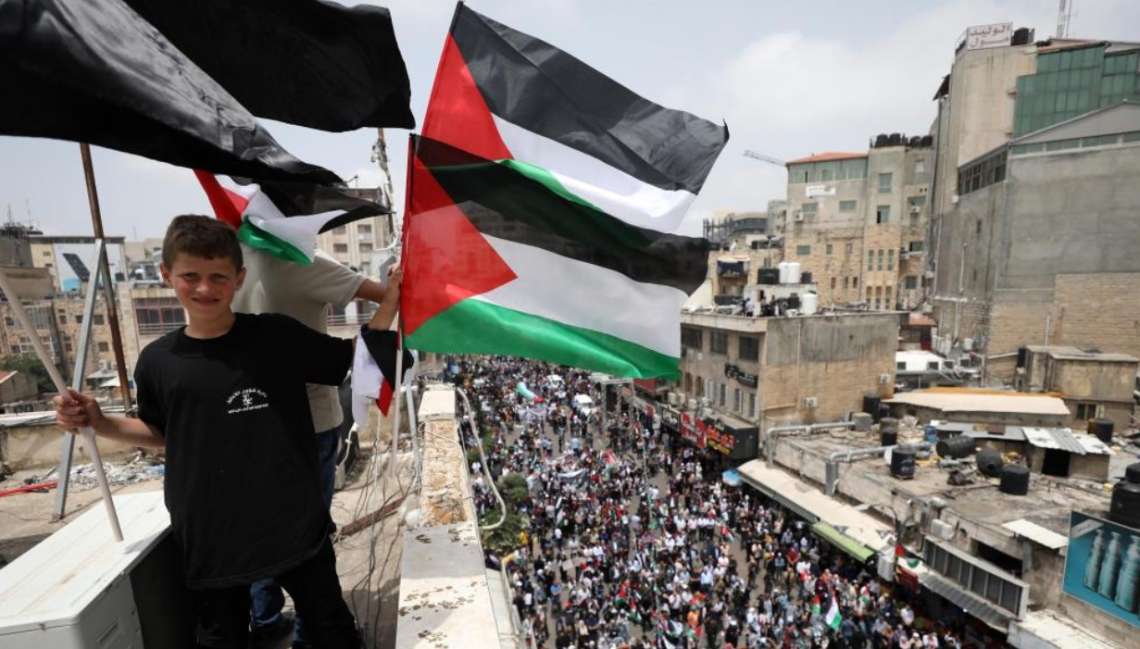
To be sure, unlike those of more centralized, weaker actors, Palestinian identity and resistance are deeply embedded within a people rather than confined to a single hierarchy. The persistence of Palestinian identity across generations and geographies distinguishes it from cases where public disengagement led to the loss of resistance. Leadership decapitation and arrests have not eliminated the underlying structures or the broader national movement. And decades of hardship have not extinguished national consciousness.
Reconciliation on terms that would dissolve Palestinian national aspirations has repeatedly failed. Agreements such as Oslo did not resolve core issues—statehood, sovereignty, refugees, Jerusalem—and thus did not produce a durable settlement. Similarly, public support—despite immense suffering—has not collapsed in a way that delegitimizes the broader cause. Temporary cessations of violence have not resulted in permanent withdrawal and have often been followed by renewed mobilization, reflecting the persistence of unresolved grievances and generational shifts.
The conclusion that follows is both empirical and strategic: there is no historical precedent to suggest that a national movement under such conditions will simply disappear. Israel, despite overwhelming military, economic, and political power, cannot expect to resolve the conflict through domination or attrition.
The demographic balance, geographic interdependence, and profound religious and historical attachments to the land render the elimination of Palestinian national identity untenable. Continued reliance on coercive measures has produced the opposite of its intended effect: rather than inducing capitulation, it entrenches resistance while eroding Israel’s international standing and moral authority.
History does not support the proposition that overwhelming force can indefinitely suppress a deeply rooted national movement without a political resolution. Where weaker parties have conceded, it has been under conditions that are absent here. The longer a viable political solution is deferred, the greater the cost—not only to Palestinians but to Israel itself.
A sustainable future cannot be built on the expectation that one side will vanish; it must rest on the recognition that both peoples are enduring, and that only a framework grounded in mutual rights, security, and dignity can bring this conflict to an end.
(Dr. Alon Ben-Meir is President of the Institute for Humanitarian Conflict Resolution)