August 3, 2025
4 mins read

US Mulls Terror Tag for Muslim Brotherhood

The US’ plan to designate the Muslim Brotherhood as a terrorist group comes after a bipartisan bill was introduced by Republican Congressman…reports Asian Lite News

The US is once again edging closer to officially designating the Muslim Brotherhood as a terrorist organisation, marking a significant step not just for American national security but for global efforts to confront the ideological infrastructure of political Islamism, according to a report.

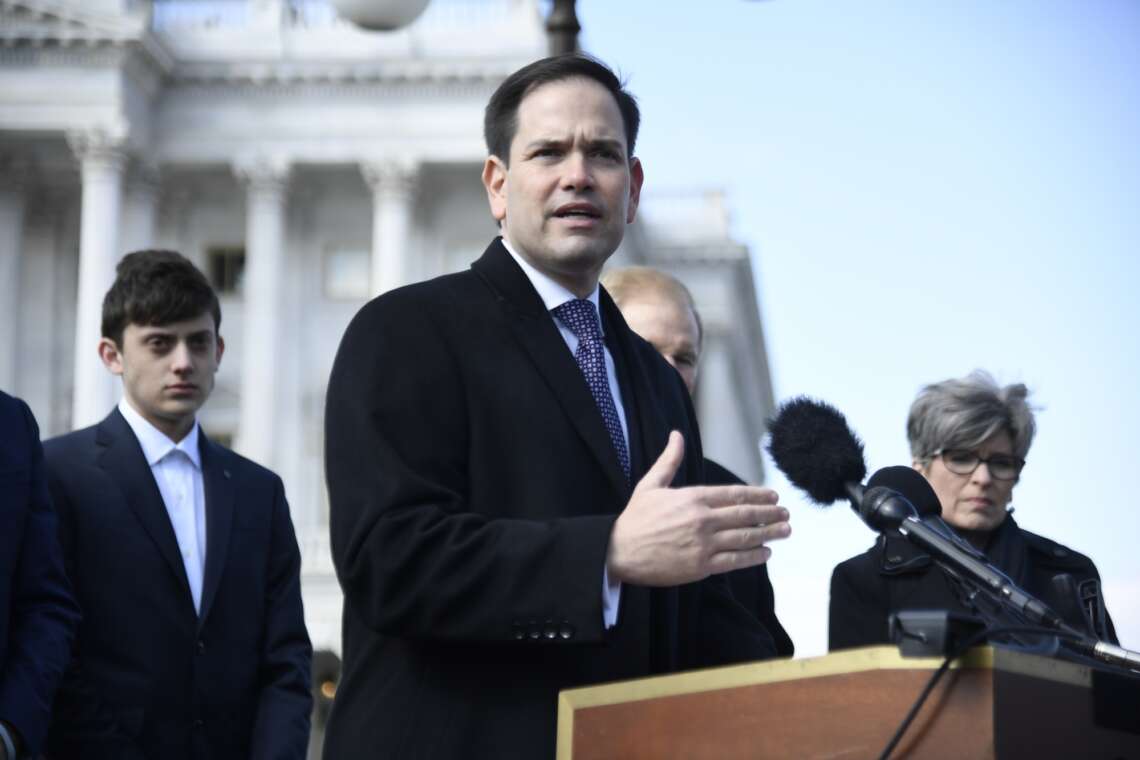
The US’ plan to designate the Muslim Brotherhood as a terrorist group comes after a bipartisan bill was introduced by Republican Congressman Mario Diaz-Balart and Democratic Congressman Jared Moskowitz in mid-July. White House Press Secretary Karoline Leavitt recently confirmed the development.

“This rare cross-party consensus highlights a growing recognition within US political circles: that the Brotherhood, despite its carefully crafted image as a political movement, operates as the ideological mothership for a wide network of violent Islamist actors, from Hamas to Al-Qaeda offshoots,” Washington-based The Capitol Institute said in a report.

In addition, influential policy institutions like the Heritage Foundation, the Israeli-American Civic Action Network (ICAN), and the American Mideast Coalition for Democracy (AMCD) have expressed support for the bill, it added.

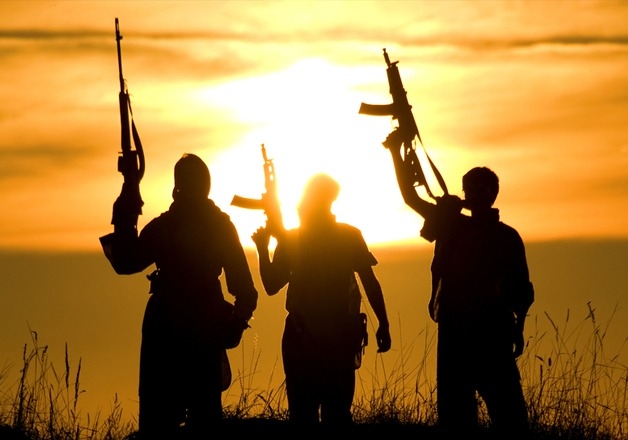
These organisations have consistently highlighted the dual strategy of the Brotherhood, which includes showcasing a modern face in public while funding, supporting, and inspiring extremist violence through proxies.

The report also mentioned US Senator Ted Cruz as a strong supporter of legislation targeting the Brotherhood, having introduced similar bills since 2015. He argues that the Brotherhood serves as an “ideological incubator for terrorism”, and designating it as a Foreign Terrorist Organisation (FTO) is “not just symbolic — it is a strategic necessity.”

It further adds that the Muslim Brotherhood is not only a political group with grievances but a “global project rooted in the radical vision of Hasan al-Banna and Sayyid Qutb, aiming to create an Islamic order through infiltration, indoctrination, and ultimately, imposition.”

The Muslim Brotherhood’s threat to liberal democracies started in Egypt’s Capital city, Cairo, following the collapse of the Ottoman Empire in 1922. A Sufi preacher from Egypt, Hassan al-Banna, in 1928, founded Jamia Hasafia al-Khairiyyah with the aim of restoring the Islamic Caliphate.

While the traditional Islamic theology focuses on the concept of Tawheed (monotheism), al-Banna shifted the purpose of Muslim existence towards the creation of a political Caliphate, even if it involved rebellion against existing governments. Later, after facing limited appeal among Shiites and Salafis for his movement, al-Banna rebranded the group as Al-Ikhwan al-Muslimeen — the Muslim Brotherhood.

After the killing of Hassan al-Banna in 1949, the leadership of the group was passed to Sayyid Qutb, an ideologue whose writings would shape the blueprint for modern jihadist movements. Qutb gathered attention from radicals like Abul Ala Maududi and Nawab Safavi, creating a revolutionary Islamist doctrine that ultimately inspired the 1979 Iranian Revolution and later groups like Al-Qaeda and ISIS, according to the report.

“Osama bin Laden’s mother, Hamida al-Attas, confirmed that her son’s radicalisation began under the influence of Abdullah Azzam, a Palestinian Brotherhood member who recruited him at King Abdulaziz University in Jeddah. Ayman al-Zawahiri, the current leader of Al-Qaeda, also began his journey with the Brotherhood,” the report stated.

Brotherhood’s inner circle not only considers Murshid as a religious guide but also as God’s vicegerent on earth.

The Brotherhood’s rise from Cairo to Tripoli, from Ankara to Gaza, was followed by chaos, bloodshed, and institutional collapse.

“In recent decades, some of the most pivotal blows to the ideological foundations of the Muslim Brotherhood have come not from Western think tanks, but from within the Islamic scholarly world itself,” the report mentioned.

Prominent Saudi Islamic scholar Shaykh Rabee bin Hadee al-Madkhali, Yemenese Sunni scholar Shaykh Muqbil bin Hadee al-Wadee, Indian Islamic scholar Shaykh Mohammed Rahmani, and several others have issued stern warnings against Hamas and its agenda.

The report also mentioned that several Middle Eastern nations, including Egypt, Saudi Arabia, the UAE, and Jordan, have officially imposed bans on the Muslim Brotherhood and affiliated groups, citing national security concerns, radicalisation and the group acting like a “subversive political force” as reasons.

Additionally, Russia and European nations like Austria and Germany have also taken actions against the Muslim Brotherhood.

“The US has taken steps to designate Hamas as a terrorist organisation. But it has stopped short of targeting its ideological fountainhead—the Muslim Brotherhood — which continues to operate under the radar in America through soft-power institutions, advocacy groups, and educational fronts,” The Capitol Institute’s report has stated.

The only way to ensure that the Islamic group is not effective is to eliminate the root cause, and not just its violent offshoots.

“Ignoring this root system while attacking only its violent offshoots is like trimming weeds while allowing the roots to spread underground,” the report said.

Previous Story

Hamas Sets Terms For Disarmament

Next Story

Couture Needs Sustainable Rethink

Previous Story

Hamas Sets Terms For Disarmament

Next Story

Couture Needs Sustainable Rethink

Latest from -Top News

Pakistan Risks Overstretching Itself in Yemen War

Pakistan’s expanding military role in Saudi Arabia amid the Yemen conflict could strain its defence resources and fragile finances…reports Asian Lite News Desk Pakistan’s military involvement in the war in Yemen may prove unsustainable because of mounting financial pressures and competing security demands, according to a new report. Islamabad’s growing military presence in Saudi Arabia risks stretching its defence resources while exposing the country to greater strategic and economic challenges. An article by Andrew Wilson in One World Outlook describes Pakistan’s involvement as a case of “fiscal and strategic overreach”, arguing that the country lacks the financial flexibility to sustain an expanded military commitment. Pakistan’s external finances depend heavily on an International Monetary Fund (IMF) programme, financial support from Gulf countries and remittances from Pakistani workers in the region. The report argues that deeper military involvement in the conflict could place additional pressure on these sources of financial stability. It also warns that deploying troops and military equipment abroad could weaken Pakistan’s capacity to address security challenges along its eastern border and deal with two domestic insurgencies. The move could also draw Islamabad into a conflict it has sought to approach cautiously. A Reuters report in May, citing Pakistani security and government sources, said Islamabad had deployed around 8,000 troops, a squadron of approximately 16 aircraft, mostly JF-17 fighter jets, two drone squadrons and a Chinese HQ-9 air-defence battery to Saudi Arabia. According to those sources, Riyadh was financing the deployment, with Pakistani personnel operating the equipment. The sources also said a confidential agreement contemplated the possibility of deploying up to 80,000 troops. Islamabad has not confirmed those figures, although it has acknowledged its military presence in Saudi Arabia, including the deployment of fighter jets at King Abdulaziz Air Base from April. The One World Outlook article argues that Saudi financial support can cover allowances and operating expenses but cannot easily replace military equipment needed elsewhere or resolve the political and strategic challenges of participating in the Yemen conflict. Pakistan’s defence budget is another concern. For the 2026-27 financial year, the federal government allocated PKR 3 trillion, or approximately $10.8 billion, to defence services. The allocation represents an 18 per cent increase from the original PKR 2.55 trillion provision and amounts to around 2.1 per cent of projected gross domestic product (GDP). Defence spending accounts for approximately 16 per cent of the federal government’s PKR 18.8 trillion expenditure. Military pensions are budgeted separately at PKR 822 billion, while debt servicing costs stand at approximately PKR 8 trillion, more than two-and-a-half times the defence allocation. The report argues that these competing financial obligations leave little room for additional military expenditure without placing further pressure on public finances. Pakistan’s reliance on IMF assistance also limits its fiscal flexibility. The country must meet the conditions attached to the programme, including a primary budget surplus target of 2 per cent of GDP and continued restraint on development spending. According to the article, these requirements make it difficult for Islamabad to finance an additional military commitment without compromising other budgetary priorities. Pakistan’s economic indicators offer limited reassurance. Economic growth for the 2025-26 financial year is estimated at between 3.6 and 3.7 per cent, while inflation reached approximately 10.3 per cent in September following an energy price shock. Foreign exchange reserves stood at around $21.5 billion at the end of September. Although this marks an improvement from the low levels recorded in 2023, the report notes that the reserves cover only a few months of imports. Financial assistance from Gulf partners remains central to Pakistan’s external stability. The article says Islamabad holds approximately $8 billion in Saudi deposits at its central bank. In July, the State Bank of Pakistan said Riyadh had extended the maturity of $5 billion in deposits to December 2028, easing the country’s immediate external financing requirements. A further $3 billion deposit was also extended in the spring. However, the article argues that these arrangements provide temporary relief rather than long-term financial independence, particularly as regional conflict threatens the stability of the Gulf economies on which Pakistan relies. The report concludes that Pakistan faces a difficult balance between supporting Saudi Arabia militarily and preserving the financial and military resources needed to address its domestic and regional challenges.

UK and Germany Ratify Kensington Treaty

Britain and Germany ratify the Kensington Treaty, agreeing new cooperation on AI, quantum research, defence and security while targeting investment, jobs and Russian hybrid threats…reports Asian Lite News Desk Britain and Germany

Economic tide is turning in Bangladesh

If there is one thing that can bring some comfort to the struggling Bangladeshi economy, it is good relations with India. Bangladesh should remember that Delhi’s backing, through easy supplies of essentials
Go toTop

Don't Miss

Trump taps his attorney Habba to serve as counselor  

Alina Habba, 40, defended Trump earlier this year, also serving

Abortion questions intensify in US courts

President Joe Biden’s administration has asked a court to block