March 12, 2025
3 mins read

India and Mauritius Strengthen Strategic Ties, Commit to Safeguard Indian Ocean Region

Acknowledging the importance of space cooperation, PM Ramgoolam thanked India for its support in the joint development of a satellite for Mauritius

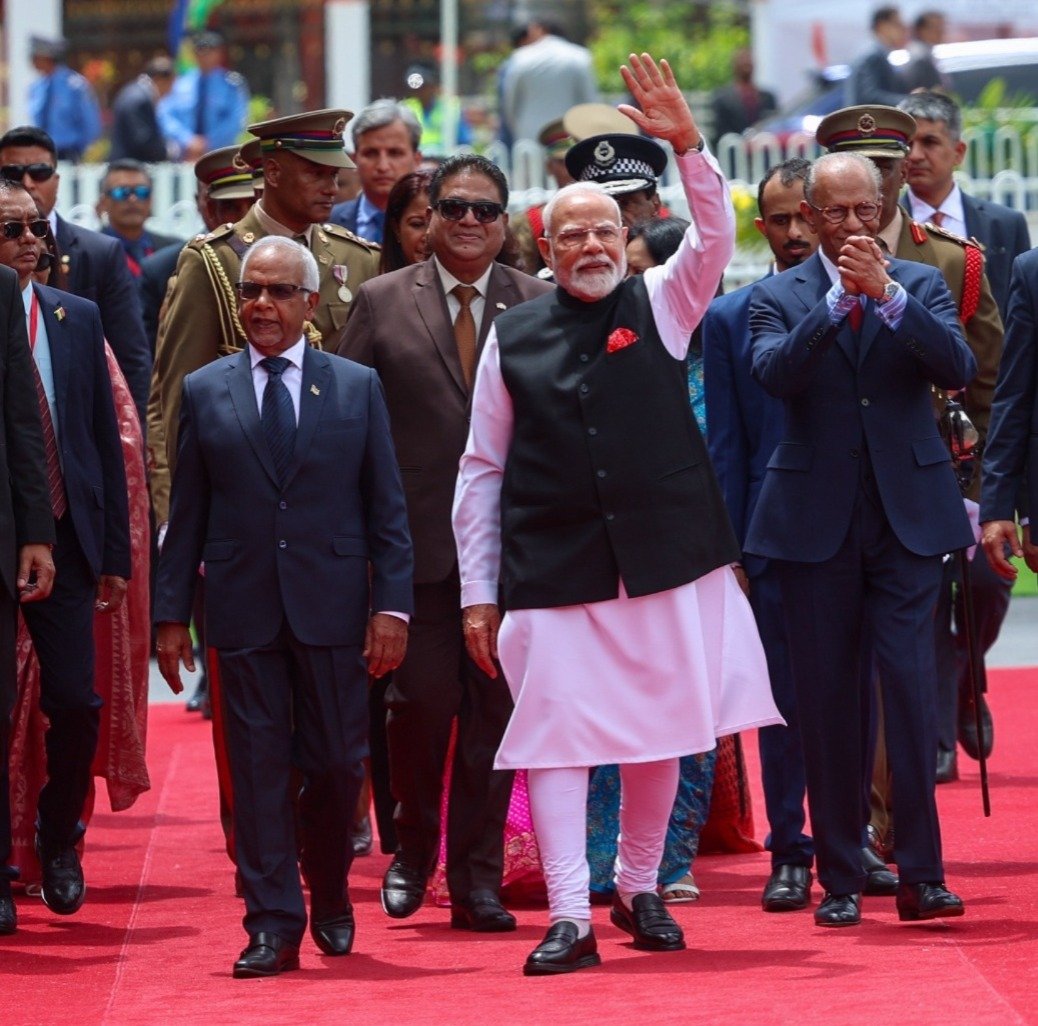
Indian Prime Minister Narendra Modi and Mauritius Prime Minister Navinchandra Ramgoolam have formally elevated their bilateral relationship to an “Enhanced Strategic Partnership,” marking a significant milestone in their ongoing collaboration. The two leaders expressed satisfaction over their comprehensive discussions and affirmed that their close and special partnership has gained substantial strategic depth.

This development comes at the conclusion of PM Modi’s landmark State Visit to Mauritius, which focused on strengthening ties across various sectors, including infrastructure, healthcare, digital technology, and maritime security. The “India-Mauritius Joint Vision for an Enhanced Strategic Partnership” was released on the final day of the visit, underscoring the deep historical, cultural, and kinship bonds shared by the two nations.

PM Modi and PM Ramgoolam acknowledged that their partnership has evolved into a significant strategic alliance, with a shared commitment to ensuring a free, open, and secure Indian Ocean Region (IOR). Both leaders agreed to work closely to counter maritime challenges and safeguard larger strategic interests in the region, emphasizing their shared goals of peace and security in the IOR.

Defence and Maritime Cooperation
The leaders placed special emphasis on defence and maritime security, which they deemed an important pillar of bilateral relations. The Prime Minister of Mauritius expressed gratitude to India for its steadfast support in safeguarding its vast Exclusive Economic Zone (EEZ). India has been instrumental in providing Mauritius with defence and maritime assets, regular deployment of ships and aircraft, joint maritime surveillance, hydrographic surveys, and patrolling, among other collaborative efforts. India’s role as a key security provider was acknowledged, with Mauritius appreciating the ongoing refit of its Coast Guard ships on a grant basis.

PM Modi reiterated that Mauritius is a special maritime partner for India, reinforcing their shared objectives in the region. The leaders agreed to enhance their cooperation through increased maritime patrols, joint surveillance, and the establishment of a National Maritime Information Sharing Centre to improve maritime domain awareness.

Chagos Islands Issue
The ongoing discussions between Mauritius and the United Kingdom regarding the Chagos Islands were also addressed. PM Modi reiterated India’s strong support for Mauritius on the Chagos issue, and PM Ramgoolam expressed his appreciation for India’s personal engagement with global leaders on the matter.

Regional Cooperation
Both leaders committed to advancing cooperation within regional and multilateral frameworks, including the Indian Ocean Rim Association (IORA), the Colombo Security Conclave, and the Coalition for Disaster Resilient Infrastructure. India’s leadership in IORA and the recent signing of the Founding Documents for the Colombo Security Conclave were also highlighted as important milestones for fostering regional maritime security.

The leaders also acknowledged India’s long-standing support to Mauritius in its socio-economic development. From high-profile infrastructure projects like the India-Mauritius Metro Express to educational tablets and social housing units, the two nations have closely collaborated to advance Mauritius’ developmental goals.

Bilateral Development Cooperation
PM Ramgoolam expressed gratitude for India’s significant contributions to Mauritius’ development, which spans sectors like infrastructure, healthcare, and space technology. India’s role as a “First Responder” during crises, such as the recent Cyclone Chido, further solidified the trust between the two countries.

Both leaders emphasized the timely completion of ongoing development projects, including a renal transplant unit, forensic science laboratory, and community development projects. They also discussed new initiatives, such as the provision of electric buses, the replacement of water pipelines, and the redevelopment of the Ganga Talao Spiritual Sanctuary.

Space Cooperation and Economic Ties
Acknowledging the importance of space cooperation, PM Ramgoolam thanked India for its support in the joint development of a satellite for Mauritius. Additionally, the conclusion of the Comprehensive Economic Cooperation and Partnership Agreement (CECPA) marked a major milestone in economic and trade relations, paving the way for more robust trade and investment between the two nations.

Looking Ahead
As part of the strengthened ties, PM Modi invited PM Ramgoolam to visit India at the earliest convenience, with both leaders agreeing that high-level exchanges are crucial to furthering bilateral relations. With mutual respect, trust, and a shared vision for regional stability, the India-Mauritius partnership stands poised to continue growing in significance.
Previous Story

Trump Increases Tariff on Canadian Imports Amid Growing Tensions

Next Story

Ukraine Agrees to 30-Day Ceasefire with US Proposal, Military Aid Restored

Previous Story

Trump Increases Tariff on Canadian Imports Amid Growing Tensions

Next Story

Ukraine Agrees to 30-Day Ceasefire with US Proposal, Military Aid Restored

Latest from -Top News

Pakistan Risks Overstretching Itself in Yemen War

Pakistan’s expanding military role in Saudi Arabia amid the Yemen conflict could strain its defence resources and fragile finances…reports Asian Lite News Desk Pakistan’s military involvement in the war in Yemen may prove unsustainable because of mounting financial pressures and competing security demands, according to a new report. Islamabad’s growing military presence in Saudi Arabia risks stretching its defence resources while exposing the country to greater strategic and economic challenges. An article by Andrew Wilson in One World Outlook describes Pakistan’s involvement as a case of “fiscal and strategic overreach”, arguing that the country lacks the financial flexibility to sustain an expanded military commitment. Pakistan’s external finances depend heavily on an International Monetary Fund (IMF) programme, financial support from Gulf countries and remittances from Pakistani workers in the region. The report argues that deeper military involvement in the conflict could place additional pressure on these sources of financial stability. It also warns that deploying troops and military equipment abroad could weaken Pakistan’s capacity to address security challenges along its eastern border and deal with two domestic insurgencies. The move could also draw Islamabad into a conflict it has sought to approach cautiously. A Reuters report in May, citing Pakistani security and government sources, said Islamabad had deployed around 8,000 troops, a squadron of approximately 16 aircraft, mostly JF-17 fighter jets, two drone squadrons and a Chinese HQ-9 air-defence battery to Saudi Arabia. According to those sources, Riyadh was financing the deployment, with Pakistani personnel operating the equipment. The sources also said a confidential agreement contemplated the possibility of deploying up to 80,000 troops. Islamabad has not confirmed those figures, although it has acknowledged its military presence in Saudi Arabia, including the deployment of fighter jets at King Abdulaziz Air Base from April. The One World Outlook article argues that Saudi financial support can cover allowances and operating expenses but cannot easily replace military equipment needed elsewhere or resolve the political and strategic challenges of participating in the Yemen conflict. Pakistan’s defence budget is another concern. For the 2026-27 financial year, the federal government allocated PKR 3 trillion, or approximately $10.8 billion, to defence services. The allocation represents an 18 per cent increase from the original PKR 2.55 trillion provision and amounts to around 2.1 per cent of projected gross domestic product (GDP). Defence spending accounts for approximately 16 per cent of the federal government’s PKR 18.8 trillion expenditure. Military pensions are budgeted separately at PKR 822 billion, while debt servicing costs stand at approximately PKR 8 trillion, more than two-and-a-half times the defence allocation. The report argues that these competing financial obligations leave little room for additional military expenditure without placing further pressure on public finances. Pakistan’s reliance on IMF assistance also limits its fiscal flexibility. The country must meet the conditions attached to the programme, including a primary budget surplus target of 2 per cent of GDP and continued restraint on development spending. According to the article, these requirements make it difficult for Islamabad to finance an additional military commitment without compromising other budgetary priorities. Pakistan’s economic indicators offer limited reassurance. Economic growth for the 2025-26 financial year is estimated at between 3.6 and 3.7 per cent, while inflation reached approximately 10.3 per cent in September following an energy price shock. Foreign exchange reserves stood at around $21.5 billion at the end of September. Although this marks an improvement from the low levels recorded in 2023, the report notes that the reserves cover only a few months of imports. Financial assistance from Gulf partners remains central to Pakistan’s external stability. The article says Islamabad holds approximately $8 billion in Saudi deposits at its central bank. In July, the State Bank of Pakistan said Riyadh had extended the maturity of $5 billion in deposits to December 2028, easing the country’s immediate external financing requirements. A further $3 billion deposit was also extended in the spring. However, the article argues that these arrangements provide temporary relief rather than long-term financial independence, particularly as regional conflict threatens the stability of the Gulf economies on which Pakistan relies. The report concludes that Pakistan faces a difficult balance between supporting Saudi Arabia militarily and preserving the financial and military resources needed to address its domestic and regional challenges.

UK and Germany Ratify Kensington Treaty

Britain and Germany ratify the Kensington Treaty, agreeing new cooperation on AI, quantum research, defence and security while targeting investment, jobs and Russian hybrid threats…reports Asian Lite News Desk Britain and Germany

Economic tide is turning in Bangladesh

If there is one thing that can bring some comfort to the struggling Bangladeshi economy, it is good relations with India. Bangladesh should remember that Delhi’s backing, through easy supplies of essentials
Go toTop

Don't Miss

IAF contingent arrives in Greece to take part in Exercise Iniochos

The Hellenic Air Force is organizing the multi-nation air exercise

India’s Public Cloud Market Set to Hit $17.8 bn

Enterprises are increasingly investing in modernising applications, developing cloud-native solutions,