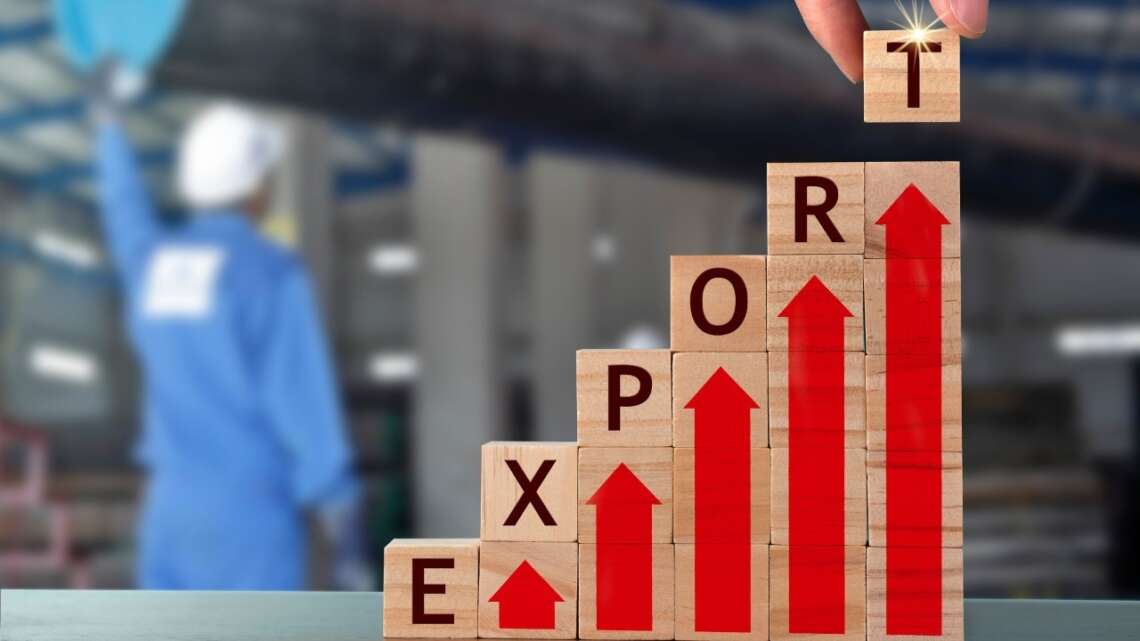
Recent trends show India’s exports to China and Hong Kong accelerating faster than those to the United States in FY 2025–26, signalling a deeper structural shift..reports Asian Lite News
India’s export landscape is undergoing a remarkable transformation, marked by broad-based growth, steady diversification, and a new-found resilience that positions the country as a rising global trade leader.
Recent trends show India’s exports to China and Hong Kong accelerating faster than those to the United States in FY 2025–26, signalling a deeper structural shift in the country’s trade orientation. As highlighted in a detailed analysis first reported by News Bomb, these emerging patterns reflect India’s evolution from a traditionally US-centric export model to a more balanced and opportunity-driven global strategy.
The global trade and production ecosystem itself is at a critical crossroads. The COVID-19 pandemic exposed the fragility of over-concentrated supply chains, leading to widespread logistics disruptions, labour shortages, shipping delays, and unprecedented volatility in commodity markets.
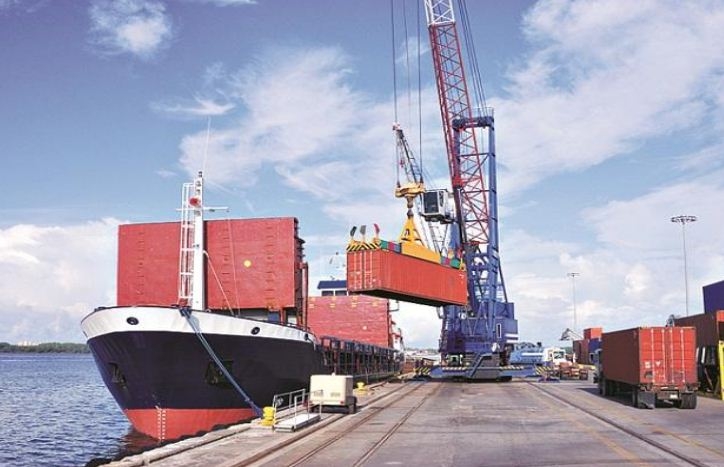
This instability was further compounded by geopolitical tensions, tariff wars, and an increasing emphasis on national security in trade policy across major economies. The once-dominant East Asia–centric manufacturing system is gradually giving way to a more distributed model where resilience, geopolitical neutrality, and risk diversification play crucial roles.
Amid this transformation, India has positioned itself as a key contender. With its vast market, youthful workforce, expanding industrial capacity, and sweeping policy reforms, India is leveraging its competitive advantages to attract global value chains. Flagship initiatives such as the Production Linked Incentive (PLI) schemes, Make in India, PM Gati Shakti, and the National Logistics Policy are reshaping the country’s manufacturing profile and enhancing its export competitiveness.
This shift aligns closely with the evolving global philosophy of supply chain resilience. Corporations worldwide are recalibrating their sourcing strategies—placing equal weight on cost efficiency, reliability, and risk mitigation.
India is no longer seen merely as a low-cost manufacturing alternative but as a politically stable, technologically capable, and reliability-focused hub. Enhanced digital infrastructure, logistics data networks, and real-time tracking tools are driving supply chain visibility and operational stability, strengthening India’s appeal to multinational firms.
A central feature of this transition is India’s deliberate and strategic export diversification. Although the United States remains an important destination, especially for electronics, pharmaceuticals, apparel, and gems and jewellery, recent tariff escalations—including a 50% duty hike on several Indian products—have nudged India toward deeper market diversification.
Consequently, exports have surged to West Asian economies such as the UAE, Saudi Arabia, Oman, and Qatar, fuelled by rising demand for food products, consumer goods, electronics, and chemicals. Europe, particularly the Netherlands and Germany, has become a significant gateway to the EU for Indian goods, while trade with East Asia—China, Hong Kong, Vietnam, Japan, and South Korea—continues to expand across categories ranging from marine exports to electronics and industrial raw materials.
Sector-specific performance further underscores India’s growing global footprint. The electronics sector, led by exponential growth in mobile phone manufacturing, has turned India into a net exporter of smartphones. Pharmaceuticals remain a global stronghold, reinforcing India’s position as the “Pharmacy of the World.” Engineering goods, auto components, industrial machinery, agricultural exports, and processed foods also show sustained momentum, aided by quality improvements and global demand shifts.
Trade partnerships and agreements are central to this growth story. The UAE–India CEPA has significantly boosted bilateral trade, while ongoing negotiations with the EU, Oman, Peru, and others are expected to enhance long-term tariff stability and market access. Infrastructure modernisation—multi-modal logistics, dedicated freight corridors, modernised ports, and renewable energy expansion—is reducing production costs and improving India’s reliability as a global supply hub.
In conclusion, India stands at a historic inflection point in global trade. Its ability to diversify markets, strengthen manufacturing capabilities, and embrace resilience-driven supply chain models reflects a transition from a primarily service-oriented exporter to a formidable manufacturing and trade powerhouse. As global markets seek alternatives in a rapidly shifting geopolitical environment, India is emerging not just as a participant but as a potential rule-setter in the future architecture of global supply chains.