November 26, 2025
3 mins read

Islamabad, Taliban in New War of Claims


Pakistan’s latest remarks came after Kabul accused Islamabad of violating Afghanistan’s airspace in a series of midnight-pre-dawn strikes….reports Asian Lite News

Pakistan’s reported denial of Taliban claims that it carried out airstrikes in Afghanistan comes amid a visible buildup of troops and equipment along the tense border.

The denial also raises questions over the bombings amidst rising tension in the region, thus implying either a faux pas or foul play, or a possible attempt at reducing hostilities. The Durand Line, said reports, witnessed a buildup of heavy artillery, troop deployment, and drone surveillance, with anticipation of an imminent cross‑border operation following the aerial bombings at Khost, Paktika and Kunar provinces.

However, both Afghanistan and Pakistan media have reported that Islamabad has publicly denied carrying out the latest air strikes. Regional news outlets said that Pakistan’s military called the Afghan claims “baseless”.

Pakistan army spokesperson Ahmed Sharif Chaudhry was quoted as stating on Tuesday that Islamabad “never targets innocent civilians” and insisted that it officially confirms its actions whenever it launches an attack. He suggested the Taliban’s allegations may be linked to what he described as internal tensions within the group.

A similar attack last month had seen Afghan Taliban fighters retaliating with an attack on Pakistan’s border posts on October 11 that led to the stoppage of all trade and transit across the volatile Durand Line.

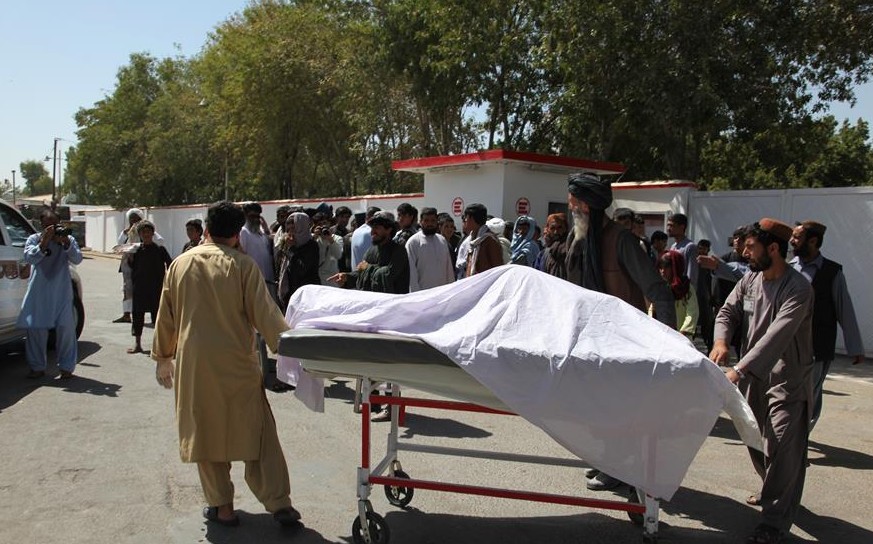
Pakistan’s Tuesday remarks came after Kabul accused Islamabad of violating Afghanistan’s airspace in a series of midnight-pre-dawn strikes. The Taliban said the attacks killed 10 people, including nine children and a woman, in Khost, and wounded four civilians in Kunar and Paktika.

Alleging Pakistan’s involvement, it had described the attack as a violation of Afghanistan’s airspace and a breach of international norms.

The Afghanistan International news website quoted Taliban spokesperson Zabihullah Mujahid declaring that they viewed the strikes as “aggression” and a crime, warning of responding “appropriately” at a time of their choosing. He added that the cross-border attacks undermined established regional principles and warned that the Taliban would not allow such actions to go unanswered, said the report.

Renewed troop and equipment movements are said to have been seen along multiple frontier sectors, including Chaman‑Spin Boldik, Angoor Adda, Kurram‑Nangahar and Torkham.

A social media post by the United Nations Assistance Mission in Afghanistan (UNAMA) mentioned the strike on its X handle, but drew questions for not naming a perpetrator. “At least 10 civilians were killed and six injured in airstrikes in Khost and Kunar provinces in #Afghanistan last night. Most of the victims were children. UNAMA again calls for respect for international law to protect civilians and prevent civilian harm,” it posted on Tuesday. One user shared some names, claiming, “These are the 10 civilians martyred by the Pakistani Military Regime’s airstrikes in Khost. Children, infants and a mother…” Another asked, “Why aren’t you saying WHO carried out the airstrikes?” asserting, “Pakistan did it.”

Reports have, however, mentioned Pakistani authorities saying that they have carried out targeted operations near the border in recent days, terming these as counter‑terrorism actions tied to recent attacks inside their territory. These raids were supposed to have resulted in dozens of militants being killed in Kurram and adjacent districts.

Simmering tension has led to several skirmishes along the disputed line, leading to intermittent closing of the border, thus affecting one of its major transit points, especially for trade, for landlocked Afghanistan.

Now, trade remains suspended through the Afghanistan-Pakistan border since November 12, with Kabul emphasising that the business community identify alternative routes. Efforts by regional players to act as mediators between the neighbours did result in a temporary ceasefire agreement between Kabul and Islamabad, but they failed to reach a consensus on specific ways and means to implement peace, despite two consecutive meetings.

Previous Story

British Lawyers Condemn Tulip Siddiq’s Bangladesh Trial

Next Story

India flags Indian’s detention in China

Previous Story

British Lawyers Condemn Tulip Siddiq’s Bangladesh Trial

Next Story

India flags Indian’s detention in China

Latest from -Top News

Nepal Floods Cause $1.66 Billion In Damage, Says World Bank

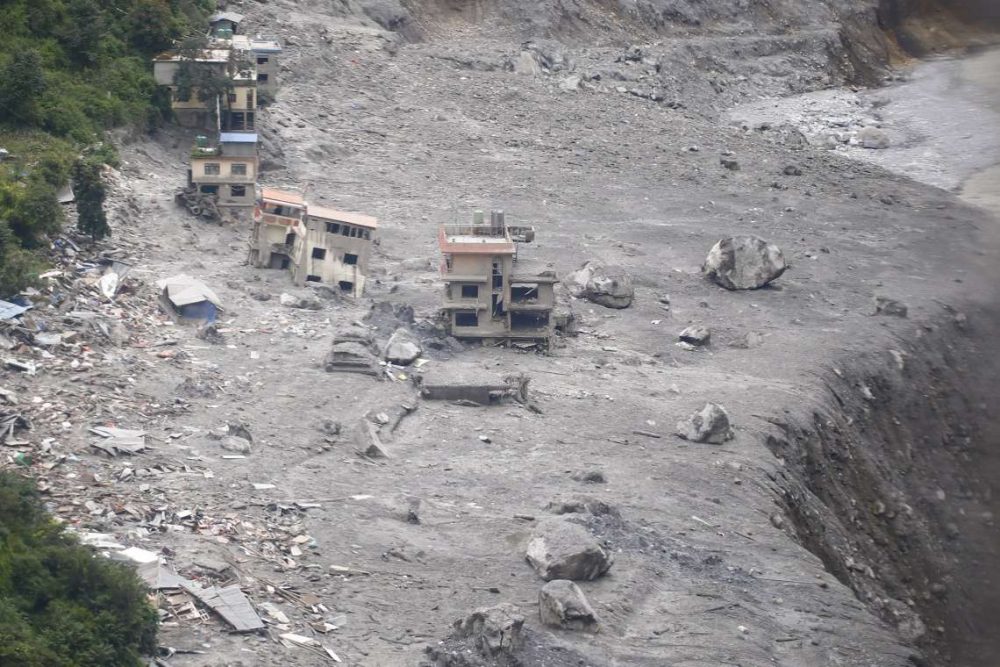
Nepal’s August 2026 floods caused an estimated US$1.66 billion in direct physical damage, with infrastructure accounting for 83 per cent of the total…reports Asian Lite News Desk Nepal’s devastating floods in August 2026 caused an estimated US$1.66 billion in direct physical damage, with infrastructure accounting for 83 per cent of the total, according to a World Bank report. The estimate, included in the World Bank’s Nepal Development Update unveiled this week, is close to the Nepal government’s preliminary Rapid Damage and Needs Assessment (RDNA), which put physical damage at US$1.81 billion. The government’s assessment also estimated losses beyond physical assets at US$883.32 million, taking the total economic effects of the disaster to approximately US$2.7 billion. The World Bank’s Global Rapid Post-Disaster Damage Estimation (GRADE) found that infrastructure suffered the greatest damage, estimated at US$1.38 billion, or 83 per cent of the total. Residential buildings accounted for US$185 million, or 11 per cent, while non-residential buildings sustained damage worth US$101 million, or 6 per cent. The floods along the Bhotekoshi and Trishuli rivers caused extensive damage to hydropower projects, solar energy facilities, electricity transmission infrastructure and transport networks. The energy sector, particularly hydropower, was among the worst affected. The August 2026 floods affected 12 hydropower projects and one solar project, involving 281.1 MW of operational capacity and 395.02 MW of capacity under construction. Damage to transmission lines and substations also disrupted the transmission of 149.6 MW of electricity to the national grid. The total affected capacity reached approximately 430.7 MW, equivalent to 10.6 per cent of Nepal’s installed hydropower and solar capacity at the end of fiscal year 2025-26, which concluded in mid-July. The disaster also severely damaged transport infrastructure along the 82-km Rasuwa trade corridor, which connects Kathmandu with the Rasuwagadhi border point with China. More than 55 km of the corridor was damaged, including 40 km that was completely destroyed. The floods also damaged 37 motorable bridges and 68 suspension bridges. The disaster resulted in significant human losses along the affected corridor and beyond. According to Nepal’s National Disaster Risk Reduction and Management Authority, 1,455 people had been confirmed dead, while 5,285 remained missing following the disaster. The World Bank report found that the physical damage was concentrated in three districts in central Nepal: Rasuwa, Nuwakot and Dhading. Rasuwa was the worst-affected district, accounting for US$1.07 billion, or 64 per cent, of the total direct damage. Nuwakot recorded an estimated US$551 million in damage, while Dhading suffered approximately US$39 million. “The findings highlight the concentration of physical damage in a small number of districts and the disproportionate impact on infrastructure, underscoring the scale of the reconstruction challenge facing the affected areas,” the World Bank said. The global development financier said the floods had demonstrated the scale and complexity of disaster risks in Nepal’s Himalayan environment. The event also showed how a single extreme weather event could trigger cascading impacts across sectors and geographical areas. The report said recovery efforts should extend beyond restoring infrastructure to its pre-disaster condition. While the principle of “Build Back Better” remained relevant, the World Bank stressed that rebuilding infrastructure to higher engineering standards in the same locations might not always be sufficient. “In some cases, simply rebuilding the same infrastructure in the same location to a higher engineering standard may not be sufficient. Nepal may need to build differently — based on a better understanding of risk, more careful decisions about location and design, greater redundancy in critical networks, stronger monitoring and early warning, and a more integrated approach to infrastructure development in the Himalayas,” the report said. The World Bank said Nepal’s recovery strategy should incorporate improved risk assessment, more informed infrastructure planning, stronger monitoring systems and better early warning mechanisms. The report emphasised that reconstruction should not only restore damaged assets but also reduce the impact of future disasters, particularly in the country’s vulnerable Himalayan regions.

Vaccine Delays Fuel Bangladesh Measles Outbreak

More than 32,000 suspected cases and over 250 deaths have been reported since mid-March, with children making up most of the fatalities….reports Asian Lite News Desk Bangladesh’s measles outbreak has intensified, with

Tsai: Stand With Taiwan, Strengthen The Indo-Pacific

The former president said stronger international partnerships would help Taiwan withstand mounting military, cyber and economic pressure while reinforcing democratic resilience….repots Asian Lite News Desk Former Taiwan President Tsai Ing-wen has called
Go toTop

Don't Miss

Opposition terms Imran ‘security threat’

Speaking at a news conference, PML-N’s Khawaja Asif blasted Khan

Afghan Women Dare Taliban

The protesters said that the silence of the UN against