June 16, 2025
2 mins read

Israel Takes Out Iran Spy Leaders

Among those killed were Mohammad Khatami, head of the IRGC Intelligence Organisation since 2022, and his deputy Mohammad Hassan Mahkaghi….reports Asian Lite News

Israel on Monday announced that four high-ranking Iranian intelligence officials, including the chief of the Intelligence Organisation of the Islamic Revolutionary Guard Corps (IRGC), were killed in a precision airstrike carried out by Israeli fighter jets in Tehran.

According to the Israel Defense Forces (IDF), the strike was executed on Sunday night, targeting a building in the Iranian capital where key intelligence personnel were assembled.

“Yesterday, Air Force fighter jets attacked, with precise intelligence guidance from the Intelligence Division in the Tehran area, a building where several senior officials in the Iranian regime’s intelligence organisations were staying,” the IDF said in a post on X.

Among those killed were Mohammad Khatami, head of the IRGC Intelligence Organisation since 2022, and his deputy Mohammad Hassan Mahkaghi.

The IDF alleged that Khatami was responsible for surveillance, suppression of dissent, and orchestrating terror operations abroad. His deputy, Mahkaghi, previously headed the Strategic Intelligence Department and was described by Israel as a central figure in Iran’s hostile intelligence efforts targeting Israel and regional actors.

The strike also eliminated Muhsin Baqri, the head of the Quds Force’s intelligence department, and his deputy Abu al-Fachel Nikoui. According to the IDF, the Quds Force officials were instrumental in coordinating with foreign militant groups, including Hezbollah, Hamas, the Houthis, and Iraq-based militias.

“Nikoui played a significant part in Iran’s efforts to entrench itself in Syria and boost Hezbollah’s strength in Lebanon,” the IDF added.

“This operation adds to the previous elimination of the head of the General Staff’s Intelligence Department last Friday, marking a serious blow to Iran’s intelligence apparatus and its capability to carry out attacks against Israel,” the Israeli military noted.

In a briefing on Monday, IDF Spokesman Brigadier General Effie Defrin declared that the Israeli Air Force (IAF) had achieved “full aerial superiority” over Tehran.

He claimed that Israel had already destroyed a third of Iran’s ballistic missile launchers and was successfully disrupting large-scale Iranian offensives.

According to Defrin, Iran launched 65 ballistic missiles and dozens of drones towards Israel in two separate barrages on Sunday night and Monday morning.

Most of the projectiles were intercepted, though three impacts resulted in eight deaths. He further disclosed that the IAF intercepted 20 ballistic missiles on the ground in Iran before they could be launched.

The IDF also reported that around 50 Israeli fighter jets and drones targeted Iranian missile storage facilities and command centres where missile launches were being orchestrated.

Since the escalation began, Israel claims to have destroyed over 120 Iranian ballistic missile launchers.

Additionally, overnight strikes were carried out in Isfahan, where the IAF hit over 100 military targets, expanding its campaign to degrade Iran’s strategic capabilities.


Previous Story

London Design Biennale Celebrates Gulf Creativity

Next Story

Abhed Abhisheki to perform at Rukmini Vitthal ‘vari’ samaroh in London

Previous Story

London Design Biennale Celebrates Gulf Creativity

Next Story

Abhed Abhisheki to perform at Rukmini Vitthal ‘vari’ samaroh in London

Latest from -Top News

Nepal Floods Cause $1.66 Billion In Damage, Says World Bank

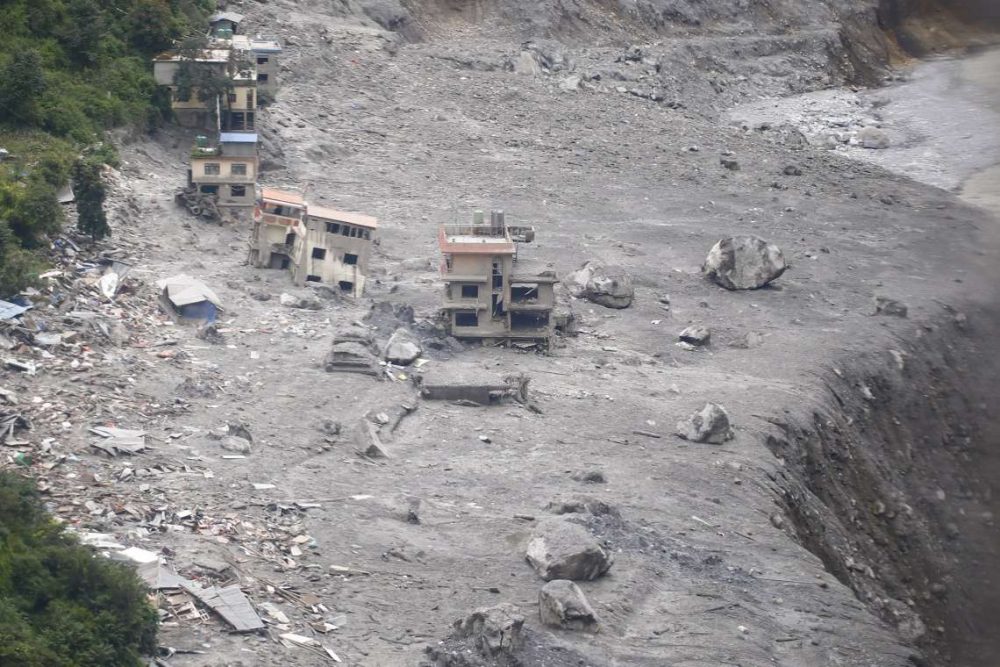
Nepal’s August 2026 floods caused an estimated US$1.66 billion in direct physical damage, with infrastructure accounting for 83 per cent of the total…reports Asian Lite News Desk Nepal’s devastating floods in August 2026 caused an estimated US$1.66 billion in direct physical damage, with infrastructure accounting for 83 per cent of the total, according to a World Bank report. The estimate, included in the World Bank’s Nepal Development Update unveiled this week, is close to the Nepal government’s preliminary Rapid Damage and Needs Assessment (RDNA), which put physical damage at US$1.81 billion. The government’s assessment also estimated losses beyond physical assets at US$883.32 million, taking the total economic effects of the disaster to approximately US$2.7 billion. The World Bank’s Global Rapid Post-Disaster Damage Estimation (GRADE) found that infrastructure suffered the greatest damage, estimated at US$1.38 billion, or 83 per cent of the total. Residential buildings accounted for US$185 million, or 11 per cent, while non-residential buildings sustained damage worth US$101 million, or 6 per cent. The floods along the Bhotekoshi and Trishuli rivers caused extensive damage to hydropower projects, solar energy facilities, electricity transmission infrastructure and transport networks. The energy sector, particularly hydropower, was among the worst affected. The August 2026 floods affected 12 hydropower projects and one solar project, involving 281.1 MW of operational capacity and 395.02 MW of capacity under construction. Damage to transmission lines and substations also disrupted the transmission of 149.6 MW of electricity to the national grid. The total affected capacity reached approximately 430.7 MW, equivalent to 10.6 per cent of Nepal’s installed hydropower and solar capacity at the end of fiscal year 2025-26, which concluded in mid-July. The disaster also severely damaged transport infrastructure along the 82-km Rasuwa trade corridor, which connects Kathmandu with the Rasuwagadhi border point with China. More than 55 km of the corridor was damaged, including 40 km that was completely destroyed. The floods also damaged 37 motorable bridges and 68 suspension bridges. The disaster resulted in significant human losses along the affected corridor and beyond. According to Nepal’s National Disaster Risk Reduction and Management Authority, 1,455 people had been confirmed dead, while 5,285 remained missing following the disaster. The World Bank report found that the physical damage was concentrated in three districts in central Nepal: Rasuwa, Nuwakot and Dhading. Rasuwa was the worst-affected district, accounting for US$1.07 billion, or 64 per cent, of the total direct damage. Nuwakot recorded an estimated US$551 million in damage, while Dhading suffered approximately US$39 million. “The findings highlight the concentration of physical damage in a small number of districts and the disproportionate impact on infrastructure, underscoring the scale of the reconstruction challenge facing the affected areas,” the World Bank said. The global development financier said the floods had demonstrated the scale and complexity of disaster risks in Nepal’s Himalayan environment. The event also showed how a single extreme weather event could trigger cascading impacts across sectors and geographical areas. The report said recovery efforts should extend beyond restoring infrastructure to its pre-disaster condition. While the principle of “Build Back Better” remained relevant, the World Bank stressed that rebuilding infrastructure to higher engineering standards in the same locations might not always be sufficient. “In some cases, simply rebuilding the same infrastructure in the same location to a higher engineering standard may not be sufficient. Nepal may need to build differently — based on a better understanding of risk, more careful decisions about location and design, greater redundancy in critical networks, stronger monitoring and early warning, and a more integrated approach to infrastructure development in the Himalayas,” the report said. The World Bank said Nepal’s recovery strategy should incorporate improved risk assessment, more informed infrastructure planning, stronger monitoring systems and better early warning mechanisms. The report emphasised that reconstruction should not only restore damaged assets but also reduce the impact of future disasters, particularly in the country’s vulnerable Himalayan regions.

Vaccine Delays Fuel Bangladesh Measles Outbreak

More than 32,000 suspected cases and over 250 deaths have been reported since mid-March, with children making up most of the fatalities….reports Asian Lite News Desk Bangladesh’s measles outbreak has intensified, with

Tsai: Stand With Taiwan, Strengthen The Indo-Pacific

The former president said stronger international partnerships would help Taiwan withstand mounting military, cyber and economic pressure while reinforcing democratic resilience….repots Asian Lite News Desk Former Taiwan President Tsai Ing-wen has called
Go toTop

Don't Miss

Iran Show Grit to Hold New Zealand in Opener

Ramin Rezaeian starred with a goal and an assist as

Israeli Knesset to vote on new govt by June 14

Levin made the formal announcement to Parliament on Monday, noting