India’s External Affairs Minister S Jaishankar declared New Delhi will never compromise on protecting farmers and small producers, vowing resistance against unfair US tariffs and external pressure.
External Affairs Minister S Jaishankar has blasted Washington’s fresh round of tariffs on Indian goods, calling them “unjustified and unreasonable,” as trade tensions between New Delhi and the Trump administration flare up once again.
Speaking at The Economic Times World Leaders Forum 2025 on Saturday, Jaishankar drew a firm line, stressing that India would not bow to external pressure when it came to safeguarding its farmers and small producers.
“Our red lines are clear — protecting the interests of our farmers and small producers. That is not something we can compromise,” Jaishankar declared.
The Trump administration this week slapped punitive tariffs of more than 50 per cent on several Indian exports, citing New Delhi’s continued purchase of Russian oil. But Jaishankar dismissed the framing as misleading, arguing that India was being unfairly singled out while others escaped scrutiny.
“This is being presented as an oil issue,” Jaishankar said, “but the same criticism has not been applied to China, the largest oil importer, or to European nations, the largest LNG importers. Europe’s trade with Russia far exceeds ours — if their money isn’t funding the war, why single out India?”
The minister underscored what he described as Western hypocrisy, pointing out that Russia-EU trade remains significantly larger than Russia-India trade. “India’s exports to Russia have grown, yes, but not dramatically. The numbers don’t justify the kind of pressure we’re facing,” he added.
Jaishankar used the moment to reiterate India’s broader doctrine of strategic autonomy. “The issue of decisions which we make in our national interest is our right. That is what strategic autonomy is about,” he said, drawing applause from the audience.
Despite the friction, Jaishankar signalled that lines of communication between New Delhi and Washington remained open. “We are two big countries. The lines are not cut, people are talking, and we will see where it goes,” he noted.
On the appointment of Washington’s new ambassador to India, however, he refused to be drawn, quipping: “I am the Foreign Minister, I don’t comment on ambassadorial appointments of other countries.”
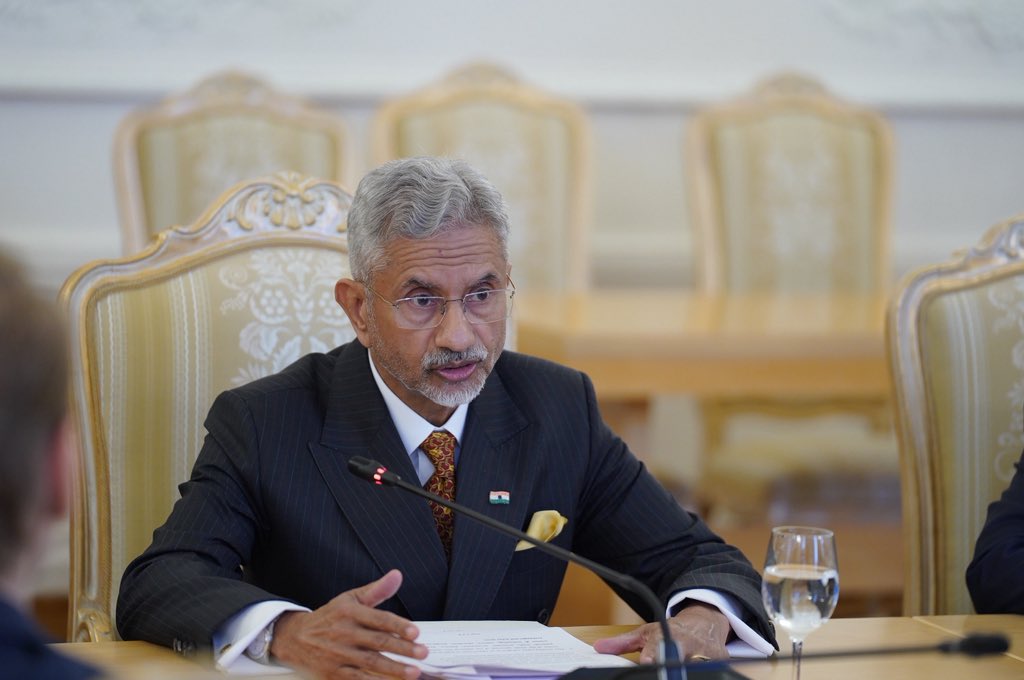
Jaishankar’s remarks come just days after a high-profile visit to Moscow, where he met President Vladimir Putin, Deputy PM Denis Manturov, and Foreign Minister Sergey Lavrov. He co-chaired the 26th session of the India-Russia Inter-Governmental Commission, covering trade, technology, energy, and regional security, while also conveying Prime Minister Narendra Modi’s greetings to Putin.
The talks, according to the Ministry of External Affairs, ranged across terrorism, the war in Ukraine, and security developments in West Asia and Afghanistan — signalling India’s determination to keep its diplomatic options open, even as pressure mounts from the West.
With Washington hardening its stance and Moscow tightening its embrace, New Delhi faces one of its toughest balancing acts yet — but Jaishankar’s message was clear: India won’t be dictated to on how it manages its economy, its energy supplies, or its sovereignty.