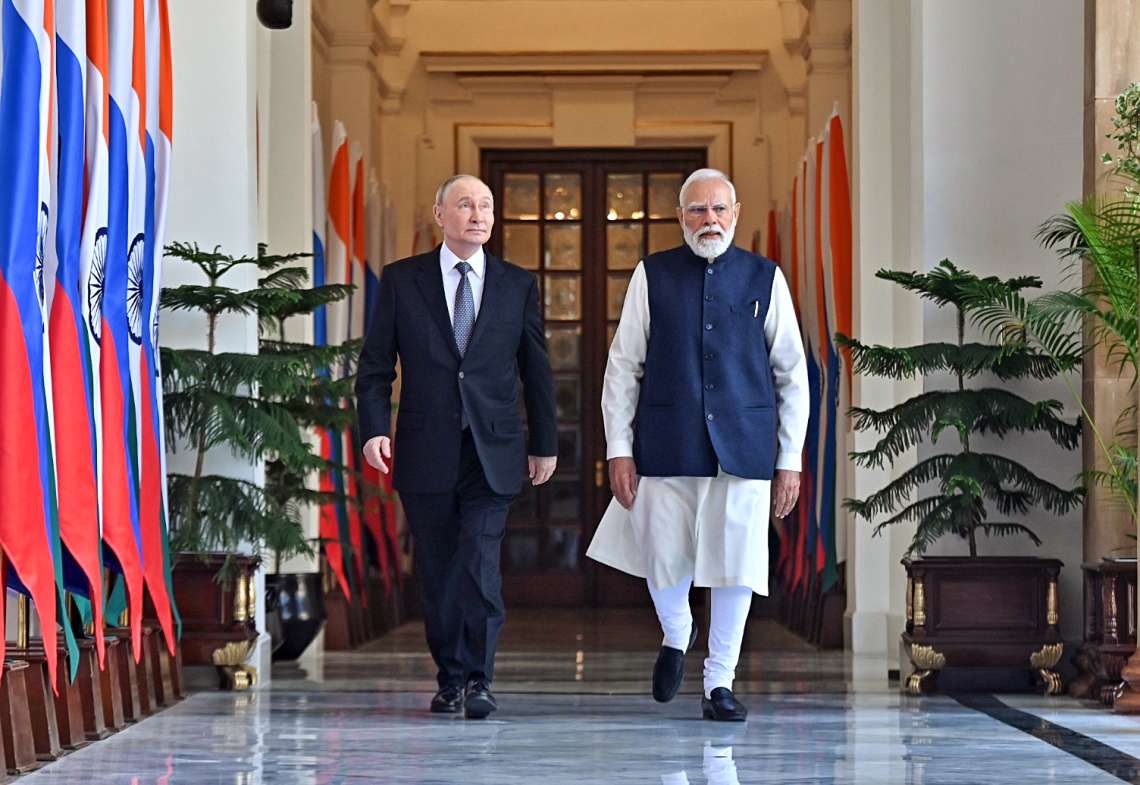
Vladimir Putin’s red-carpet welcome in Delhi has unsettled Western capitals, not least in London, where concerns are rising over India’s refusal to take sides, writes Kaliph Anas
Vladimir Putin’s arrival in Delhi and the sweeping ceremony that greeted him have triggered a familiar bout of anxiety in Western political circles, with the UK among those fretting about what the renewed warmth between Moscow and New Delhi means for their own strategic interests. British officials have long hoped that India’s growing partnership with the West, including deepening defence cooperation and the long-discussed UK-India trade deal, would translate into closer alignment on global security. But the tone of reporting around the visit makes clear that India is not about to reshape its foreign policy to suit Western expectations. Far from it. India is behaving like a global actor confident in its own weight, and the unease in London highlights how much the geopolitical landscape has shifted.
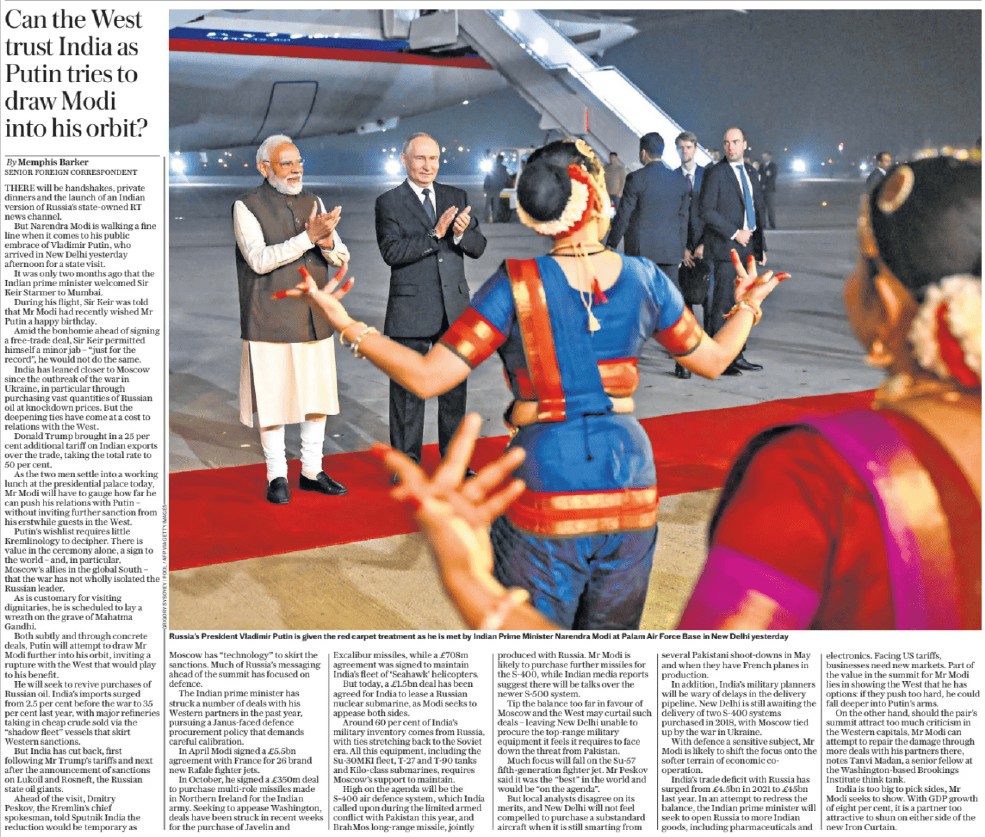
The coverage of the visit, framed as a test of India’s loyalties, reveals a Western assumption that India must eventually “choose” between rival blocs. For India, this is an outdated premise. Strategic autonomy is not a diplomatic balancing act but a deliberate assertion of sovereignty. Russia remains a key defence partner because it provides technology and systems that Western countries— including the UK—historically refused to share. India has not forgotten decades of Western export controls, nor does it miss the irony of being asked to abandon Russian hardware while being offered expensive, limited alternatives. This pragmatic approach is consistent with India’s view that alliances are tools, not obligations.
The UK’s stake in this dynamic is significant. With the post-Brexit tilt to the Indo-Pacific still a central pillar of British foreign policy, London needs India to play a stabilising role in the region. Economically, the UK courts India intensely—whether through the stalled trade talks, the push for Indian investment, or the dependence on Indian-origin talent in British universities, healthcare and tech sectors. But the relationship is not asymmetric. India is the world’s fastest-growing major economy and a diplomatic heavyweight that attracts overtures from Washington, London, Brussels, Tokyo and the Gulf. The truth is simple: India can walk away from any one partnership; the West cannot easily walk away from India.
Much of the Western concern over India’s Russia ties overlooks the practical realities driving them. Russian energy remains cheap and stable. Russian defence supplies remain indispensable. And Moscow’s diplomatic support at the UN comes without the political conditionality favoured in Western capitals. Meanwhile, the UK and Europe still import Russian energy through intermediaries, making their criticism of India sound selectively moral.
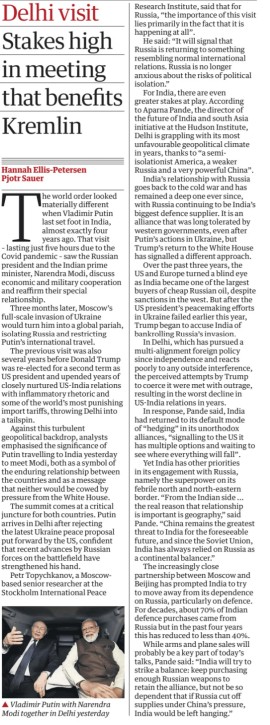
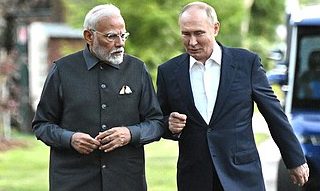
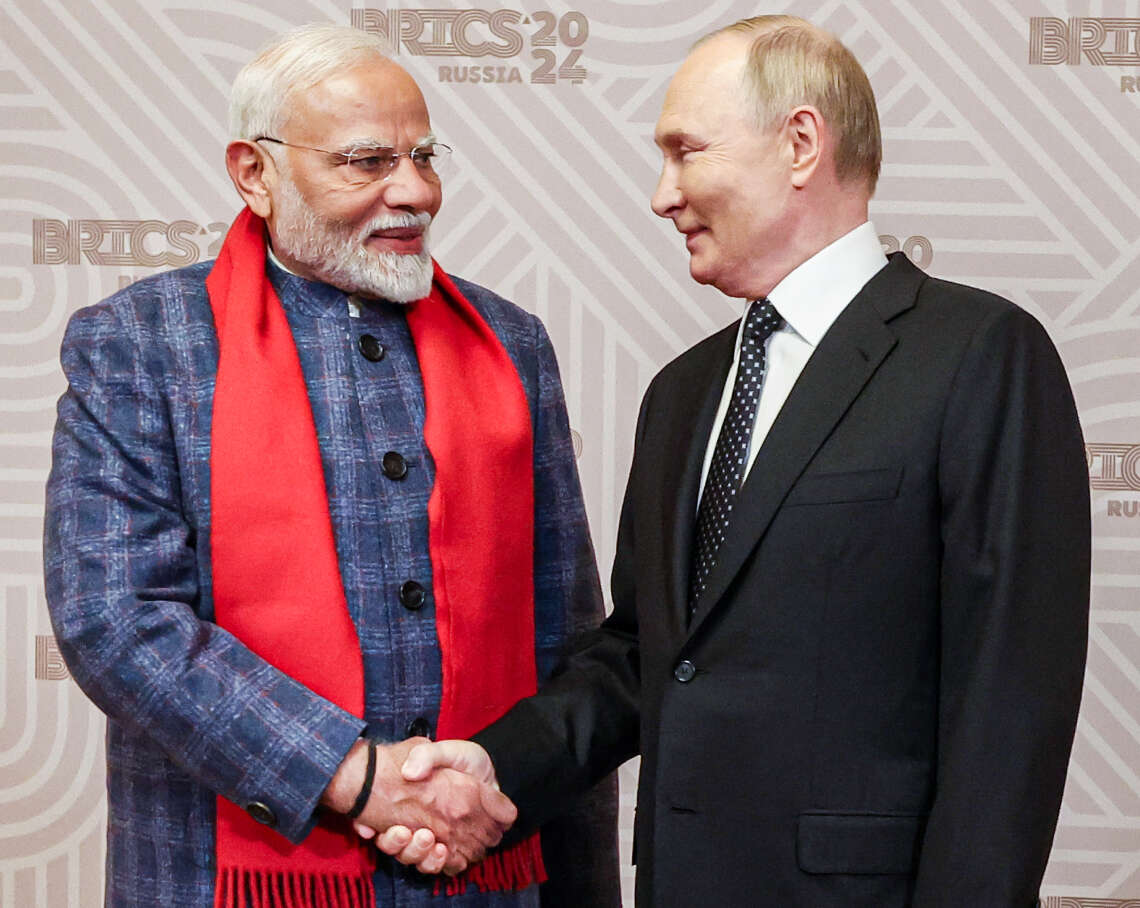
Western pressure—whether from the US, UK or EU—has done little to shift India’s stance and, if anything, has reinforced its independence. London’s calls for India to distance itself from Moscow do not come with viable alternatives, especially when British defence offerings are costlier and rarely match India’s current inventory. The symbolism of Putin’s elaborate welcome, highlighted so prominently in British reporting, reflects something deeper: India performing confidence on the world stage. Delhi can host Putin without jeopardising its partnerships with the US or UK, because it is no longer defined by Western approval.
For London, the takeaway is stark. India is not drifting away; it is simply acting like a power that does not need the West more than anyone else. If the UK wants to shape India’s choices, it must approach Delhi as an equal, not a recruit. India’s refusal to take sides is not a threat—it is the reality of a multipolar world in which Western influence is no longer the centre of gravity.