Analysts emphasise that Saudi Arabia remains a key strategic and economic partner for India, with bilateral trade reaching $41.88 billion in FY 2024-25, far outpacing its $3–4 billion trade with Pakistan.
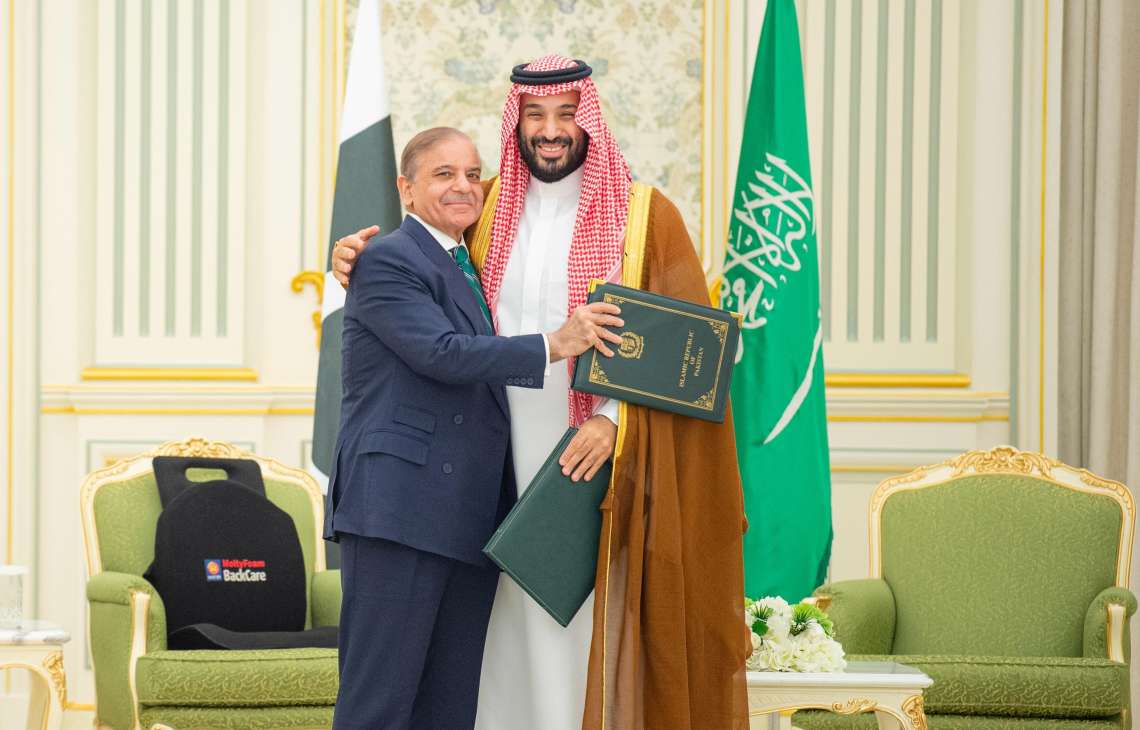
India on Thursday said it is carefully evaluating the implications of a newly signed Strategic Mutual Defence Agreement between Saudi Arabia and Pakistan, stressing that safeguarding national interests remains a top priority. The agreement, inked in Riyadh on Wednesday by Pakistani Prime Minister Shehbaz Sharif and Saudi Crown Prince Mohammed bin Salman, stipulates that any aggression against one country will be considered an attack on both.
The Ministry of External Affairs (MEA) said in a statement that New Delhi had been aware of the development, which formalises a long-standing arrangement between the two nations. “We will study the implications of this development for our national security as well as for regional and global stability. The Government remains committed to protecting India’s national interests and ensuring comprehensive national security in all domains,” the MEA added.
Informal defence ties formalised
The pact represents the most formal articulation of decades-long military cooperation between Riyadh and Islamabad. Pakistan has historically trained Saudi troops and engaged in joint exercises since the 1960s. According to a joint statement, the accord seeks to “develop aspects of defence cooperation” and “strengthen joint deterrence against any aggression.”
The signing ceremony, held at Al-Yamamah Palace, included delegations from both countries, with Pakistan’s Deputy Prime Minister and Foreign Minister Ishaq Dar, Defence Minister Khawaja Muhammad Asif, Army Chief Asim Munir, and several senior officials in attendance. During the visit, Sharif extended greetings to Saudi King Salman and expressed gratitude for the warm reception by Crown Prince Mohammed bin Salman, who in turn wished continued prosperity for Pakistan.
The agreement comes amid heightened regional instability. Just days earlier, Israel conducted a targeted airstrike in Doha that killed senior Hamas political leaders during ongoing ceasefire talks. The attack prompted condemnation across Arab capitals, highlighting the fragile security environment in the Gulf.
For India, the pact coincides with recent cross-border tensions. The Pahalgam attack in Jammu and Kashmir, which killed 26 civilians at the hands of heavily armed terrorists linked to the Pakistan-based Lashkar-e-Taiba, was followed by India’s “Operation Sindoor,” striking nine high-value terror infrastructures in Pakistan and Pakistan-occupied Kashmir (PoK). Pakistan responded with counterstrikes, raising the stakes further.
India also launched “Operation Sindoor Outreach,” sending delegations of parliamentarians and officials to friendly nations, including Saudi Arabia, to spotlight Pakistan’s role in sponsoring terrorism. This diplomatic effort preceded the signing of the defence pact, underlining India’s strategic engagement in the Gulf.
Strategic implications
While Pakistan has portrayed the agreement as a diplomatic victory aimed at India, experts note that it does not explicitly target any country and is unlikely to alter Riyadh’s robust ties with New Delhi. Analysts emphasise that Saudi Arabia remains a key strategic and economic partner for India, with bilateral trade reaching $41.88 billion in FY 2024-25, far outpacing its $3–4 billion trade with Pakistan.
The timing of the pact is also linked to broader Middle East dynamics, including the aftermath of Israel’s airstrike in Doha. Observers suggest that the agreement signals a recalibration of Gulf security posture in response to Israeli actions, rather than a direct message to India. Riyadh’s long-standing relationship with New Delhi, strengthened under Prime Minister Narendra Modi, remains unaffected, with ongoing collaboration in energy, space, health, and infrastructure, including plans for two oil refineries in India.
India’s measured response
India has responded cautiously, framing the agreement as the formalisation of a pre-existing arrangement rather than a new threat. Analysts argue that Saudi Arabia has deliberately delinked the pact from its strategic ties with India, signalling that its defence commitments with Pakistan do not supersede its robust bilateral relationship with New Delhi.
The MEA’s statement highlights India’s approach of strategic patience, monitoring developments closely while continuing to safeguard its national interests. Experts note that India is unlikely to face direct military repercussions from the pact, but will continue diplomatic engagement with Saudi Arabia and other Gulf partners to maintain regional equilibrium.
Ultimately, the pact underscores the complex security environment in South Asia and the Gulf. While Pakistan may celebrate the agreement as a diplomatic achievement, India maintains that it has been, and will continue to be, a responsible actor, responding to provocations while deepening strategic partnerships. The timing of the pact suggests it is as much about consolidating Gulf solidarity in the wake of Middle East tensions as it is about Pakistan’s defence posture.