April 25, 2025
4 mins read

Trump unhappy with deadly strikes on Kyiv 

The president said he is “putting a lot of pressure” on both sides to end the war in Ukraine, following the deadliest attacks Kyiv has seen since last July 

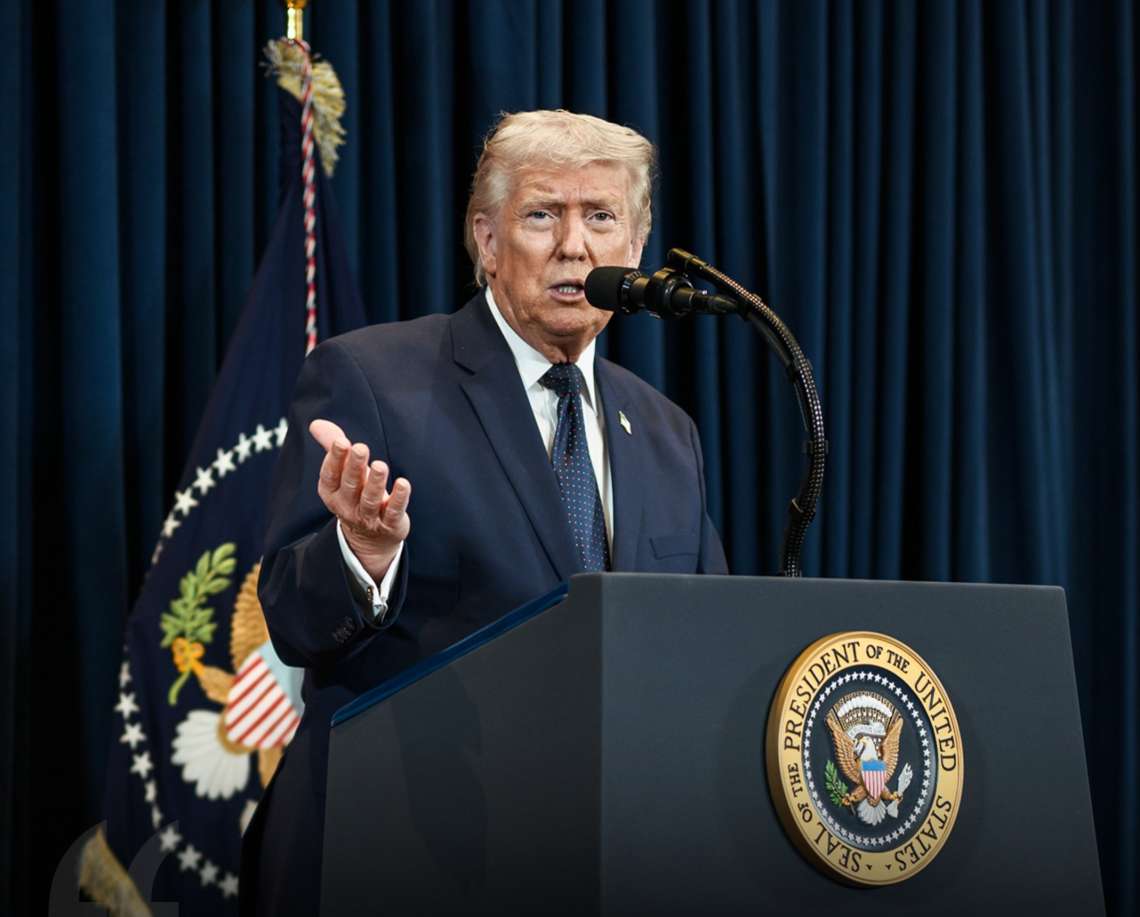
President Donald Trump has said he is “not happy” with deadly Russian strikes on Kyiv and that President Vladimir Putin should “stop” – but has not said if further action might taken against Russia. Overnight into Thursday, the attacks on the Ukrainian capital killed at least 12 people and injured dozens of others. 

The president said he is “putting a lot of pressure” on both sides to end the war in Ukraine, following the deadliest attacks Kyiv has seen since last July. It is the latest road bump in efforts to advance a peace deal between the two countries – something the US president said he would be able to quickly do as part of his election campaign last year. In rare criticism of Russian President Vladimir Putin, Trump wrote in a post on Truth Social: “Not necessary, and very bad timing. Vladimir, STOP!” 

The attack has come at a time of growing pressure on Ukraine and President Volodymyr Zelensky to accept Russian occupation of its territory as part of a peace deal. On Thursday, Trump appeared alongside Norway’s Prime Minister Jonas Gahr Støre at the White House and said he had “no allegiance to anybody” only an “allegiance to saving lives”. 

While he admitted frustration with Putin, Trump said he would wait a week “to see if we have a deal” – but that “things will happen” if the bombings do not end. President Volodymyr Zelensky responded to the attacks during a visit to South Africa, saying he felt the US could be more forceful with Russia to secure a ceasefire. “We believe that if more pressure is applied to Russia, we’ll be able to make our positions closer,” Zelensky told reporters. 

When asked if he would be willing to make any concessions, Zelensky said the fact that Ukraine is prepared to negotiate with Russia at all is a “huge compromise” and a “ceasefire must be the first step”. 
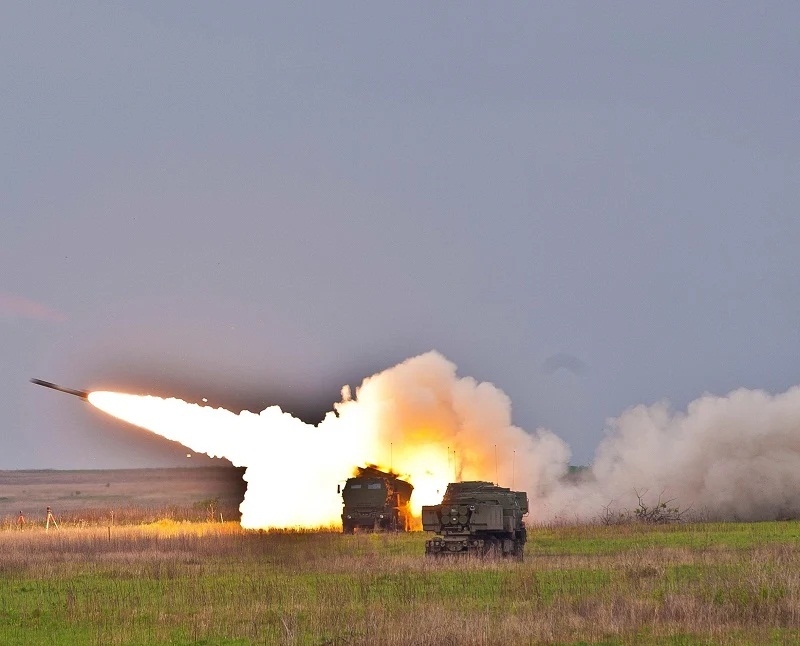
HIMARS – a game-changer in Russia-Ukraine conflict?.(photo:IN)

“If Russia says it is ready to cease fire, it must stop massive strikes against Ukraine. It is Ukrainians who are running out of patience, because it is us who are under attack, and no one else,” he added. 

Before the attack on Kyiv, the week had seen a fraying of the already imperilled relationship between Trump and Zelensky – as the US president has suggested the need for Ukraine to make land concessions as part of a peace deal. On Wednesday, Trump claimed a deal to end the war was “very close”, but that Zelensky’s refusal to accept US terms “will do nothing but prolong” the conflict. 

Ukraine has long said it will not give up Crimea, a southern peninsula illegally annexed by Russia in 2014. On Wednesday, US Vice-President JD Vance laid out the US vision for a deal, saying it would “freeze the territorial lines […] close to where they are today”, and added that Ukraine and Russia “are both going to have to give up some of the territory they currently own”. 

When asked by reporters at the White House this week about whether the administration was looking to recognise Russia’s sovereignty over Crimea, Trump said he just wanted to see the war end. 

Recognising Russia’s illegal occupation of Crimea would not only be politically impossible for Zelensky to accept, it would also be contrary to post-war international legal norms that borders should not be changed by force. 

“We’ve shown them the finish line,” Secretary of State Marco Rubio said on Thursday in the Oval Office, where he appeared alongside Trump and the Norwegian prime minister. We need both of them to say yes, but what happened last night with those missile strikes should remind everybody of why this war needs to end.” 

President Zelensky’s visit to South Africa, during which he met President Cyril Ramaphosa, signalled a dramatic improvement in the once-strained relations between the two nations. Ramaphosa said during a news briefing alongside Zelensky that he was deeply concerned about the ongoing conflict in Ukraine. He also reiterated South Africa’s commitment to speaking to all parties in the conflict. 

He added that he had spoken to both Putin and Trump on the need to bring an end to the conflict. Ramaphosa, in the briefing, did not go into whether Ukraine should cede territory to Russia. 

The US was one of Ukraine’s closest allies until the re-election of Trump in November. Now Ukraine is keen to broaden its pool of international partners – particularly in Africa where many countries have strong links with Russia. South Africa has also suffered from strained relations with Washington, which has expelled its ambassador and removed aid funding. South Africa says its non-aligned position puts it in a prime position to help bring about a peace deal with Russia. 

Previous Story

Macron: ‘We Stand with India’

Next Story

Vance concludes cultural, strategic India tour 

Previous Story

Macron: ‘We Stand with India’

Next Story

Vance concludes cultural, strategic India tour 

Latest from -Top News

Pakistan Risks Overstretching Itself in Yemen War

Pakistan’s expanding military role in Saudi Arabia amid the Yemen conflict could strain its defence resources and fragile finances…reports Asian Lite News Desk Pakistan’s military involvement in the war in Yemen may prove unsustainable because of mounting financial pressures and competing security demands, according to a new report. Islamabad’s growing military presence in Saudi Arabia risks stretching its defence resources while exposing the country to greater strategic and economic challenges. An article by Andrew Wilson in One World Outlook describes Pakistan’s involvement as a case of “fiscal and strategic overreach”, arguing that the country lacks the financial flexibility to sustain an expanded military commitment. Pakistan’s external finances depend heavily on an International Monetary Fund (IMF) programme, financial support from Gulf countries and remittances from Pakistani workers in the region. The report argues that deeper military involvement in the conflict could place additional pressure on these sources of financial stability. It also warns that deploying troops and military equipment abroad could weaken Pakistan’s capacity to address security challenges along its eastern border and deal with two domestic insurgencies. The move could also draw Islamabad into a conflict it has sought to approach cautiously. A Reuters report in May, citing Pakistani security and government sources, said Islamabad had deployed around 8,000 troops, a squadron of approximately 16 aircraft, mostly JF-17 fighter jets, two drone squadrons and a Chinese HQ-9 air-defence battery to Saudi Arabia. According to those sources, Riyadh was financing the deployment, with Pakistani personnel operating the equipment. The sources also said a confidential agreement contemplated the possibility of deploying up to 80,000 troops. Islamabad has not confirmed those figures, although it has acknowledged its military presence in Saudi Arabia, including the deployment of fighter jets at King Abdulaziz Air Base from April. The One World Outlook article argues that Saudi financial support can cover allowances and operating expenses but cannot easily replace military equipment needed elsewhere or resolve the political and strategic challenges of participating in the Yemen conflict. Pakistan’s defence budget is another concern. For the 2026-27 financial year, the federal government allocated PKR 3 trillion, or approximately $10.8 billion, to defence services. The allocation represents an 18 per cent increase from the original PKR 2.55 trillion provision and amounts to around 2.1 per cent of projected gross domestic product (GDP). Defence spending accounts for approximately 16 per cent of the federal government’s PKR 18.8 trillion expenditure. Military pensions are budgeted separately at PKR 822 billion, while debt servicing costs stand at approximately PKR 8 trillion, more than two-and-a-half times the defence allocation. The report argues that these competing financial obligations leave little room for additional military expenditure without placing further pressure on public finances. Pakistan’s reliance on IMF assistance also limits its fiscal flexibility. The country must meet the conditions attached to the programme, including a primary budget surplus target of 2 per cent of GDP and continued restraint on development spending. According to the article, these requirements make it difficult for Islamabad to finance an additional military commitment without compromising other budgetary priorities. Pakistan’s economic indicators offer limited reassurance. Economic growth for the 2025-26 financial year is estimated at between 3.6 and 3.7 per cent, while inflation reached approximately 10.3 per cent in September following an energy price shock. Foreign exchange reserves stood at around $21.5 billion at the end of September. Although this marks an improvement from the low levels recorded in 2023, the report notes that the reserves cover only a few months of imports. Financial assistance from Gulf partners remains central to Pakistan’s external stability. The article says Islamabad holds approximately $8 billion in Saudi deposits at its central bank. In July, the State Bank of Pakistan said Riyadh had extended the maturity of $5 billion in deposits to December 2028, easing the country’s immediate external financing requirements. A further $3 billion deposit was also extended in the spring. However, the article argues that these arrangements provide temporary relief rather than long-term financial independence, particularly as regional conflict threatens the stability of the Gulf economies on which Pakistan relies. The report concludes that Pakistan faces a difficult balance between supporting Saudi Arabia militarily and preserving the financial and military resources needed to address its domestic and regional challenges.

UK and Germany Ratify Kensington Treaty

Britain and Germany ratify the Kensington Treaty, agreeing new cooperation on AI, quantum research, defence and security while targeting investment, jobs and Russian hybrid threats…reports Asian Lite News Desk Britain and Germany

Economic tide is turning in Bangladesh

If there is one thing that can bring some comfort to the struggling Bangladeshi economy, it is good relations with India. Bangladesh should remember that Delhi’s backing, through easy supplies of essentials
Go toTop

Don't Miss

Trump: ‘Zelenskiy Shouldn’t Target Moscow’

When asked whether the United States would send long-range missiles

‘Students won’t need jab proof to enter US’

Instead they will require a negative certificate of their COVID-19