The operation reportedly took place several hundred miles off the coast of Sri Lanka. After the boarding and seizure, the vessel was permitted to continue its journey…reports Asian Lite News
Maritime tensions between the United States and Iran have intensified after reports emerged of a US special operations raid on a vessel allegedly carrying military-related cargo to Iran, followed closely by Iran’s seizure of a foreign oil tanker in the Gulf of Oman on charges of fuel smuggling.
According to a report by The Wall Street Journal, a US special operations team last month boarded a ship travelling from China to Iran in the Indian Ocean and seized materials believed to be linked to Iran’s conventional weapons programme. Citing US officials, the report said the cargo included components that could potentially be used for military purposes. One official told the newspaper that the seized items were later destroyed.
The operation reportedly took place several hundred miles off the coast of Sri Lanka. After the boarding and seizure, the vessel was permitted to continue its journey. US officials have not publicly disclosed further details about the ship, its ownership or the precise nature of the materials seized, but the report underscores Washington’s continued efforts to disrupt supply routes that could bolster Iran’s military capabilities.
Within weeks of that operation, Iranian authorities announced the seizure of a foreign oil tanker in the Sea of Oman, escalating concerns about security and freedom of navigation in the region. Iranian media reported overnight Friday to Saturday that the tanker was carrying six million litres of smuggled diesel fuel and had been intercepted by Iranian forces near the southern port city of Jask.
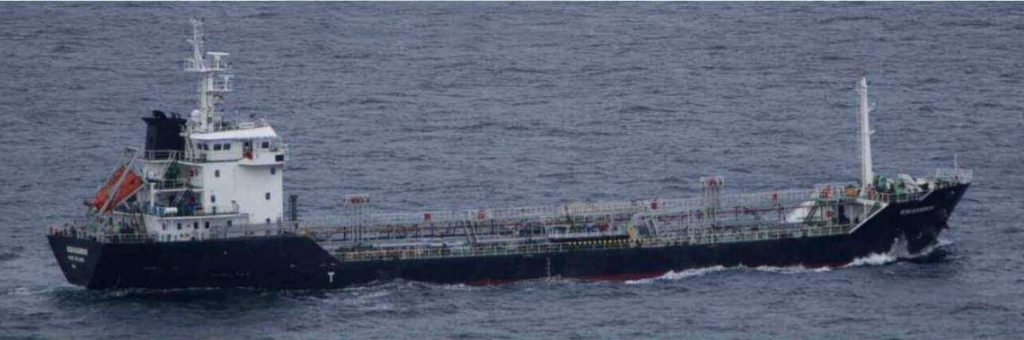
Iran’s semi-official Tasnim news agency quoted Hormozgan Province Chief Justice Mojtaba Qahremani as saying the seizure was conducted under a court warrant as part of ongoing intelligence monitoring and surveillance of fuel-smuggling activities along Iran’s maritime borders. Judicial officers inspected the foreign-flagged tanker in waters under Iran’s sovereignty in the western Jask area, where multiple violations were allegedly discovered.
According to Qahremani, the vessel lacked proper maritime and cargo documentation, including a valid bill of lading for the fuel. He said the tanker had also ignored orders to stop, attempted to flee, switched off its navigation and radar systems, and intentionally damaged some onboard equipment during the interception. Based on these findings, the ship was confiscated and legal proceedings were initiated.
Iranian state-run IRIB news agency reported that 18 crew members were on board the tanker, including nationals of India, Sri Lanka and Bangladesh. The crew, along with the ship’s captain, have been placed under supervision while investigations continue. Iranian authorities said the results of the judicial inquiry would be announced at a later stage.
Iranian officials routinely announce the interception of vessels accused of illegally transporting fuel in the Gulf and Sea of Oman. Retail fuel prices in Iran are among the lowest globally due to heavy subsidies, making smuggling to neighbouring countries highly profitable. Tehran has consistently maintained that such seizures are part of its domestic law enforcement efforts rather than retaliatory actions linked to broader geopolitical disputes.
The latest tanker seizure came just days after the United States confiscated an oil tanker off the coast of Venezuela. Washington said that vessel was involved in transporting oil from Venezuela and Iran. The US Treasury has imposed sanctions on Venezuela since 2022, citing alleged ties to Iran’s Islamic Revolutionary Guard Corps and Hezbollah.
Iranian authorities last month also dismissed suggestions that a previous tanker seizure in Gulf waters was retaliatory, saying the ship had been carrying unauthorised cargo. Nevertheless, the sequence of incidents highlights rising friction across key maritime routes connecting Asia, the Middle East and global energy markets.
Together, the US boarding of a China-to-Iran vessel and Iran’s seizure of a tanker in the Sea of Oman reflect the increasingly contested nature of shipping lanes in the region, where sanctions enforcement, smuggling, and strategic rivalries continue to intersect.