A powerful winter storm disrupted holiday travel across the US Northeast and Great Lakes, grounding flights, knocking out power and prompting emergency declarations as millions prepared to travel….reports Asian Lite News
A powerful winter storm swept across large parts of the United States over the weekend, bringing heavy snow, ice and strong winds to the Northeast and Great Lakes regions, severely disrupting holiday travel and leaving tens of thousands of people without power during one of the busiest periods of the year.
The storm moved in from the west on Friday evening, intensifying overnight and continuing into Saturday, just ahead of the peak Christmas-to-New Year travel rush. Airports, roads and rail networks across several states were affected as snowfall and icy conditions made travel hazardous.
By Saturday afternoon, more than 5,500 flights within, to or from the United States had been delayed, while at least 860 flights were cancelled, according to flight-tracking service FlightAware. The impact was most acutely felt in the New York metropolitan area, where John F. Kennedy International Airport, LaGuardia Airport and Newark Liberty International Airport all reported significant delays.
The Federal Aviation Administration said flights arriving at JFK were delayed by an average of around two hours on Saturday morning, as airlines struggled to recover schedules disrupted by overnight snowfall and de-icing operations. All three major airports issued warnings on social media advising passengers to expect disruptions and to check flight status before travelling.
Winter storm alerts stretched from New York through Pennsylvania and into parts of the mid-Atlantic and southern New England, with forecasters warning of slippery roads, reduced visibility and the risk of power outages. The National Weather Service urged residents and travellers to exercise caution, particularly during early morning hours when temperatures remained below freezing.
The storm arrived just ahead of what was expected to be the busiest air travel day of the holiday season. The Transportation Security Administration estimated that approximately 2.86 million passengers were scheduled to pass through US airport security checkpoints on Sunday alone, raising concerns that lingering disruptions could ripple through the system.
In response to the deteriorating conditions, the governors of both New York and New Jersey declared states of emergency ahead of the storm’s arrival. New York Governor Kathy Hochul said the declaration was intended to ensure resources were in place to respond quickly to road closures, accidents and power failures. Acting New Jersey Governor Tahesha Way similarly urged residents to avoid unnecessary travel.
Way said the storm was expected to create dangerous driving conditions and have a major impact on holiday travel. She said motorists should plan journeys carefully, monitor weather updates and allow emergency and road crews to do their work safely.
Snowfall totals varied widely across the region. New York City recorded around four inches of snow between Friday night and early Saturday, slightly below some earlier forecasts. However, heavier accumulations were reported further east and north. Central and eastern Long Island saw snowfall exceeding six inches, while parts of the Catskills recorded up to 10 inches.
National Weather Service forecaster Bob Oravec said the storm was gradually weakening as it tracked from the northwest towards the southeast. He said that while flurries lingered across parts of the Northeast on Saturday morning, conditions were slowly improving, allowing road crews and airport operations to begin clearing backlogs.
Despite improving weather, the storm caused widespread power disruptions. In Michigan, ice accumulation weighed down trees and power lines, leaving more than 30,000 homes and businesses without electricity by Saturday morning. Utility crews worked through freezing conditions to restore service, while residents were advised to prepare for extended outages.
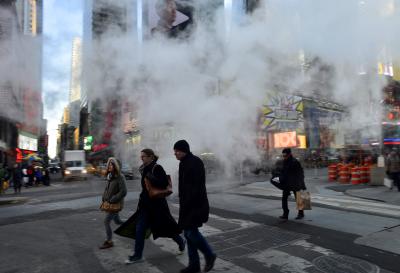
Across the Northeast, municipal workers were deployed in force. In New York City, sanitation crews cleared snow and slush from streets and pavements overnight, including around Times Square, where workers in bright red winter gear used shovels and snowblowers to restore pedestrian access.
While the eastern United States grappled with winter conditions, the West Coast faced a different set of challenges. California experienced a brief lull over the weekend after being battered by a series of powerful storms earlier in the week that brought torrential rain, flash flooding and deadly mudslides.
At least three people were killed in California as a result of the storms, according to local authorities. Some mountainous areas received between 10 and 18 inches of rain over a three-day period, peaking on Christmas Eve. Meteorologist Rose Schoenfeld of the National Weather Service said rainfall totals were particularly intense in higher elevations.
In more densely populated regions, including the Los Angeles Basin and coastal areas, rainfall reached up to four inches, overwhelming drainage systems and triggering landslides. Significant damage was reported in Wrightwood, a mountain town northeast of Los Angeles, where floodwaters turned roads into rivers and buried vehicles under mud and debris.
Although California enjoyed a relatively dry weekend, forecasters warned that further hazards lay ahead. Santa Ana winds were expected to develop from Sunday night through Tuesday, with gusts exceeding 60 miles per hour in mountainous areas. Officials warned that the combination of saturated ground and strong winds could uproot trees and cause additional power outages.