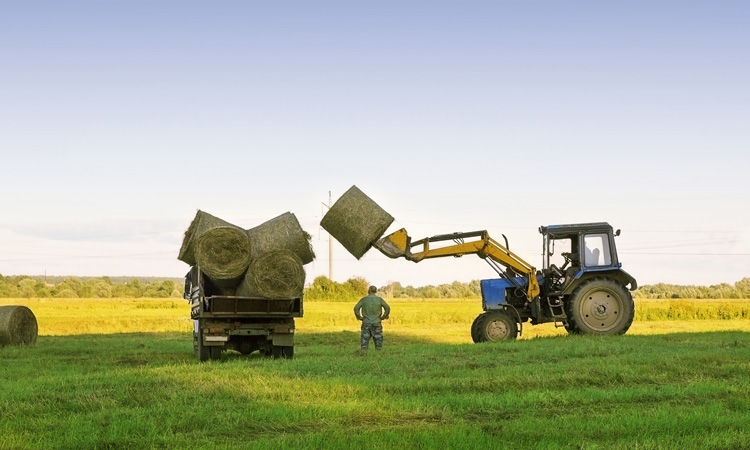
Crop production this year was hit by the hottest spring and summer on record, including some drought conditions, leaving farmers with 20% less revenue, according to an estimate by the Energy and Climate Intelligence Unit (ECIU) thinktank…reports Asian Lite News
British arable farmers are facing a revenue loss of more than £800m after one of the worst-ever harvests on record, analysis shows. Crop production this year was hit by the hottest spring and summer on record as well as drought conditions, leaving farmers with 20% less revenue, according to an estimate by the Energy and Climate Intelligence Unit (ECIU) thinktank.
The estimated loss of £828m is based on researchers looking at “per-hectare yield” figures for wheat, spring and winter barley, oats and oilseed rape and crop area estimates for the UK. They compared current farm gate prices to government figures for the 10-year average for production volumes for the five staple crops from 2015-2024, finding a sharp drop in revenue.
Farmers saw a 38.4% decline in revenue from oilseed rape, a 21.5% decline in milling oat revenues, 19.6% decline in milling wheat revenues and 16.1% in feed wheat, according to the ECIU.
The provisional environment department (Defra) figures in October found 2025 to be the second-worst year on record for England, with the harvest across the UK expected to be similarly poor. This year’s anticipated poor harvest comes following another one of the worst harvests on record in 2024, which came after the preceding autumn and winter saw extreme rainfall.
Tom Lancaster, ECIU land, food and farming analyst, said: “This has been another torrid year for many farmers in the UK, with the pendulum swinging from too wet to too hot and dry. “With confidence in the sector at rock bottom, there is an urgent need to ensure farmers are better supported to adapt to these climate shocks and build their resilience as the bedrock of our food security.”
He said delays to the relaunch of green farming payment schemes, like the sustainable farming incentive, “are the last thing the industry needs”. David Lord, an arable farmer from Essex and member of the Nature Friendly Farming Network steering group, said that with near-constant extreme rainfall, heat and drought in recent years, green farming schemes “are a vital lifeline for me”.
“But with the schemes closed and no clarity on their future, too many farmers are locked out, unable to access the support they need to adapt whilst facing a wider agriculture policy that does too little to build our resilience and too often works against it,” he added.
A Defra spokesperson acknowledged that there are “challenges” in the sector and weather extremes that have affected harvests.
They added: “We are backing our farmers in the face of a changing climate with the largest nature-friendly farming budget in history to grow their businesses and get more British food on our plates,” they said.