China’s growing maritime assertiveness, economic pressure and territorial disputes are testing relations with Southeast Asian nations…writes Sarabjeet S Parmar
China’s increasingly assertive actions in the South China Sea, growing maritime disputes and economic pressure are widening its rift with Southeast Asian neighbours, raising concerns over regional stability and ASEAN unity. Despite being the region’s largest trading partner, Beijing’s approach towards territorial sovereignty, international law and economic relations is increasingly alienating ASEAN members, with the failure to finalise a long-awaited South China Sea Code of Conduct highlighting the deepening tensions.
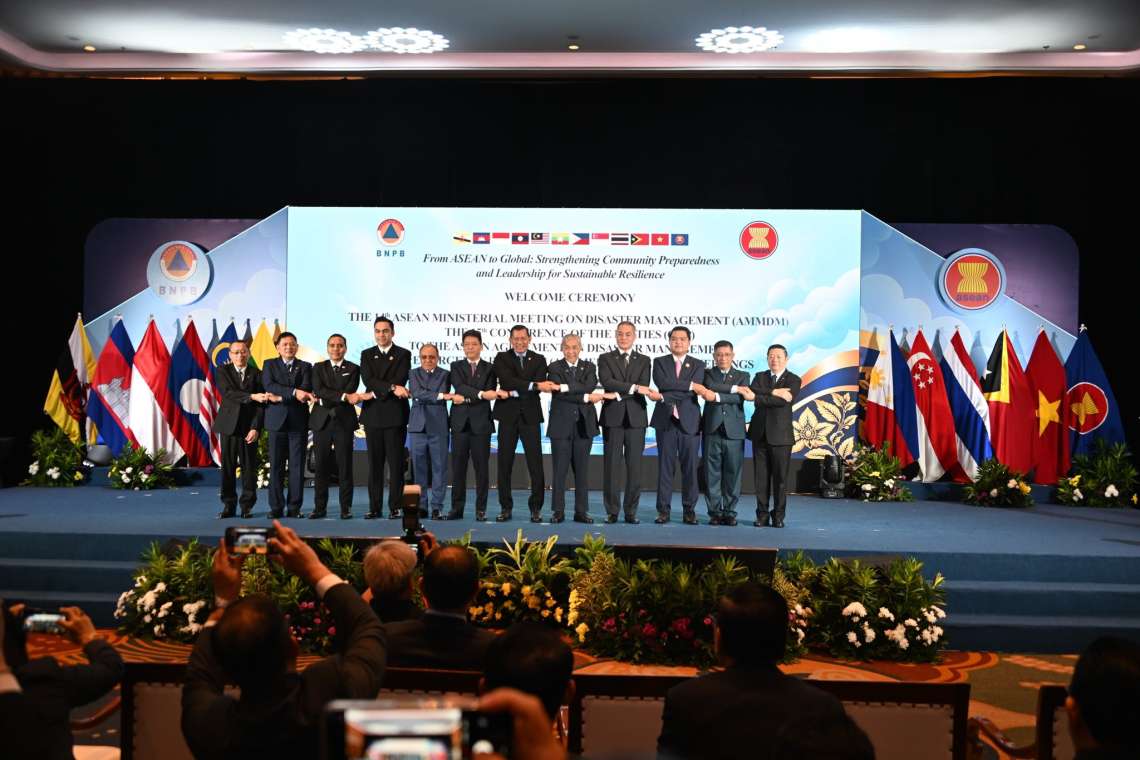
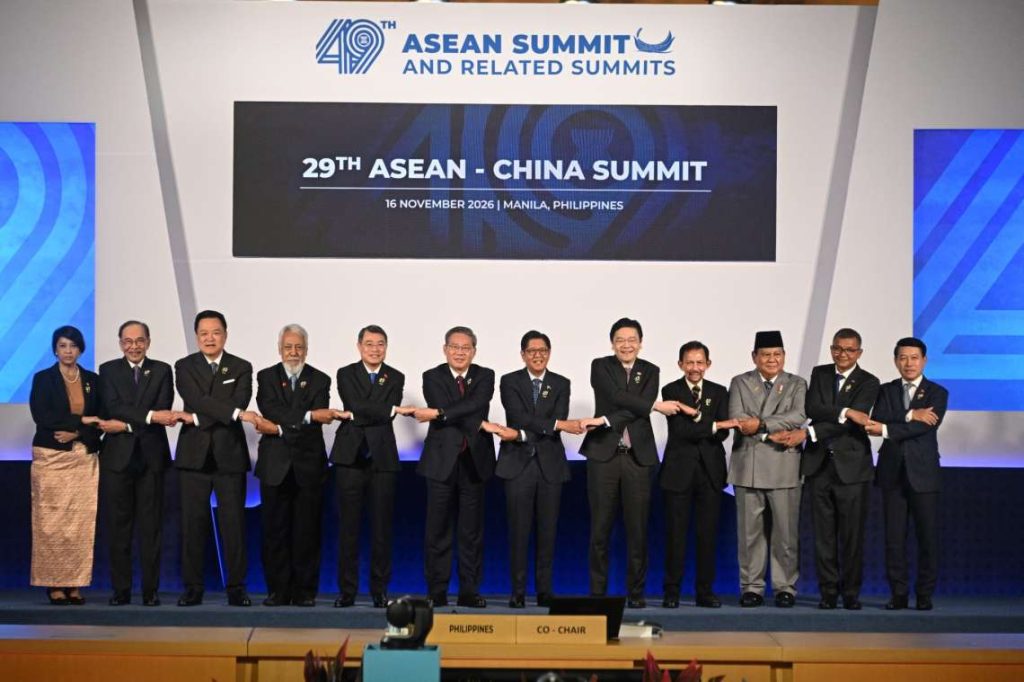
The Philippines’ chairmanship of ASEAN ended with the 49th ASEAN Summit held in Manila on November 15. ASEAN Secretary-General Kao Kim Hourn stated at a press conference that leaders had adopted 117 documents, of which 85 were at the summit and 32 at related meetings. However, the long-awaited Code of Conduct (COC) for the South China Sea was not among them. Philippines Foreign Secretary Theresa Lazaro announced that while significant progress had been made, with provisional agreement on about 80 per cent of the paragraphs, the most contentious issues remained unresolved, especially the geographical scope and whether the code would be legally binding.
The negotiations now pass to Singapore, the new ASEAN Chair, to steer the code, which started 24 years ago with the non-binding 2002 Declaration on the Conduct of Parties (DOC). The missed deadline is not a procedural hiccup. It is a symptom of a deeper and widening rift between ASEAN and China, rooted in Beijing’s coercion at sea, its lopsided economic statecraft, and its disregard for the sovereignty of its neighbours and the rules meant to govern relations between them.
This may seem at odds with the 2026 State of Southeast Asia Survey, in which 52 per cent of respondents selected alignment with China while 48 per cent indicated alignment with the US. However, 43.8 per cent of respondents indicated that Beijing could use its economic and military power to threaten their countries’ interests and sovereignty. The apparent slight tilt towards China can be viewed as a response to Washington’s unreliability, and hence a temporary preference, as Beijing’s conduct will continue to erode any goodwill it may generate.
After Vietnam, the Philippines has been bearing the brunt of Chinese aggressiveness. In July 2026, as Manila hosted the 59th ASEAN foreign ministers, Chinese coast guard ships fired water cannons at Philippine fishing boats, with 12 Chinese Coast Guard ships and three maritime militia vessels involved. In September 2026, Chinese vessels hindered a resupply mission to the Second Thomas Shoal, a hostile act after two years of relative calm. Subsequently, in October 2026, China Coast Guard ships and aircraft hindered a routine air patrol near Scarborough Shoal, and obstructed a fisheries protection operation by the Philippines in the area between the Philippine-held Thitu Island and Chinese-held Subi Reef.
This incident was preceded by the ramming of a Filipino government fisheries bureau boat in another area of the Spratlys. Beijing’s 2025 plan to establish the Huangyan Island National Nature Reserve at the disputed Scarborough Shoals was termed by Manila as a ‘clear pretext for occupation’. Interestingly, while the first half of 2026 witnessed a decrease in the number of Chinese maritime militia vessels and PLA Navy ships, there was an increase in the number of Chinese coast guard vessels and PLA research vessels, which is indicative of the change in operative norms, especially in keeping events below the threshold of conflict.
This pattern extends well beyond Manila. In January 2026, Malaysia acknowledged that the presence of the Chinese Coast Guard in the North Luconia Shoals and South Luconia Shoals off Sarawak has been the ‘norm’ since 2013. It is important to note that this maritime area lies within Malaysia’s Exclusive Economic Zone. Indonesia, which is not a South China Sea disputant, continues to see Chinese research vessels and the Chinese Coast Guard in its Exclusive Economic Zone that is part of the North Natuna Sea. This area falls within Beijing’s nine-dash line claim. These incursions that form part of China’s grey zone activities, which increased a day after President Prabowo Subianto’s inauguration, are increasingly testing Indonesia’s patience and ambiguity strategy.
Vietnam, which has been facing China’s maritime aggressiveness for some time now, usually keeps its differences with Beijing quiet, has called for all relevant parties to exercise restraint and act in accordance with international law, especially after the recent China-Philippine clashes at the Second Thomas Shoal.
Underlying Beijing’s behaviour is the treatment of international law as an ‘inconvenience’ to be suitably interpreted. Although the South China Sea arbitral award by the PCA in 2016 ruled in favour of the Philippines, Beijing rejected the ruling and has continued to ramp up its aggressiveness and grey zone operations. Under China Coast Guard Regulation number 3, the Coast Guard is permitted to detain foreign vessels and persons in ‘waters under China’s jurisdiction’ for up to 60 days.
Since the formulation of the DOC, Beijing has resisted a legally binding code that some ASEAN nations, especially the Philippines and Vietnam, consider essential for holding China accountable. A code shaped to Beijing’s preferences would risk legitimising facts created by force, and a weak, vague agreement could be worse than none. The impact on ASEAN itself has been quite corrosive, mainly due to the consensus mechanism. The bloc’s 2026 communiqué language on the South China Sea was functionally identical to the 2025 statement when Malaysia was chair. This indicates the measure of hold and leverage Beijing exercises that constrains ASEAN’s collective voice and questions the possibility of a COC while further widening the rift with China.
Although it is ASEAN’s largest trading partner, the relationship is increasingly one-sided. One result of the US tariff policy was the increase in Chinese exports to ASEAN by 13 per cent in 2025, reaching a record USD 276 billion surplus, an increase of 45 per cent from 2024. Chinese exports to the region increased by 19 per cent from January to April 2026, and continue to surge, while Chinese exports to the US fell by 10 per cent. The impact on the ASEAN markets is quite stark, and the region now accounts for 18 per cent of China’s exports, while the US share has reduced to 11 per cent. This provides Beijing the perfect arena for trade and economic warfare.
China’s industrial overcapacity poses an increasing challenge to ASEAN’s broader industrial production and development, as ASEAN has relied significantly on exports to fuel its industrial development. Thailand, ASEAN’s most industrialised economy, has borne the brunt of this trend, and Malaysia and Singapore may face similar challenges. One offset was the imposition of anti-dumping duties on certain commodities flooding the domestic markets. Another option is the enhancement of manufacturing capabilities and trade diversification. This requires a two-step approach: access to US markets and successful outplaying of the 2025 Master Plan on ASEAN Connectivity. ASEAN’s ability to successfully navigate the challenges posed by China’s industrial overcapacity is crucial for the region’s economic future, and will be a difficult path which easing of US tariffs may help.
China’s disregard for its neighbours is not confined to the sea. Its 11 dams on the upper Mekong have long been criticised for being operated in secrecy with little regard for impacts downstream, and a 2026 IUCN study noted that no routine operational data is publicly available for the largest Chinese dams. There has been an increase in toxic waste in the rivers in northern Thailand. This waste has come from mines in Myanmar’s Shan State that are reportedly run by Chinese companies, including a state-owned firm, in areas controlled by the United Wa State Army (UWSA).
ASEAN is beginning to push back. Indicators that the region is less willing to absorb coercion in silence flow from several aspects. These include Manila’s policy of publicising Chinese actions, Jakarta’s more transparent reporting of Natuna incursions, and the endorsement of the ASEAN Maritime Centre at the 48th ASEAN Summit and approval of the concept note and terms of reference at the 49th Summit. However, the consensus model and members’ economic dependence on China will continue to limit collective action. For partners such as India, Japan, Australia and the European Union, the opening lies in offering what Beijing does not: capacity-building in maritime domain awareness, investment that adds value rather than extracts it, and steady support for UNCLOS and the 2016 PCA award. Whether the present rift hardens into a lasting rupture would depend on Beijing’s behaviour. So far, the conduct suggests it has not grasped that coercion, however incremental, is the surest way to lose the neighbourhood it seeks to control and displace the US in.
(The writer is a retired Indian Naval Officer and is presently a Distinguished Fellow with the Council for Strategic and Defence Research, New Delhi, and the Australia India Institute, Melbourne. Views expressed are personal.)