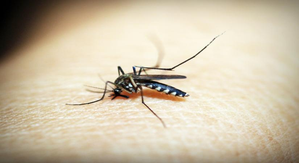
West Nile Virus is a vector borne disease belonging to the Flaviviridae family, which also includes the viruses that cause dengue and yellow fever
A research programme by the UK Health Security Agency (UKHSA) and the Animal and Plant Health Agency (APHA) has identified fragments of West Nile Virus (WNV) genetic material in mosquitoes collected in Britain for the first time.
West Nile Virus is a vector borne disease belonging to the Flaviviridae family, which also includes the viruses that cause dengue and yellow fever. It is usually found in birds, and typically circulates through bird-biting mosquitoes. In rare cases mosquitoes can transmit the virus to humans or horses.
The fragments were detected through the Vector-Borne RADAR (Real-time Arbovirus Detection And Response) programme by APHA, using polymerase chain reaction (PCR) testing, in 2 samples of Aedes vexans mosquitoes collected by UKHSA from wetlands on the River Idle near Gamston (Retford), Nottinghamshire, during July 2023. The mosquitoes were pooled into groups of 10 for testing, and fragments of West Nile Virus genetic material were identified in 2 of the pools. The other 198 were negative. This is the first evidence of West Nile Virus detected in a mosquito in the UK. A further 198 pools from the same site tested negative for the virus.
West Nile virus (WNV) is endemic in various regions across the globe, including Europe, Africa, the Middle East, West and Central Asia, and North America, as well as South America, USA and Australia. The geographic range of West Nile Virus has expanded in recent years to more northerly and western regions of mainland Europe.
The UKHSA has assessed the risk to the general public as very low, but is issuing advice to healthcare professionals so that patients with encephalitis of unknown cause can be tested as a precaution through UKHSA’s Rare and Imported Pathogens Laboratory.
There have been no cases of locally acquired West Nile Virus detected in humans or horses in the UK to date, although 7 travel-associated cases have occurred since 2000. Based on available surveillance, there is no evidence to suggest ongoing circulation of the virus in birds or mosquitos in the UK. Disease surveillance and control activities are being enhanced in light of the findings. Currently, the main risk of West Nile Virus for UK residents continues to be travel to endemic areas overseas.
Dr Meera Chand, UKHSA Deputy Director for travel health, zoonoses, emerging infections, respiratory and tuberculosis, said, “While this is the first detection of West Nile Virus in mosquitoes in the UK so far, it is not unexpected as the virus is already widespread in Europe. The risk to the general public is currently assessed as very low. Vector research of this kind is designed to give us early warning of potential threats so that we can enhance our disease surveillance and control activities and ensure patients receive appropriate testing.”
Dr Arran Folly, Arbovirologist at APHA and lead of the Vector-Borne RADAR project concluded, “The detection of West Nile virus in the UK is part of a wider changing landscape, where, in the wake of climate change mosquito-borne diseases are expanding to new areas. Only through continued surveillance can we assess the risk to animal and public health. Our primary focus is to understand how viruses move into the country and how they are transmitted. Combined this can help us identify areas that may be at increased risk of outbreaks.”
The Vector-Borne RADAR project brings together a wealth of expertise across government and wildlife charities, to enhance the surveillance we undertake in the United Kingdom for mosquito-borne diseases.
Aedes vexans are native to the UK and although they can be found widely at very low densities, in a few locations in England they can occur at high densities associated with summer flooded river landscapes. While uncommon, they are known to cause nuisance biting in a small number of areas in the country, including in villages along the River Idle near Retford, Nottinghamshire, where summer flooding and poor drainage is experienced. Recent efforts have taken place to manage the mosquito populations and to minimise suitable habitats for the main nuisance biting mosquito.
As temperatures warm due to climate change, tick and mosquito species not currently native to the UK will begin to find the UK’s climate more bearable making it easier for them to survive, reproduce and establish a local population. Other species of mosquito, some of which have the potential to transmit infectious disease, can arrive in the UK in several ways, such as by becoming trapped in cars and lorries crossing the border into the UK. They may also be transported through trade channels in containers which are shipped internationally. UKHSA’s wider vector surveillance programmes involve monitoring transport hubs such as motorway service stations and truck stops, as well as other high-risk sites, to ensure that these invasive insects can be detected and eradicated before they disseminate more widely.